
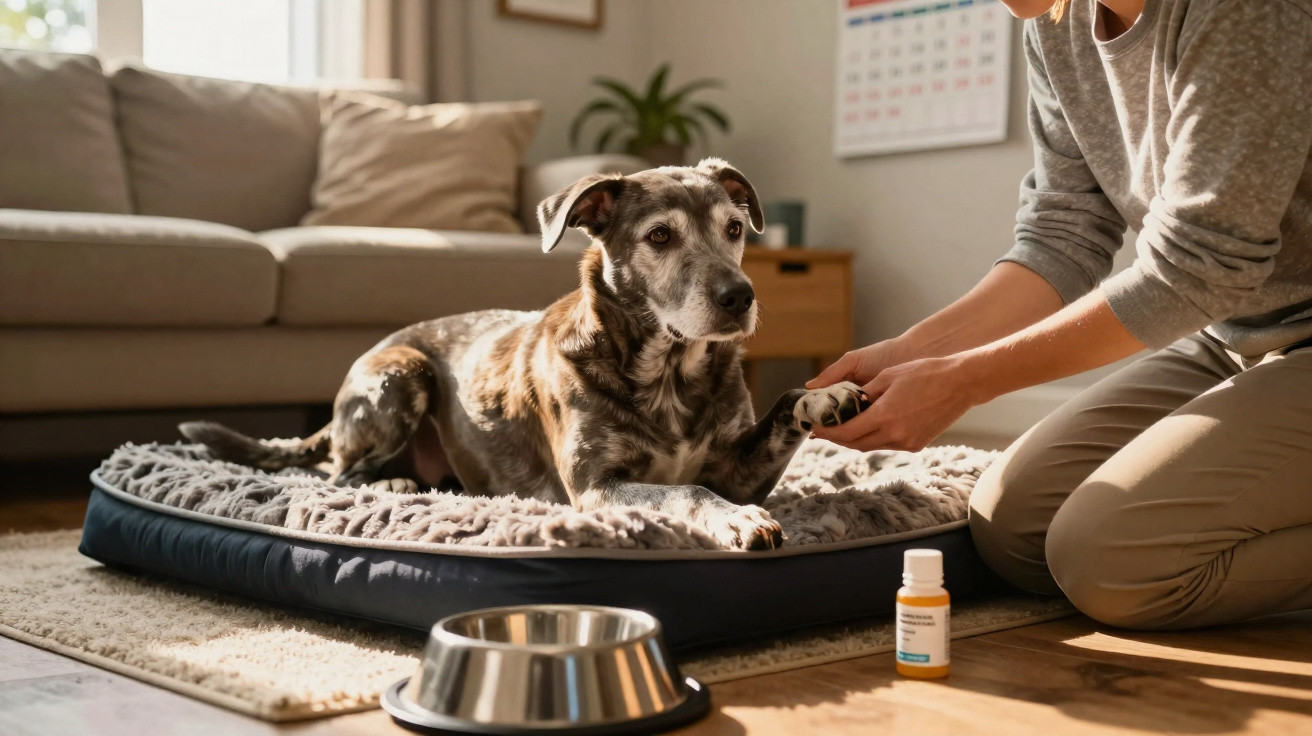
Knowing when a dog reaches its senior years is essential for supporting its comfort, health and quality of life. Although many people assume that all dogs grow old at the same age, this is not the case. The ageing process differs according to the animal’s size and weight. Spotting the signs and adapting the home can help prevent health issues while promoting greater wellbeing throughout this important stage of a pet’s life.
At what age is a dog considered elderly?
The point at which canine old age begins is directly linked to a dog’s size and weight. Small dogs generally live longer and become senior dogs later, whereas large and giant dogs tend to age sooner.
In general, experts use several benchmarks to establish when a dog is considered elderly. The most commonly used guidelines are:
- Dogs weighing under 10 kg enter the senior stage between 10 and 11 years old.
- Dogs weighing between 10 and 25 kg become elderly between 8 and 9 years old.
- Dogs weighing from 25 to 45 kg reach old age between 7 and 8 years old.
- Giant breeds may be regarded as elderly from the age of 6.
What are the main signs of ageing in dogs?
Signs of ageing usually emerge gradually. In many instances, an owner notices behavioural changes before more obvious physical changes become apparent.
To help you recognise whether your four-legged companion is entering its later years, veterinarian @DicaVeterinaria has listed the key behavioural and physical signs that dogs display after the age of 7. Watch the video below to find out what to look for:
How can you adapt your home for an elderly dog?
As a dog gets older, straightforward changes to its surroundings can make a considerable difference to its day-to-day routine. The aim is to minimise unnecessary exertion and improve safety at home.
Non-slip mats can prevent falls, while more supportive beds help ease joint discomfort. It is also important to place water and food bowls where they can be reached easily, making it simpler for the dog to move around during the day.
Why do veterinary appointments need to be more frequent?
As dogs age, they are more likely to develop chronic illnesses, joint problems, heart changes and other conditions that may progress unnoticed. Veterinary monitoring therefore becomes even more important in the animal’s routine.
Regular tests can detect changes early and allow treatment to begin before problems worsen. In addition, the professional can adapt the diet, recommend supplements when needed and advise on the best care to keep the pet healthy. The earlier these measures are introduced, the greater the likelihood that the dog will spend its mature years with comfort, energy and quality of life.





Comments
No comments yet. Be the first to comment!
Leave a Comment