
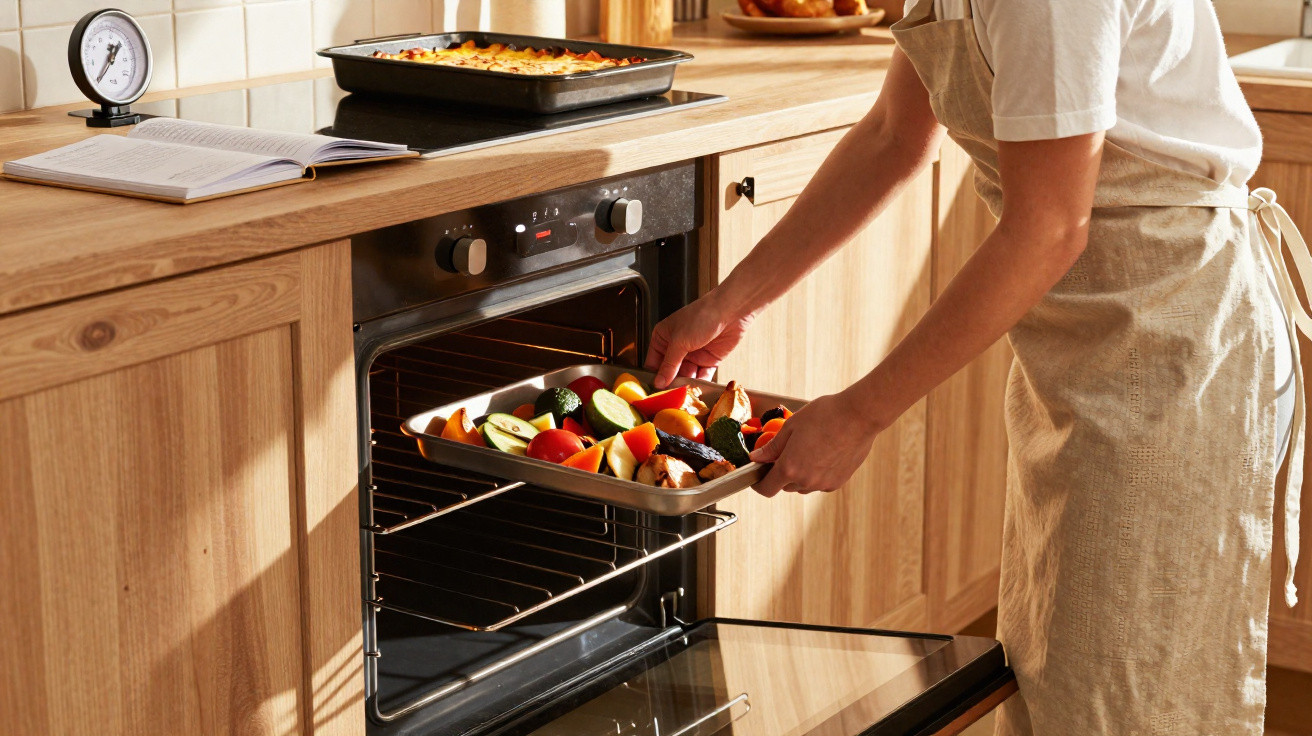
The oven rack is not only there to hold baking trays, cake tins and ovenproof dishes. Its position determines how heat reaches the food, how much the base browns, how the top gratinates and whether the middle of the dish cooks evenly.
Why does oven rack height make such a difference?
Heat does not work in exactly the same way throughout the oven. The upper section encourages browning and gratinating, the lower section focuses heat on the base, while the middle generally provides the most balanced cooking.
As a result, using the same temperature can produce different outcomes simply by moving the baking tray to another height. A cake placed on a low shelf may burn underneath before it rises properly, while a pizza in the centre may cook through but lack the expected crisp base.
When should you use the oven rack in the centre?
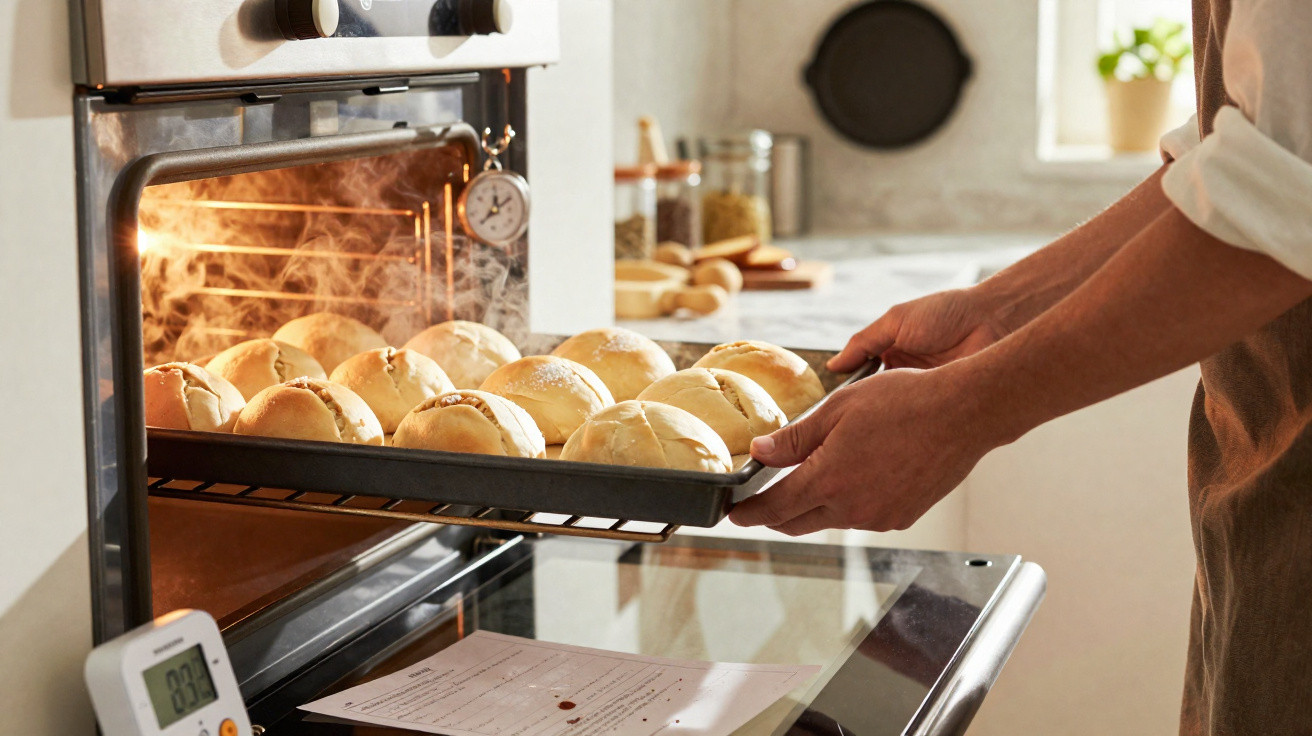
The middle position is the most flexible and reliable choice for recipes needing heat to circulate from above and below. It is ideal when you want food to cook completely without browning the base or surface too quickly.
- Cakes, sweet tarts and baked puddings that need to rise without cracking.
- Biscuits and cookies that should brown without burning underneath.
- Homemade bread requiring a properly baked crumb and an evenly coloured crust.
- Simple baked dishes in an ovenproof dish, when the recipe does not need a final gratin.
What is the upper oven rack position for?
Use the highest oven rack when the food is already cooked in the middle but needs colour on its surface. This applies to lasagne, pasta bakes, vegetables topped with cheese, shepherd's pie and dishes finished with white sauce or Parmesan.
This shelf needs close attention because the top browns quickly. Move the baking tray upwards only for the final few minutes, watch through the oven door and remove it once the surface has developed a golden crust, before the cheese dries out or becomes too dark.
When should you place a baking tray on the lower oven rack?
The lower position suits recipes requiring a firm, dry and crisp base. Since the baking tray sits closer to the lower heat source, its underside receives a greater thermal boost.
- Pizzas that need a crisp dough base and a well-baked crust.
- Savoury tarts with wet fillings, helping to prevent an undercooked bottom.
- Quiches and pies that need their pastry to set before the top browns.
- Flatbreads and focaccia, when the recipe calls for a well-marked base.
- Roasted vegetables on a shallow baking tray, when you want to brown the side touching the metal.
The right oven rack prevents undercooked, burnt or textureless food
The most common mistake is leaving the oven rack in the same slot all the time. It may work for certain dishes, but it can compromise bakes, gratins and roasts that rely on heat being directed at the base, centre or surface.
For better cooking, set the height before turning on the oven: use the centre for even cooking, the bottom for crisp bases and the top for final gratinating. This simple adjustment transforms pizza, cake, lasagne and tart without changing any ingredients, simply by making better use of the heat your oven already provides.


Comments
No comments yet. Be the first to comment!
Leave a Comment