
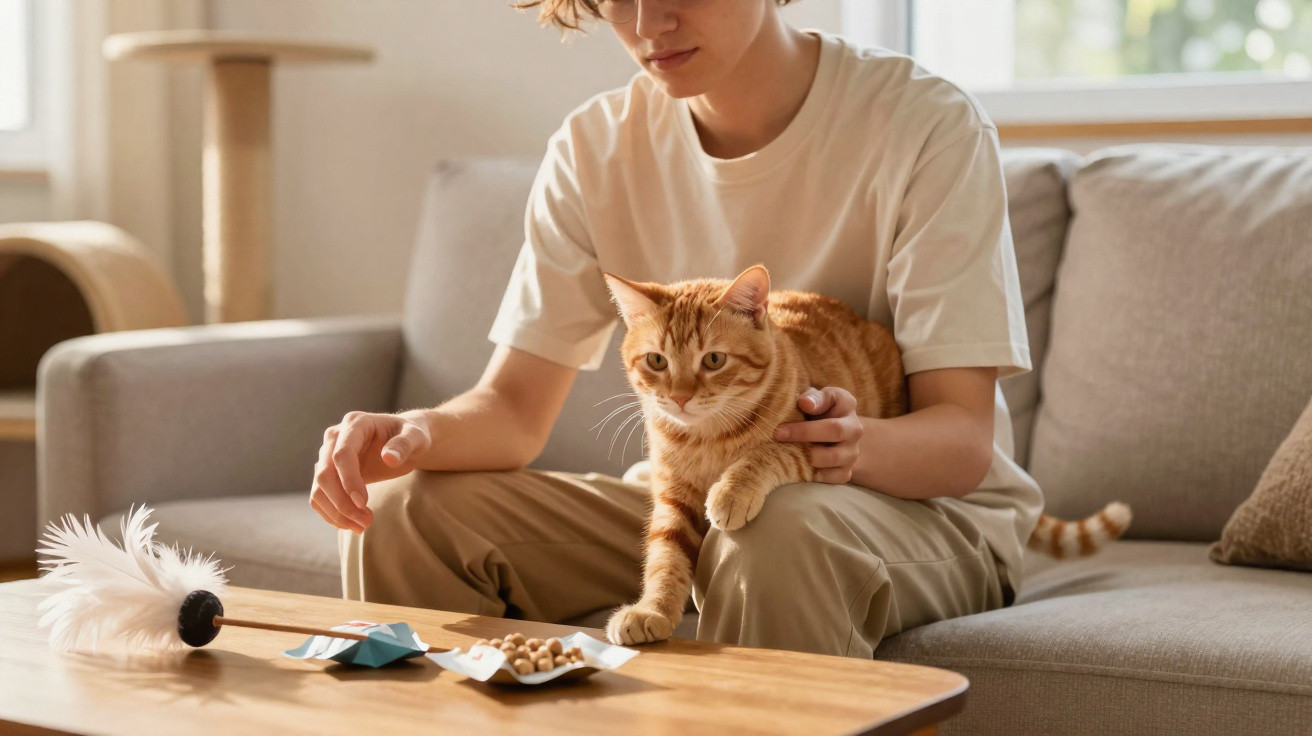
Anyone who lives with a cat will know the scenario: one moment it is in cuddly mode, and the next, claws or teeth are digging into your hand. Our instinct is to pull away, tell it off or wave our arm about. That is perfectly human – but from the cat’s perspective, it is a huge incentive. Behavioural veterinarians now recommend a completely different approach.
Why our reflex encourages the cat even more
Look at the situation through the cat’s eyes: there is a piece of “prey” moving in front of it – our hand. The cat stretches out, we stroke it, and suddenly the tension rises. Perhaps it has had too much contact, it has gone on for too long, or we have touched the wrong area. The cat snaps.
What usually happens next? We yank our arm away, cry out and perhaps wave our hand around without thinking. In doing so, we create a game that the cat finds enormously exciting.
To a cat, a twitching, squeaking hand does not mean “Stop”; it means “Keep going!”
“Fleeing” prey is especially tempting. Rapid movements, frantic twitching and a high-pitched voice all activate hunting instincts and the urge to play. What began as a brief reaction can turn into a full-on fight on the sofa.
Why telling the cat off does not help – and can make everything worse
Many owners try to correct their cat with a firm voice, a “No”, or even by shouting. That may seem logical from a human viewpoint, but to a cat it is simply noise.
Cats do not understand moral lessons. They merely notice that things have become loud, hectic and threatening. Their heart rate rises and stress hormones surge. Some animals then retreat in fear, while others bring out their claws even more determinedly.
Instead of receiving the message, “You bit me, and that is not allowed”, the cat hears: “There is excitement, danger and an attack here.” The result is often a vicious circle of stress, misunderstandings and increasingly forceful attacks.
The most effective response: stop moving, stay silent and “switch off” your body
The alternative sounds strange at first: do nothing. Yet this is precisely what animal behaviour specialists have recommended for years, and it works surprisingly well for many cats.
If the cat bites or scratches, you should:
- Stop all movement immediately
- Do not talk, shout or laugh
- Keep your hand and arm as still as possible
- Look away rather than staring into the cat’s eyes
For the cat, the exciting prey becomes a completely dull, lifeless object – and therefore loses its appeal.
Many cats release their grip within seconds because the “toy” is broken – in other words, it no longer reacts. If the cat keeps holding on, leave the situation in a controlled way.
If the cat will not let go: leave quietly
If the cat continues to hold on or immediately launches another attack, move on to step two: ignore it completely.
In practice, this means:
- Stand up very slowly, without any sudden movement
- Do not say anything or look at the cat
- Leave the room and close the door behind you
- Wait one or two minutes before returning
For many cats, losing attention is the toughest “punishment”. They wanted interaction, whether that meant play, excitement or contact. Instead, they suddenly find themselves alone in the room.
This teaches the cat that attacking does not result in fun, play or closeness, but in boredom and an end to contact. Animals need exactly this clear pattern to adjust their behaviour.
Reward rather than punishment: calm behaviour pays off for your cat
Ignoring the behaviour alone is not enough in the long term. It is equally important to reinforce calm, friendly behaviour very consistently. Cats are pragmatic: they repeat what benefits them.
This is easy to use in everyday life:
- If the cat lies calmly beside you without scratching or nibbling, offer quiet praise and perhaps one or two treats.
- If it stays relaxed while being cuddled, give it gentle strokes in its favourite places.
- If it plays in a controlled way, reward it with another round using a teaser wand or toy mouse.
By rewarding calmness, composure and gentle approaches, you can gradually build a far more relaxed relationship.
How to prevent further attacks while stroking your cat
Many cats bite or scratch because they are overwhelmed, not because they are malicious. They enjoy being touched – but only up to a certain point or only on particular parts of their body.
These everyday rules can help:
- Stroke the cat only where it visibly enjoys it, usually around the head, cheeks, neck or back.
- It is generally best to avoid the belly and paws, as many cats are sensitive in these areas.
- Keep petting sessions short and end them yourself in good time, before the mood changes.
- Take body language seriously: a twitching tail tip, tense muscles or ears held out to the sides are signs that it is better to stop.
If you repeatedly fall into the same “trap” and carry on even when the signs are obvious, you are practically inviting the cat to defend itself.
Play and exercise: preventing your cat from taking its energy out on people
Some of these problems arise because many indoor cats simply do not have enough meaningful activity. Energy levels can rise sharply, especially in spring and autumn, while their home environment remains unchanged.
Structured play sessions with suitable toys can help:
- Teaser wands that move like prey
- Balls or small fabric mice to chase
- Treat balls or dry-food search games
- Climbing and scratching opportunities that the cat is allowed to use properly
Important: hands should never be part of play. Do not encourage finger chasing or use toes under a duvet as a “mouse”. Once something has been used as play prey, the cat is unlikely to accept it as “off limits” later on.
When cat bites become a risk
Small cat teeth may look harmless, but a bite can become seriously infected. Cats’ mouths contain many bacteria that can enter deeper layers of tissue.
If you have been bitten, you should:
- Rinse the wound immediately with water
- Disinfect it and keep an eye on it
- See a doctor, ideally on the same day, if there is redness, swelling or throbbing pain
Scratch wounds usually heal more easily, but they can also cause problems. Children, older people and those with weakened immune systems are particularly vulnerable.
When you should seek professional help
If a cat attacks regularly for no apparent reason, hisses often, hides away or reacts very extremely, it is worth consulting a vet or feline behaviourist. Aggressive behaviour is often linked to pain, ongoing agitation or negative past experiences.
Some cats have arthritis, dental problems or digestive discomfort, and become irritable when they are touched in painful places. Others were poorly socialised as kittens and never learned to feel relaxed around human hands and close contact.
A professional can determine whether there is a physical cause, create training plans and provide practical strategies for everyday life.
Why self-control is the key
The hardest part does not lie with the cat, but with the person: at the crucial moment, NOT shouting, NOT flinching and consistently switching to “Stop, I am leaving now.”
Anyone who understands their own reflexes and consciously controls them not only protects their skin, but also gives the cat guidance. Over time, the cat learns very clearly: scratching and biting get me nothing, while calmness and closeness bring exactly what I want – contact, play, food and security.






Comments
No comments yet. Be the first to comment!
Leave a Comment