
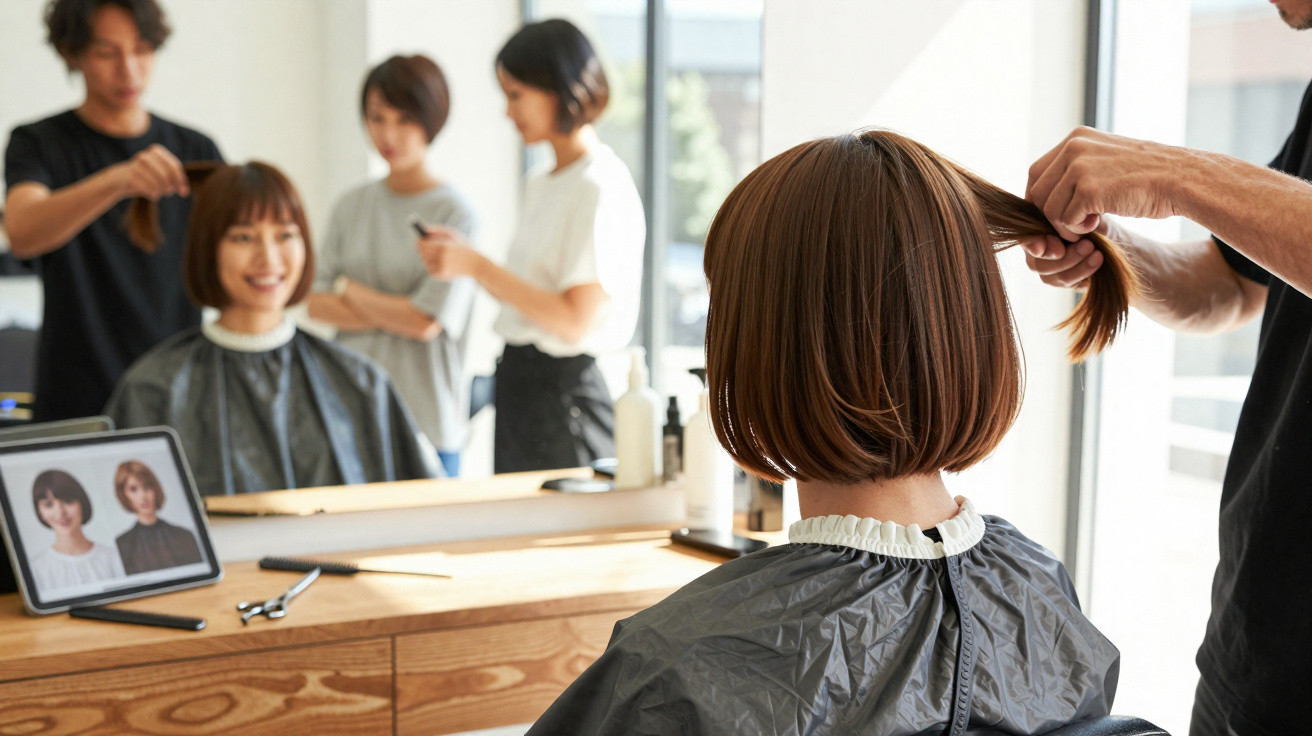
The hairdresser tipped her head to one side, combed through my hair and gave me that faintly apologetic smile. “You’ve got fine hair, but we can work with this.” I had heard those words so often that I knew them by heart. At every appointment, I turned up with screenshots of airy, bouncy short cuts. And every time, I walked out with a style that looked wonderful in the salon… before falling flat within an hour of getting home.
Fine hair has a particularly cruel way of revealing every millimetre of missing volume. Mornings are spent teasing at the roots, drying your hair upside down and messaging friends from the bathroom: “Does this look thin?” Meanwhile, somebody with thick hair can throw it into a messy bun and somehow resemble an advertising campaign.
One small adjustment can quietly change that whole experience.
The best short cuts to fake fuller hair (without 40 styling products)
For fine strands, short hair can be a powerful ally. Removing excess length takes away the weight that pulls hair down, giving your roots a new lease of life. The key is selecting a shape that creates movement and structure, rather than sitting on your head like a helmet. Four cuts stand out: the layered bob, textured pixie, French-style crop and soft shag.
Imagine a woman standing before the mirror on a Monday morning. Her old long hairstyle has been replaced by a gently layered bob that sits at the jaw. She tousles it with her fingers, gives it a quick blast with the hairdryer, and something surprising happens. Her hair lifts. The ends move rather than clinging to her jawline. At the office, nobody comments on the shorter length first. Instead, they say, “Wow, your hair looks thicker.” That is the understated power of the right structure for fine hair.
These four styles work because fine hair often has little internal support, much like a tent with too few poles. Long, blunt cuts draw the hair down into a straight, flat shape. Soft layers, subtle graduation at the back or a slightly shorter nape quite literally allow the hair to stack over itself. Light catches between the layers, creating shadows, and the eye interprets that contrast as density. It is an optical illusion, but an extremely effective one.
Cut 1 & 2: The layered bob and the textured pixie
The layered bob is the safe choice that can still feel transformative. It generally falls somewhere between the cheekbones and collarbone, although fine hair tends to look its best around the jawline or just beneath it. Request soft, invisible layers instead of obvious, chunky ones. The goal is a crisp outline with just enough weight removed to encourage lift and movement. A side parting or a long, sweeping fringe can instantly create the appearance of more volume at the front.
The textured pixie is its bolder younger sister. The back and sides are kept closer, with more length and softness left through the top. This variation in length is what produces height and volume. Picture separated, piecey strands that can be ruffled with your fingers and still hold their place. One client described it this way: “For once, my hair does something when I touch it, instead of collapsing.” On rushed mornings, it only takes a tiny amount of lightweight mousse or paste to bring it to life.
These styles operate on the same principle: they direct volume towards the areas where it has the greatest effect, around the crown and cheekbones. A defined silhouette helps fine hair because the eye no longer reads “thin”; it reads “style”. One-length blunt bobs can also work, although they require thoughtful under-layering to stop the perimeter clinging to your face. Realistically, hardly anyone gives themselves a complete salon-standard blow-dry every day. Both of these cuts remain forgiving when you simply rough-dry your hair and head out.
Cut 3 & 4: The French crop and the soft shag for effortless lift
The French crop is not just for celebrities in striped T-shirts. For fine hair, this slightly tousled, neck-skimming style can add immediate personality. It is commonly cut with gentle graduation at the back, a light, soft fringe and delicate texture around the face. Shaping the nape in slightly while leaving the top a little longer creates a natural lift at the crown. The effect is discreet elevation rather than rigid volume.
By contrast, the soft shag is like volume with a passport stamp. With its layers, curtain fringe and relaxed, lived-in feel, it suits anyone who dislikes overly polished hair. Its appeal comes from feathered ends and overlapping lengths. If your fine hair has ever felt “too clean” or “too flat”, a shorter mini shag can transform it in a day. It shifts as you walk, develops an attractive bend after sleeping, and can genuinely look better with a little texture.
Both styles embrace imperfection. They make it possible to avoid heavy styling in favour of a fast rough-dry, some dry shampoo and perhaps texturising spray. The French crop creates the impression of thicker hair through its gentle fullness at the crown. The shag relies on controlled disorder: shorter internal layers push the longer pieces outward, and this soft pressure imitates natural density. Fine hair doesn’t need punishment; it needs clever architecture.
How to talk to your hairdresser about short cuts for fine hair
The ideal short cut for fine hair begins with a proper discussion, rather than simply holding a screenshot up in front of the mirror. Bring pictures, certainly, but describe your concerns too. You could say: “My hair goes flat here,” while pointing to the crown. Or explain: “I don’t like when it clings to my jaw.” A skilled hairdresser can turn those comments into a technique, using graduation, internal layers or root texture. Ask them where they intend to create volume and where they will preserve weight, so you do not feel as though you have lost every strand.
Another sensible step is to be truthful about your everyday routine. If you spend no more than five minutes on your hair, tell them. If you own three round brushes but never touch them, admit it. That sort of emotional honesty can prevent months of disappointment. If you dislike blow-drying, request a style that air-dries well, such as a soft shag or a lightly textured French crop. If you prefer a sleek finish, a layered bob with minimal internal thinning may be your best option. Your cut should suit your life, rather than requiring you to reshape your life around it.
There are a few pitfalls to avoid, and most people encounter them at least once. Cutting the crown too short on fine hair can leave unruly tufts that will not sit correctly. Excessive thinning in pursuit of “lightness” may make the hair appear even more sparse. And constantly straightening it until it is ultra-smooth? That removes every trace of the natural bounce you do have.
“Fine hair isn’t weak hair,” says Paris stylist Léa M., who specializes in short cuts. “It just needs the right shape and light products, not punishment and heavy creams.”
- Avoid heavy oils at the roots – they drag hair down and remove valuable lift.
- Request soft internal layers rather than harsh thinning.
- Leave some length in the fringe or on top so you can create height and shape.
- Choose mousse or foam over thick serums for daily styling.
- Arrange light maintenance trims every 6–8 weeks to preserve the shape.
Living with short fine hair: daily habits that quietly change everything
After the scissors have done their job, the real test begins at the bathroom sink the following morning. This is when the right small actions matter more than any supposed miracle product. Turn your head upside down while blow-drying, concentrate on the roots, then finish by drying the hair in the opposite direction to your usual parting. That simple change gives the roots an immediate lift and brings out the silhouette your cut was designed to create.
Some people discover their volume through a new routine: washing their hair in the evening, allowing it to gain a little “crease” against the pillow overnight, then refreshing it with a quick blast of air and dry shampoo at the crown. Others use a pea-sized amount of texturising paste through the ends and mid-lengths only, preventing the hair from slipping into a limp shape. Perfection is not the aim. It is about catching your reflection in a shop window and thinking, “My hair actually looks thicker today,” without having spent three hours achieving it.
We have all experienced that moment of scrolling through photos from six months earlier and suddenly recognising how much an old style was weighing us down. Cutting fine hair short can feel daunting on the day of the chop, but a week later it can feel unexpectedly freeing when you notice how fast it dries, how well it frames your face and how it reveals your neck and shoulders. You may even begin speaking to your hairdresser more, gradually experimenting with a slightly shorter length next time, a little more texture or a fringe that once seemed impossible. At some point in that process, thickness stops being something you pursue and becomes something you create.
| Key point | Detail | Value for the reader |
|---|---|---|
| Strategic short cuts | Layered bobs, textured pixies, French crops, and soft shags create structure and lift | Practical options to discuss with a stylist for making fine hair appear thicker |
| Honest consultation | Explain how your hair behaves and how much time you genuinely spend styling it | A better chance of leaving the salon with a cut that works in everyday life |
| Light daily habits | Root-focused drying, changing direction, lightweight products and regular trims | Long-lasting volume without demanding routines or heavy products |
FAQ:
- Question 1 Which short haircut makes fine hair look the thickest?
- Question 2 Can a pixie cut work if my fine hair is also a bit flat and oily?
- Question 3 How often should I cut my short fine hair to keep the shape?
- Question 4 What styling products are best for adding volume without weighing hair down?
- Question 5 How do I explain “volume” to my hairdresser so they really understand what I want?





Comments
No comments yet. Be the first to comment!
Leave a Comment