
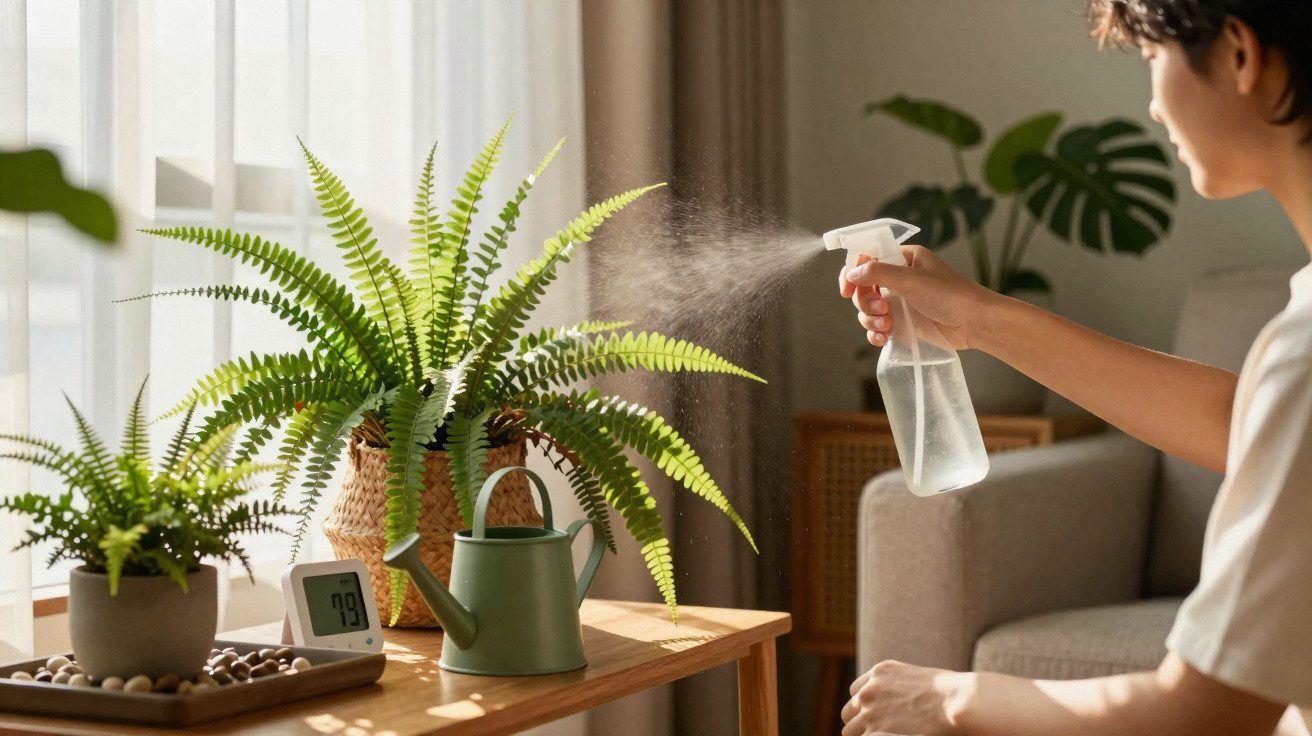
Among indoor ornamental plants, the fern stands out for the abundance of its foliage and its ability to make any corner feel more welcoming. To grow thickly and retain a healthy appearance, it needs more than occasional watering: suitable light, balanced humidity and a steady indoor temperature determine whether it remains attractive or starts drying out and shedding fronds frequently.
What is the ideal light for an indoor fern?
Bright indirect light provides the best conditions for a fern indoors. It needs plenty of daylight, but its fronds should not be exposed to direct sunshine, particularly from late morning to mid-afternoon, when rays can scorch the tips and turn them brown.
In very dark rooms, the fern stretches its new growth towards the light, producing long, thin fronds with a sparse appearance. In brighter positions, near windows with sheer curtains or frosted glass, it generally grows fuller; simple adjustments to the pot's position can often restore its vigour.
Which rooms in the home are best for a fern?
Certain rooms naturally provide soft light and good humidity indoors, helping the fern remain more stable and lush. When selecting a spot, assess both the available daylight and ventilation, while avoiding places exposed to strong draughts or sudden temperature changes.
To guide this choice, consider rooms that most closely recreate the humid woodland conditions in which this plant grows naturally:
- Bathroom with a window: combines gentle light with high humidity, keeping the fronds green and firm.
- Bright kitchen: usually offers effective ventilation and slightly higher humidity, provided the pot is not placed beside the cooker.
- Well-lit living room: large windows with curtains that filter sunlight create a comfortable, stable setting.
How do humidity and temperature affect a fern's appearance?
Air humidity is essential for keeping a fern full and even, as it favours conditions similar to those found within forests. In homes with strong air conditioning or a very dry atmosphere, the tips are likely to dry out despite regular watering, and the pot loses its “full bunch” appearance.
In general, temperatures between 18°C and 26°C encourage development, as long as they do not fluctuate sharply during the day. Intense cold below 12°C slows growth, whereas excessive heat combined with dry air makes the fronds wilted and brittle, reducing the volume of foliage.
What simple care keeps a fern looking its best?
A few practical changes can keep a fern healthy all year round, even in a flat. One useful approach is to create small, more humid microclimates by grouping plants together or using trays filled with water and pebbles, which helps prevent the fronds from drying out.
It is also worth treating the plant as an indicator of its surroundings: brown tips usually point to dry air or too much sun, while heavily yellowing fronds suggest overwatering or insufficient light. By filtering the light, moving the pot away from intense heat and cold sources, and repositioning it with the seasons, the fern is more likely to produce consistent new growth and deeper green foliage, keeping the pot full without frequent leaf drop.




Comments
No comments yet. Be the first to comment!
Leave a Comment