
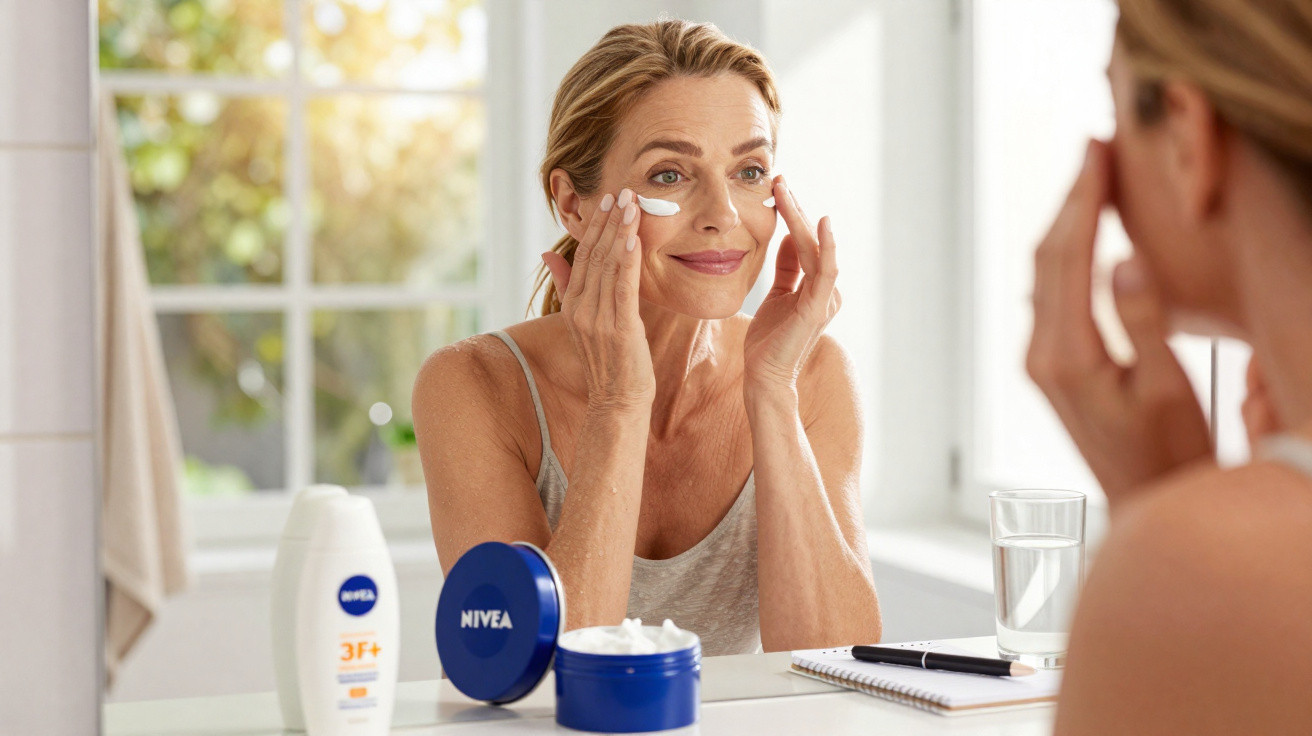
The classic Nivea Creme is currently enjoying renewed attention, with readers aged over 50 praising it for making shadows appear softer and reducing puffiness. Some of that enthusiasm is supported by science, but the outcome varies with application technique, skin type and consistency.
What is inside the blue tin of Nivea Creme
Nivea Creme uses a rich, occlusive formula that holds water within the skin’s upper layers. This hydration can plump fine lines around the tear trough and lessen the appearance of crêpey skin. In turn, that visual effect may make dark circles seem less pronounced.
| Ingredient | Role around eyes | Watch-outs |
|---|---|---|
| Eucerit (lanolin alcohol) | Keeps the emulsion stable and enhances lasting hydration | Lanolin may cause sensitivity for some people |
| Glycerin | Attracts water to the skin’s outer layer for a fuller appearance | Requires an occlusive layer to retain moisture |
| Panthenol (pro-vitamin B5) | Calms skin, helps repair the barrier and relieves tightness | Generally low risk, although patch test if your eyes are easily irritated |
| Mineral oil, waxes | Lock in moisture and reduce transepidermal water loss | Overuse of heavy textures may lead to milia |
| Fragrance | Provides scent only | May irritate highly reactive eyes and eyelids |
“Hydration is the quickest way to make fine lines and shadowed troughs look softer after 50. The trick is consistent sealing of moisture.”
How to apply for maximum effect
How you apply it is as important as the formula itself. Use very little product on clean skin, with gentle movements intended to provide light stimulation.
- Wash with lukewarm water and a gentle cleanser that does not strip the skin, then pat the area completely dry.
- When using a lightweight eye serum, such as caffeine or peptides, tap it in first and allow 60 seconds for it to settle.
- Soften a rice-grain amount of Nivea Creme between your ring fingers until it becomes thinner.
- Apply dots from the outer eye towards the inner corner, remaining 3–4 mm away from the lash line.
- Make feather-light circular motions and tiny lifting movements over the orbital bone to encourage micro-circulation.
- End with two slow presses at the temples to help relieve fluid build-up.
“Use a rice-grain amount per eye and keep a small gap from lashes to avoid migration into the eye.”
Use it morning and evening. A morning application seals in moisture before sunscreen, while evening use can aid overnight repair and leave the area less tight when you wake.
Morning routine pairing
If puffiness is your main concern, combine it with a caffeine serum. Allow the serum to absorb before applying Nivea Creme to lock in hydration. Finish with broad-spectrum SPF 30 or above, and wait two minutes before concealer to avoid pilling.
Evening routine pairing
Layer a low-strength retinol or peptide eye serum between fine layers of Nivea Creme. Start with a very small veil of cream as a buffer, apply the serum, then add a final sealing layer. This approach may limit dryness while maintaining the serum’s benefits.
What changes after 50-and what a cream can fix
Dark circles commonly have more than one cause: thinning skin, visible blood vessels, volume loss that creates hollowness and pigmentation. Hydration improves surface texture and the way light reflects from the skin, but it cannot independently remove veins, alter bone structure or clear deep pigment.
- Dehydration and fine lines: these often respond well to occlusives such as Nivea Creme and humectants including glycerin.
- Mild morning puffiness: this can improve with short lymphatic massage and caffeine serums.
- Blue-purple tone from vessels: this may require a brightening corrector, precisely placed concealer or in-clinic laser treatment.
- Brown pigment: daily SPF, vitamin C, gentle retinoids and a regular routine can help.
- Hollow troughs: fillers are often needed; skincare can only make the appearance less noticeable.
“Set goals around hydration and texture first. Use colour correction for tone, and seek professional care for hollowness.”
Who should patch test or pause
Take extra care if your eyes are highly reactive, you have eyelid eczema or you have previously had a lanolin allergy. Fragrance may sting, particularly during cold or windy weather. Before regular use, test a small amount beneath the ear for 48 hours. Discontinue use if redness, stinging or new bumps develop. Should milia appear, use it less often and choose a lighter daytime gel.
A simple 7-day plan to track impact
A structured approach makes it easier to assess both progress and results. Each morning, photograph the eye area in the same lighting before applying any products.
- Days 1–2: Use serum, if desired, followed by a rice-grain amount of Nivea Creme morning and evening; apply SPF during the day.
- Days 3–4: Add a two-minute cool compress in the morning to help reduce puffiness.
- Days 5–7: Add a pea-size amount of vitamin C to the face, avoiding the lash line, then use Nivea Creme to seal in moisture.
Look for three changes in your photographs: less crêpey texture, concealer sitting more smoothly and less morning swelling. If the skin looks shiny or your make-up slips, use a smaller amount or reserve it for night-time.
Application tweaks that make a visible difference
Store the tin at room temperature, as cold cream can pull on delicate skin. If mascara transfers, place Nivea Creme higher along the orbital bone and avoid the lower lash line. Before concealer, use a peach-toned corrector to counter purple shadows. This combination works well with a hydrating base and means less product is needed overall.
“Massage technique can matter more than product choice. Think light taps and short circles, not stretching or rubbing.”
Cost, alternatives, and smart pairings
Nivea Creme is far less expensive than specialist eye products, and a tin can last for months when only eye-area quantities are used. Its rich texture is best suited to dry or very dry skin. Those with combination skin may favour a lighter daytime gel and keep Nivea Creme for the evening. For highly sensitive eyes, fragrance-free alternatives are available: seek products marked for sensitive skin, or consider plain petrolatum as an overnight seal.
- Budget pairings: caffeine gel in the morning, Nivea Creme at night and SPF every day.
- Upgrade pairings: vitamin C in the morning, peptide or low-strength retinol at night, with Nivea Creme as a buffer.
- Make-up synergy: well-hydrated, thin skin requires less concealer, which lowers the chance of creasing.
Extra context to broaden the playbook
Sleep and salt consumption both affect how the eye area looks in the morning. Keep a regular bedtime, use a second pillow if fluid tends to collect, and opt for a lower-salt evening meal. Sunglasses that protect against UV and wind can keep eyelids calmer and reduce pigment triggers. SPF over the orbital bone is important for both colour and collagen; choose a mineral stick if cream formulas migrate.
Adapt the routine to the season. During winter, Nivea Creme’s heavy occlusive base provides protection from dry air and central heating. In summer, reduce use to evenings and rely on lightweight serums during the day. Review changes every four weeks. Skin may need 28 days of repeated hydration before its texture becomes more consistently improved, whereas pigment routines require 8–12 weeks. For more significant improvement in hollowness or vascular tone, arrange a consultation and bring notes on your routine so a clinician can personalise the next steps.






Comments
No comments yet. Be the first to comment!
Leave a Comment