
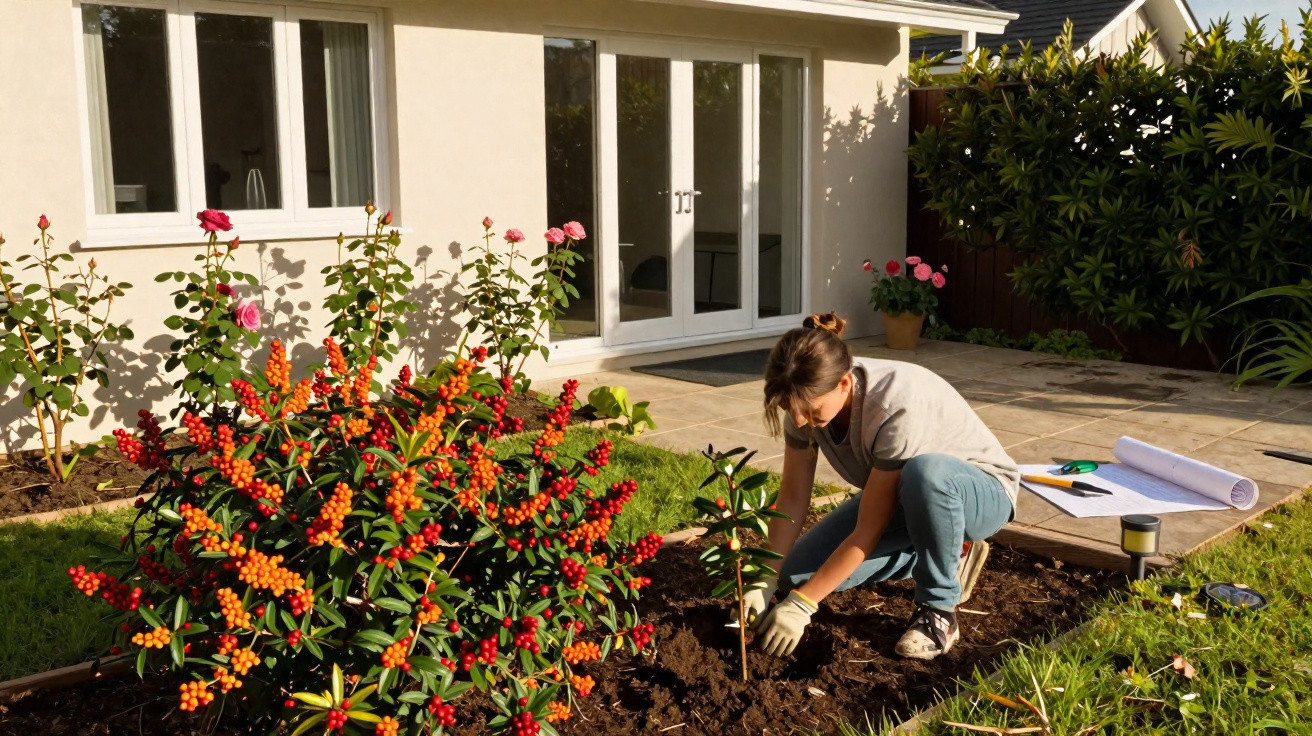
A gardening trick, however, can make things considerably more difficult for them.
Burglar alarms, cameras and security doors are what most people think of when protecting their home from unwanted visitors. The front garden is frequently overlooked. Yet it can serve as a surprisingly effective first line of defence: particularly thorny shrubs can turn the route to a window into a painful climb, while also exposing intruders through noise and physical traces.
Why garden thorns genuinely slow burglars down
Burglars look for easy targets. They want to get in and out quickly, without risking injury or making much noise. This is exactly where so-called “defensive planting” comes in. It makes access laborious, unpleasant and risky.
A dense, prickly hedge combined with crunching gravel can reduce the risk of burglary by up to half, according to security experts.
The idea is straightforward:
- Thorns tear clothing and cause pain.
- Dense branches slow down every step and movement.
- Gravel crunches loudly, making night-time visitors audible.
- Marks in gravel or flowerbeds reveal that someone has been there.
Important: plants are no substitute for an alarm system or robust windows. They supplement security technology. Letting a garden become overgrown has the opposite effect, creating ideal hiding places in the shrubbery. A clearly laid-out, well-maintained garden that remains visible from the street and is lit by motion sensors is the better option.
Four plants that create a natural defensive barrier
Four shrubs are central to this approach. They have proved effective in many gardens and are manageable in everyday care. They look at home in an ordinary domestic garden, but can feel like barbed wire to anyone trying to climb through them.
Pyracantha: a firethorn hedge as a thorny barrier
Pyracantha, commonly known as firethorn, is among the most effective “deterrent plants”. This shrub grows densely, can readily reach two metres in height and produces large numbers of long, hard thorns. In autumn, its branches are laden with bright berries, greatly enhancing its appearance.
Typical locations include:
- along boundary fences
- beneath low ground-floor windows
- beside walls that someone could climb over
For a hedge, plant firethorn roughly 50 to 70 centimetres apart. Regular pruning will create an almost impenetrable barrier within a few years. Gloves are essential for maintenance – and that applies to burglars too.
Berberis: compact prickly protection for side passages
Berberis, often called barberry, grows more compactly than firethorn and is particularly suitable for narrow passageways at the side of a house. Many varieties remain fairly low, while others develop into sturdy shrubs around 1.50 metres tall.
Berberis is especially useful for:
- blocking narrow side passages
- securing concealed access routes to patios
- filling gaps in existing hedges
Its many finer thorns make moving through the shrub unpleasant. At the same time, numerous varieties offer attractive yellow flowers and red or blue berries in autumn, allowing the security benefit to be presented in a decorative way.
Rosa rugosa: a tough thorny rose belt beneath windows
Rosa rugosa, an exceptionally vigorous wild rose, is ideal for areas directly below easily accessible windows. Its stems carry dense thorns, grow taller than many traditional bedding roses and gradually form a substantial thicket.
A broad strip of robust roses beneath a window makes climbing in so unattractive that burglars usually move on.
The plant offers several benefits:
- heavy thorn coverage
- fragrant summer flowers
- rose hips that provide food for birds
To establish a security belt, plant the roses in a broad strip below ground-floor windows. Spacing plants about 60 centimetres apart is enough to achieve dense growth.
Cherry laurel: screening in front of large glazed areas
Cherry laurel is not exceptionally thorny, but it is highly valuable as evergreen screening. Large glazed areas, patio doors and full-height windows can be attractive to burglars when they are directly visible.
Cherry laurel can create a dense, opaque screen. It removes direct views into living rooms and bedrooms. Burglars often avoid properties where they cannot see what awaits them or whether somebody is at home.
Combined with the other plants, it creates a layered security zone: thorny shrubs at potential entry points, with evergreen screening positioned in front of or behind them.
Planning a defensive garden without making it look unattractive
Nobody wants their property to resemble a fortress. With some planning, a garden can look welcoming while remaining very unpleasant for unfamiliar visitors.
One possible basic layout is:
- A cherry laurel hedge facing the street, with a strip of gravel beneath it.
- Alternating firethorn and Berberis along the side boundaries.
- A band of Rosa rugosa directly beneath vulnerable windows.
- Gravel surfacing across the main entrance and path to the front door.
Gravel serves two purposes: it looks tidy and makes every footstep audible. In quiet residential areas especially, this functions like a natural alarm.
Legal distances, child safety and maintenance requirements
Rules and day-to-day practicality also matter when planting hedges and shrubs. Many local authorities have regulations governing how close a tall hedge may be planted to a property boundary. Anyone planning planting that could grow beyond two metres should keep at least two metres from the boundary and, if in doubt, check with the local authority planning office.
Children and pets are another consideration. Highly thorny plants should not be placed directly beside:
- sandpits or play areas
- swimming pools or paddling pools
- paths used by children on bicycles
Where young children live in the household, it is sensible to clearly define thorny areas, for example with low fences or visible bed edging. The security benefit remains without a constant need for plasters.
In terms of maintenance, at least one substantial prune each year is advisable, usually in late winter. This keeps hedges dense, prevents them from blocking neighbours’ light and stops them becoming impenetrable hiding places. Put thorny cuttings straight into bags where possible – otherwise, you may still find thorns in the lawn months later.
Motion sensors, lighting and effective combinations
The plants have their greatest effect when used alongside technology. A particularly effective combination includes:
- a thorny hedge along access routes
- gravel strips beneath windows
- motion-sensor lighting at house corners and patio doors
- lockable window handles and solid doors
Anyone crawling through a thorny shrub at night, stepping onto loudly crunching gravel and then suddenly standing in floodlight will usually abandon the attempt. This psychological effect is precisely what defensive planting is intended to achieve.
There is also an interesting ecological side benefit: many of these plants provide food and shelter for birds, insects and small mammals. The garden becomes more secure while also becoming more lively. Choosing native, or at least well-adapted, varieties further supports biodiversity.
The result is a property that appears inviting from outside but is intelligently planned within: clear routes for residents and guests, and thorny obstacles for unauthorised visitors. This is particularly worth considering before a longer trip, because it is not only the front door that determines how easy a home is for burglars to enter.






Comments
No comments yet. Be the first to comment!
Leave a Comment