
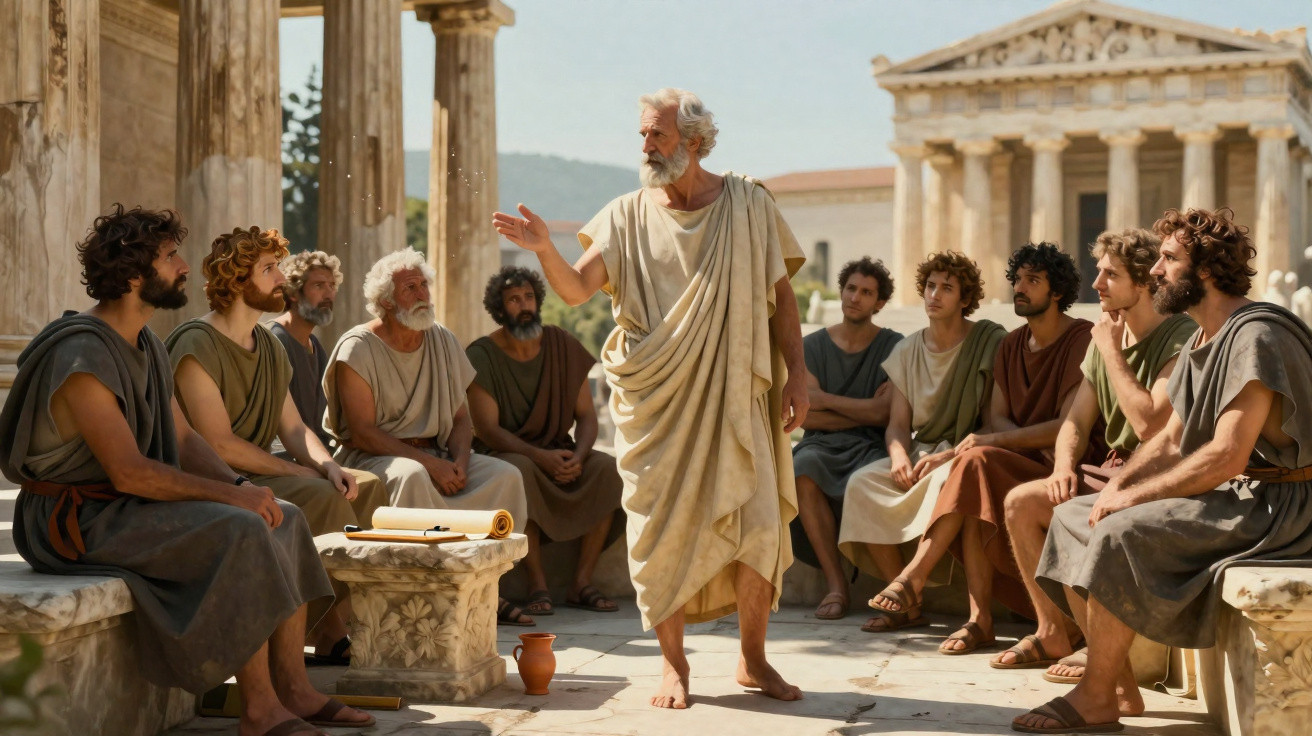
The pursuit of self-knowledge becomes more compelling when we consider Socrates’ path in Ancient Greece. The philosopher prized spoken debate in public squares as a way to dismantle absolute certainties, arguing that an examined life reshapes everyday habits and brings wisdom.
How did Socrates teach citizens in Athens?
The Greek thinker chose to share his ideas solely through spoken dialogue because he believed written records could make knowledge rigid. He moved freely through the cultural vitality of Athens, discussing ideas with ordinary residents in order to encourage profound ethical reflection.
Because Socrates never wrote any books, historians face a major obstacle in trying to understand his genuine philosophical thought. Everything now known about him rests on accounts written by others, creating the well-known and complex problem of Socratic investigation.
Why did Socrates walk through the streets questioning people?
The Greek teacher aimed to awaken knowledge in ordinary people through direct questions, but the outcome of these public conversations… Read more
What are the main sources on Socrates’ life?
Information about the philosopher comes from three principal witnesses: Plato, Xenophon and the writer Aristophanes. Each author offers an entirely distinct view of the thinker’s personality, ranging from profound idealisation to sharp criticism of Athenian society.
Whereas Plato presents a mythical figure concerned with lofty metaphysical debates, Xenophon portrays the practical application of his ideas in daily life. This striking contrast prevents modern scholars from determining with complete accuracy where the real person ends and literary creation begins.
Below is a video from the Tinocando TV YouTube channel that explores the issues discussed in this topic in greater depth:
What do the accounts reveal about the thinker’s appearance?
Historical records indicate that the philosopher had a highly unusual appearance, far removed from conventional standards of beauty. Available descriptions suggest that he wore plain clothing, had an unkempt beard and showed complete indifference towards personal vanity.
In dialogues written by Plato, the Greek teacher’s appearance is even compared with silens, mythological creatures with caricature-like features. This distinctive physical portrait reinforces the intriguing nature of a man who placed the intellect above visual standards.
Historical Perspectives
The Three Pillars of the Accounts
Discover the principal sources that documented Socrates’ existence:
- Plato and moral philosophical idealisation;
- Xenophon and practical everyday lessons;
- Aristophanes and critical theatrical caricature.
Why did Socrates’ trial make history?
The final stage of Socrates’ life came through a significant legal trial in Athenian democracy, driven by collective political tensions. The philosopher faced serious charges connected with rejecting the city’s traditional gods and the alleged ideological corruption of local youth.
This tragic verdict showed that the teacher’s questioning stance deeply troubled Athens’ governing structures and its conservative citizens. His final conviction and subsequent execution established the thinker as a major historical symbol of integrity and intellectual steadfastness.
The principal reasons given for the philosopher’s official condemnation included the following critical issues:
- Refusal to recognise the city’s official deities;
- Accusations of corrupting the minds of young Athenians;
- A widespread perception that his ideas were subversive and dangerous.
What is the true legacy of the Socratic method?
The enduring impact of Socratic philosophy lies in its encouragement of continual questioning, rejecting ready-made answers and absolute certainties. This dialectical method serves as a constant invitation to challenge established dogmas, driving the relentless search for truth and human development.
Rather than providing definitive statements to his followers, Socrates left behind valuable questions that still shape reflection on ethics and education. Debate around his ideas shows how doubt forms the basis for building critical knowledge and evolution.






Comments
No comments yet. Be the first to comment!
Leave a Comment