
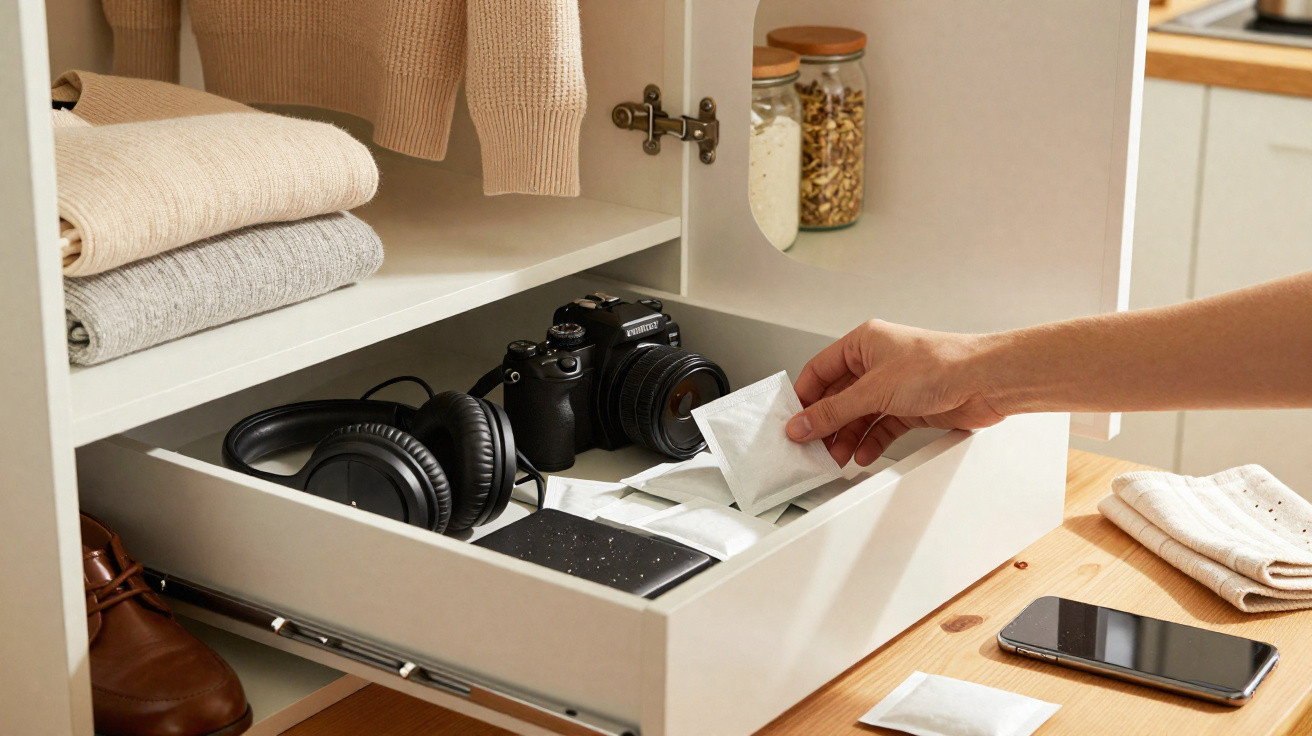
The small white sachets marked “Silica Gel” may look harmless and unnecessary. They turn up in shoe boxes, electronics packaging and alongside instant drinks, and many people automatically throw them away. That is a mistake: these unobtrusive packets can be surprisingly useful around the home, from keeping electronics dry to freshening sports bags.
What is really inside the white sachets
The little packets contain silica gel, a granulate that strongly attracts water. It removes moisture from the surrounding air and retains it within its structure, protecting delicate goods during storage and transport.
Silica gel sachets work like miniature dehumidifiers, but need neither electricity nor maintenance.
This is why they are commonly included in everyday packaging such as:
- shoe boxes, to stop leather, fabric and glue becoming damp
- boxes containing cameras, headphones and other electronic equipment
- tubs of powdered drinks, food supplements or spices
- packaging for tools, screws and metal components
- rolls of 3D-printer filament
Once a package has been opened, the sachets are often binned straight away. It is worth thinking twice, however: silica gel remains effective for a long time and can be put to highly specific use.
How silica gel sachets can save your electronics
Moisture is one of the biggest threats to electronic devices. A device does not even need to be dropped in water: a heavy downpour or a drinks bottle leaking through a backpack can be enough to damage a smartphone, camera or pair of headphones.
In many situations, the priority is to draw residual moisture out of the device as quickly and thoroughly as possible. This is where silica gel sachets can help.
Emergency steps for damp electronics
If a device has become wet, it is important to act calmly and methodically. Rice is a familiar old solution, but it works rather slowly and unreliably. Silica gel sachets are often more effective.
- Switch the device off immediately and do not charge it.
- Remove detachable parts: the case, SIM card, memory cards and, where possible, the battery.
- Carefully dab the exterior dry using an absorbent cloth.
- Place the device in an airtight freezer bag or container.
- Add several silica gel sachets - the more, the better.
- Seal the bag or container tightly and leave it for at least 24 to 48 hours.
Over this period, the granulate draws moisture from the device’s cavities and narrow gaps. Only switch the device back on when it appears completely dry, preferably at first only briefly and without a charging cable attached.
To be clear, this method cannot always rescue smartphones that were fully submerged or circuit boards that have already corroded. For light to moderate moisture damage caused by rain or condensation in a backpack, though, the sachets can substantially improve the chances.
Practical places to use silica gel every day
Silica gel works quietly in the background. Positioning the sachets deliberately can prevent mould, unpleasant smells and rust before they develop.
In bags, suitcases and electronics cases
Fine electronic equipment is now carried everywhere: handheld consoles, cameras, headphones and power banks. Moisture often builds up in bags and backpacks, especially where wet jackets, drinks bottles or sports kit are packed alongside it.
Useful places for one or two sachets include:
- the carrying case for a Nintendo Switch, Steam Deck or another handheld console
- a camera bag containing lenses and batteries
- a laptop bag or backpack
- a hard case for in-ear headphones or wireless microphones
The sachets gradually remove moisture from the air, helping sensitive electronic devices remain functional for longer. Glass surfaces and contacts particularly benefit.
In wardrobes and with shoes
Silica gel is also suitable for textiles and leather. It is especially useful in areas with little air circulation, where dampness can linger easily:
- in a shoe cupboard or directly inside trainers after exercise
- in storage boxes for winter clothes or rarely worn jackets
- in boxes holding leather belts, handbags or accessories
The sachets reduce odours and lower the risk of mildew marks. They are not, of course, a replacement for washing heavily sweaty clothing, but they can reduce dampness until those items are put on the washing line.
In the kitchen: protecting powders, spices and more
Food and drink products can also benefit from these small moisture absorbers. Anyone who frequently uses powdered products will know the issue: clumps forming and spoons sticking together.
Products that can be suitable for a sachet include:
- instant coffee, hot chocolate powder and protein shakes
- opened spice jars containing salt, granulated garlic or onion powder
- storage tubs of dry pet food
Important: silica gel sachets must never split open or come into direct contact with food. Always check that they are undamaged, and use only sachets that originally came in food packaging.
How to restore old silica gel sachets
Many people do not realise that silica gel can be reused several times. The granulate absorbs moisture until it becomes saturated. It will then no longer work properly, but can be regenerated very easily.
Regenerating sachets in the oven
Following a few simple rules can greatly extend the useful life of the sachets:
- Preheat the oven to around 120 °C.
- Spread the sachets across a baking tray, leaving space between them where possible.
- Leave them in the oven for about one hour, turning them once after 30 minutes.
- Allow them to cool completely before putting them back into containers or bags.
Heating causes the stored moisture to evaporate, effectively “recharging” the granulate.
Damaged sachets should be placed in general waste. Keep any loose granules out of the reach of children and pets.
What silica gel is made of and what to consider
Chemically, silica gel consists of silicon dioxide, a substance also found in a similar form in sand. As a granulate, it is porous and has a vast internal surface area on which water molecules can collect. This accounts for its powerful absorbing action.
Many sachets are labelled “do not eat”. Silica gel is generally not highly toxic, but it is undesirable as a foreign material in the body and may be problematic depending on any additives. A brightly printed sachet can easily resemble sweet packaging to a child, so it should never be left lying around openly.
Some versions contain colour indicators that change shade once the granulate is saturated. These sachets are often supplied with measuring instruments, tools or high-quality electronics housings. For everyday domestic use, however, standard white sachets are entirely sufficient.
More useful ideas for silica gel sachets
With a little creativity, there are further applications that can offer genuine everyday benefits:
- in a guitar case or with other wooden instruments, to reduce stress cracks caused by changing moisture levels
- in a toolbox, to prevent screws and bits from rusting
- alongside old photographic prints or important documents in archive boxes
- in a sports bag, to reduce the build-up of odours
Anyone who regularly keeps the new sachets found in boxes and packaging can gradually build up a small supply. A compartment in a kitchen drawer or hallway cupboard is enough to ensure they are ready for damp-related emergencies.
They can make a particular difference in homes with relatively high humidity, such as older properties without modern ventilation or basement rooms. They do not replace full-sized dehumidifiers, but they work locally in the places that are most sensitive: electronics, leather, powdered products and documents.






Comments
No comments yet. Be the first to comment!
Leave a Comment