
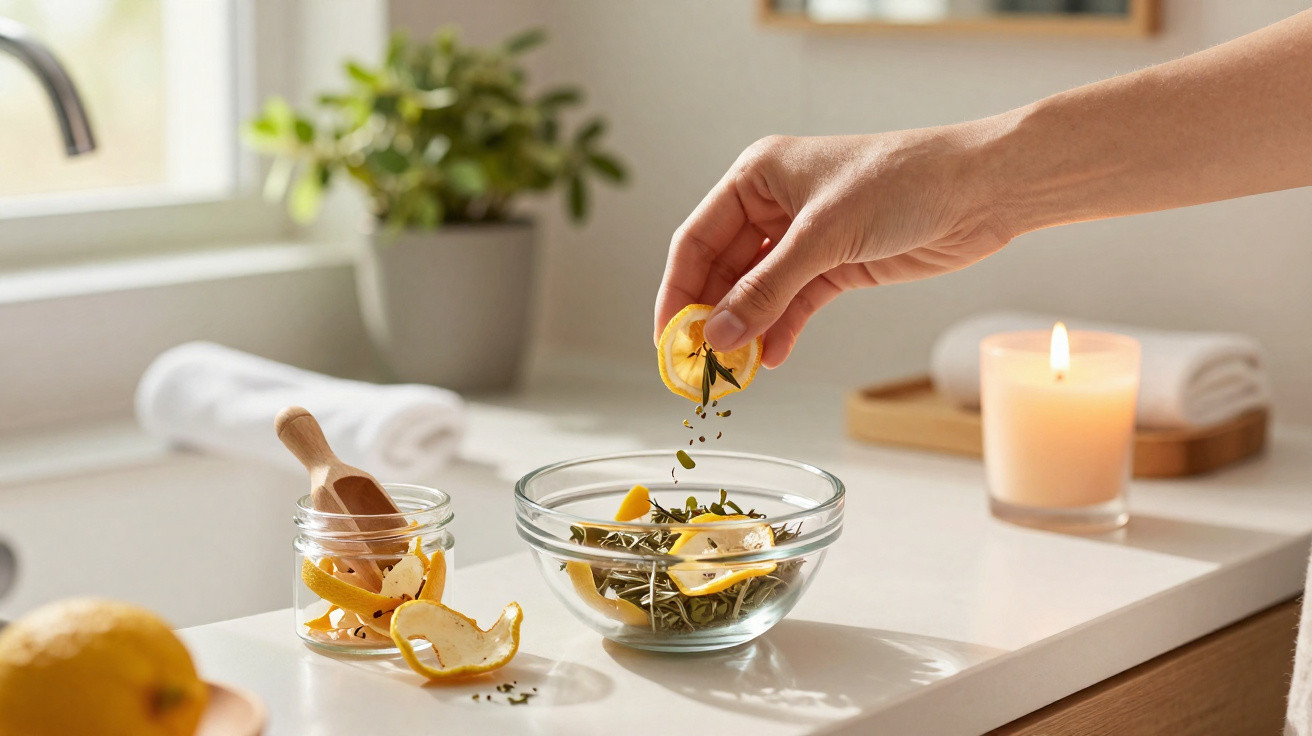
Keeping the home consistently fragrant calls for effective ways to remove unwanted smells. Using dried peels to scent the bathroom is a sustainable option that makes use of citrus essential oils to provide a continuously fresh, pleasant aroma.
Why does dried lemon peel scent the bathroom?
Lemon peel has a high concentration of limonene, a natural compound behind its intense citrus fragrance. Once the peels are fully dried, they gradually release this aroma, helping to counter humidity and neutralise unpleasant odours on an ongoing basis.
This traditional practice in homes across Portugal turns food waste into inexpensive air fresheners. Without relying on chemical aerosols, it gives the room a fresh, welcoming touch and creates a clean atmosphere using simple everyday materials.
Why carry dried lemon peel in a cloth?
The traditional Portuguese habit of keeping peel wrapped in fabric has a surprising secret for everyday wellbeing… Read more
How should citrus peels be prepared for scenting?
To dehydrate the raw material properly, slice the peel into thin pieces and spread them over a rack. Direct exposure to the sun speeds up drying, preventing the material from becoming mouldy or losing its essential olfactory properties during preparation.
If the weather is damp, use the oven on a low setting to complete the process safely. Removing all moisture is essential to preserve the oils and ensure excellent durability for the handmade air freshener when kept in small containers.
Below is a video from the JnC CORNER YouTube channel that explores the points discussed in this topic in greater detail:
What is the best way to assemble a citrus pot-pourri?
Once they have fully dehydrated, place the pieces in a small open ceramic or glass container. Ongoing air circulation allows the fragrance to spread evenly, refreshing the air in the room without overwhelming the space.
Combining peels from different fruits creates attractive, fragrant visual arrangements. Adding drops of essential oil to the pot-pourri strengthens the citrus scent, extending the feeling of cleanliness and freshness in the household bathroom with great practicality.
Essential Scenting Kit
Basic items
Essential elements for making your natural home diffuser:
- Lemon peels fully dehydrated in the sun or oven;
- An uncovered ceramic pot or glass dish;
- Drops of citrus essential oil to enhance the fragrance.
What are the benefits of using natural air fresheners?
Natural options avoid synthetic aerosols, which may cause respiratory discomfort for sensitive people. Choosing plant-based fragrances supports ongoing wellbeing, keeping the home healthy and pleasant without harsh chemicals.
Reusing fruit peel directly helps reduce organic waste from the kitchen. This alternative combines sustainability with savings, making it possible to fragrance the home with accessible materials that would otherwise be thrown away without any further useful purpose.
Main advantages of natural home scenting:
- Lower spending on commercial air fresheners;
- Sustainable use of organic kitchen materials;
- A healthier environment without the release of synthetic aerosols.
How can you keep the bathroom fragrant with ease?
Maintaining the scent requires dried peels to be replaced regularly, preventing dust from building up in the container. Refreshing the pot every two weeks ensures the continued release of oils and keeps citrus freshness at its ideal level.
Positioning the diffuser in areas with good airflow improves fragrance distribution throughout the room. A few small daily habits turn the use of peels into a practical, inexpensive and exceptionally fragrant solution.





Comments
No comments yet. Be the first to comment!
Leave a Comment