
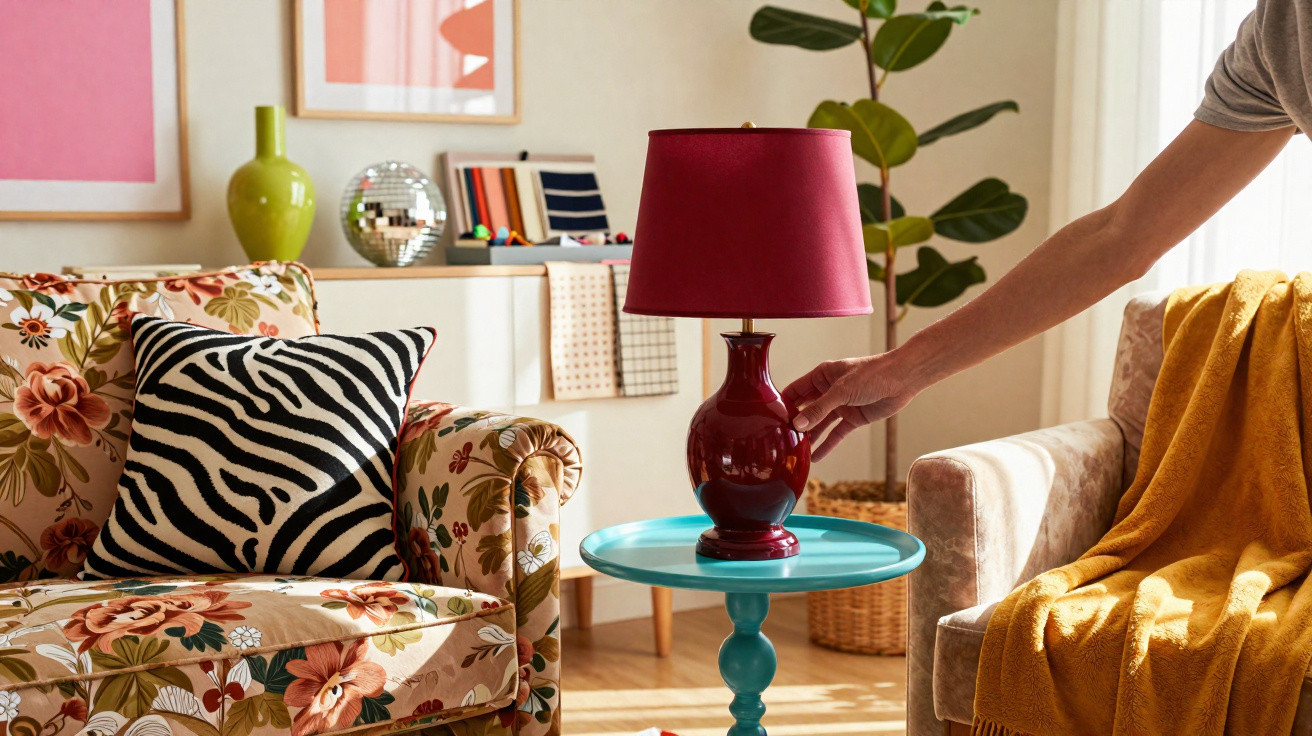
Neon cushions, competing prints and shelves packed with trinkets create a deliberately loud, nostalgic and gently chaotic atmosphere.
Following years of beige sofas and immaculate coffee tables, interiors are becoming messier, more colourful and much more individual. The audacious aesthetic that many design insiders had dismissed as tasteless is steadily returning to mainstream homes, particularly as the darker months set in.
The return of kitsch: why maximalism will not stay cancelled
For a time, the interior-design formula seemed straightforward: white walls, light timber, one quality candle and perhaps a plant that appeared to have its own content strategy. Anything brighter could be derided as cluttered or “trying too hard”. Now, however, the pendulum has moved the other way.
Maximalist kitsch, once ridiculed as “the ugliest trend of the decade”, now reads like a mood booster for anxious times.
Homeware retailers, textile labels and independent creators are seeing greater demand for saturated shades, retro motifs and attention-grabbing objects. Feeds previously filled with stoneware mugs and cream bouclé now feature cherry-red lamps, checkerboard rugs and floral sofas that would have been called “too much” just a few years ago.
Colour that shouts: how vivid shades displaced neutrals
Rather than sandy colour schemes, living rooms and bedrooms are being overtaken by richer hues. Electric-blue throws are draped over oatmeal sofas, while bubblegum pink, burnt orange and acid yellow turn up on lampshades, vases and side tables. Tableware is becoming bolder too, as mismatched plates and glasses recall 1970s party sets.
These colours are particularly effective during winter, when daylight is limited and evenings at home become longer. A dark-red rug or citrus-yellow occasional chair can offset the dull light that leaves minimalist interiors feeling chilly or vacant.
Maximalism trades “calm at all costs” for something closer to visual comfort: warmth, humour and a hint of drama.
Prints are moving in the same direction. Oversized florals, checkerboards, squiggles, leopard print and retro geometric designs are layered over cushions, curtains and bedding. The style does not require perfectly coordinated sets; instead, it thrives on contrast, pairing a proper chintz with a graphic stripe or a glossy mushroom lamp with mid-century timber.
Nostalgia with a purpose: what this “ugly” trend reveals about today
This resurgence of kitsch has not appeared by accident. It is being driven by several emotional impulses:
- Comfort through memory: granny-style florals, sweet-shop colours and glass trinkets evoke childhood houses and holiday rentals.
- Rebellion against sameness: people weary of identical “Instagram apartments” are seeking rooms that feel lived-in and distinctive.
- Visual warmth: concentrated colour and layered textiles make spaces feel more cocooning throughout long, grey seasons.
There is also a subtle rejection of the belief that good taste must mean restraint. In many cities, rents are costly, homes are compact and daily life feels intensely optimised. A slightly excessive living room allows people to relax their standards. Displayed possessions – old vinyl records, inherited porcelain or a ceramic dog from a charity shop – create small narratives and suggest that a real person lives there.
Controlled chaos: creating maximalist kitsch without ruining a room
The style’s critics fear visual overload. That danger is real, but considered decisions can stop an energetic space from resembling a prop cupboard. The aim is not to fill every available surface, but to build layers of interest while still giving the eye somewhere to pause.
Think of maximalism less as hoarding and more as curation with a softer dress code.
How to combine patterns without a headache
A straightforward framework is useful when mixing prints:
- Limit a room to roughly three key patterns, such as a floral, a stripe and an animal or geometric design.
- Connect them with a shared colour, whether that is recurring green, red or blue.
- Leave one substantial area quieter, such as plain walls or a solid-colour sofa.
Accessories carry much of the visual impact. Fringed lampshades, retro posters, striking throws and patterned cushions can alter a room more quickly than replacement furniture, and they are easy to relocate. A striped pouffe can travel between rooms, while a bright blanket can move from bed to armchair and change the mood without any renovation work.
Another practical approach is to create a “zone” for the maximalism. A reading nook, desk space or console table can hold the highest-impact pieces while the remainder of the room stays more subdued.
Texture as a safeguard: balancing gloss, fluff and solid finishes
Texture prevents loud colours from appearing one-dimensional. Juxtaposing rough, smooth, soft and glossy finishes gives the eye points of focus, helping the arrangement feel less chaotic.
| Element | Maximalist choice | Balancing partner |
|---|---|---|
| Seating | Velvet or boldly patterned fabric | Plain cotton or linen cushions |
| Surfaces | Coloured glass, lacquered trays | Light wood, rattan, unglazed ceramics |
| Textiles | Fringed lamps, shaggy rugs | Flat-weave rugs, simple curtains |
Lighting has a major influence. Warm, low-level lamps, fairy lights and coloured-glass shades soften powerful palettes and make the overall mix feel welcoming. In contrast, cool overhead LEDs can make exactly the same items appear severe and cluttered.
Should you embrace the kitsch crowd or leave it alone?
Nobody has to repaint an entire flat in acid shades to follow the trend. Maximalist kitsch can suit different budgets and levels of confidence, whether that means a single playful vase or a complete gallery wall. The larger issue is how strongly you want your home to express your personality.
Testing the waters or committing fully: two ways to try the trend
For more cautious decorators, even modest additions can change the feel of a space:
- A small collection of clashing cushions on a neutral sofa.
- A single patterned rug beneath a coffee table.
- A group of colourful candles or glass vases arranged on a shelf.
People with a greater appetite for visual drama could take a more assertive approach: removable statement wallpaper on one wall, a patchwork arrangement of framed prints, or a second-hand floral armchair used as the room’s focal point.
The point is not perfection but personality; if it makes you smile when you walk in, it earns its place.
Key pieces that transform a winter room from dull to joyful
When light is scarce and the days become repetitive, a few items often make a notable difference:
- Patterned cushions that can be switched around seasonally and layered on beds or sofas.
- Vintage-style rugs in faded florals or bold graphics to bring warmth to bare floors.
- Statement lamps with pleated or fringed shades that produce a gentle, tinted light.
- Coloured glass or ceramic ornaments that reflect lamp and fairy-light glow, creating small areas of visual interest.
One less obvious advantage of this style is that it works well with limited budgets. Rather than buying everything new, people can search lofts, charity shops and online marketplaces. Old crockery collections, floral tablecloths and unusual ceramic animals suddenly seem on trend. The object’s story can matter just as much as its appearance.
Beyond fashion: what maximalist kitsch can bring to everyday life
Interior trends usually change more quickly than most people can repaint their homes. Still, a more expressive space can bring practical benefits. A busier, more personal room may be easier to live with than one that is perfectly styled. Scuffs and unmatched glasses feel less significant when the wider setting already embraces imperfection.
This approach also supports low-pressure creativity. Moving around a group of prints, painting a picture frame in a vivid colour or making a cushion from leftover fabric turns decorating into an ongoing pursuit rather than one expensive project. Some households even make it a shared pastime, moving pieces between rooms or exchanging finds with friends as their preferences change.
There are compromises to consider. Bold patterns may date more quickly, and highly saturated colours can become tiring for some people over time. Before committing, it can help to test the look: collect all the colourful belongings you already have in one corner, live with them for a week and see whether the display invigorates you or makes you feel unsettled. This short trial often exposes your personal threshold for visual noise.
For renters, or anyone hesitant about dramatic paint, textiles and lighting provide a lower-risk option. Removable wallpaper, fabric panels displayed as artwork and plug-in wall lamps add depth without permanent alteration. Once the trend has passed, these items can be moved, stored or reused, while the home retains the confidence and playfulness that maximalist kitsch helped to release.

Comments
No comments yet. Be the first to comment!
Leave a Comment