
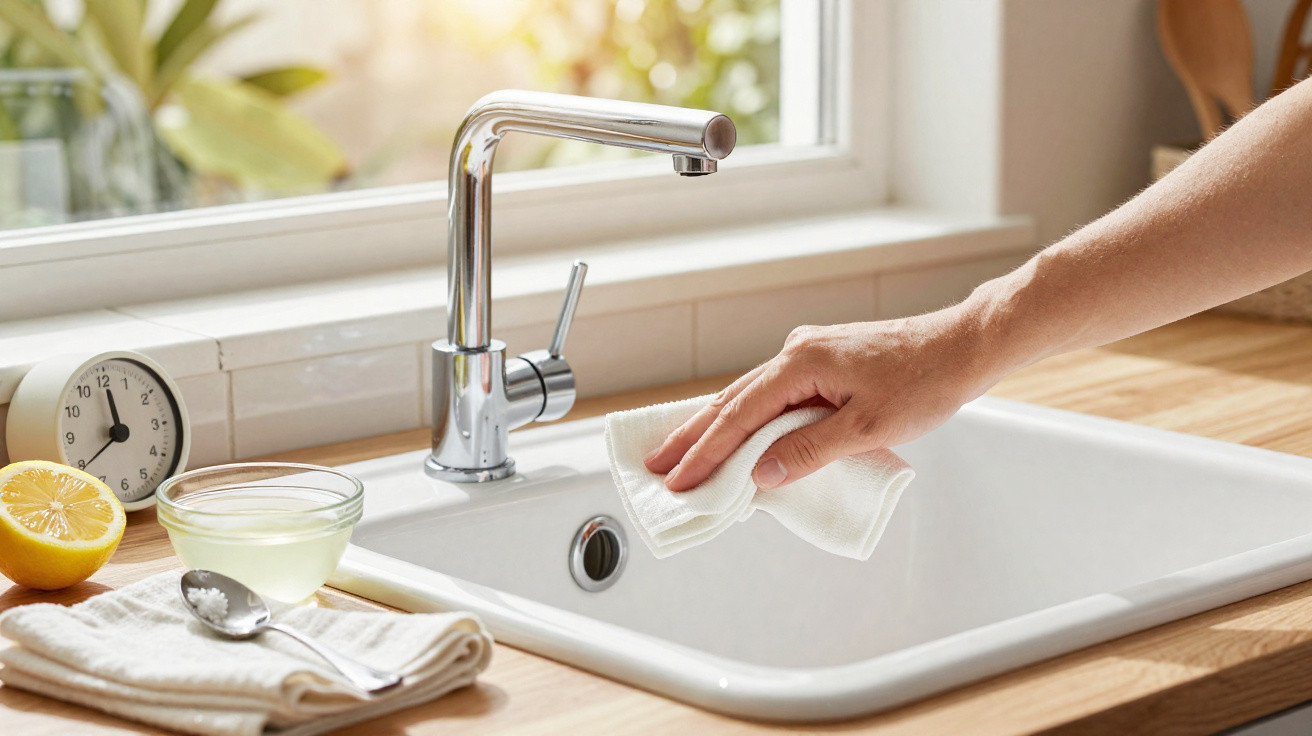
The cause is not always dirt. Often, chemistry, water and a hectic daily schedule are to blame.
Hard water can leave a coating that takes the shine off chrome and blocks aerators. Aggressive cleaning products may seem quick, but they bring fumes and expense. There is a more discreet solution in most kitchen cupboards.
Why limescale forms on household taps
In many areas of Britain, water comes from chalk and limestone aquifers. This water contains calcium and magnesium ions, which is what makes it hard.
As hard water is heated or dries on a tap, it creates calcium carbonate. This powdery residue gradually becomes a hard crust. Aerators, heat and splashing all accelerate the problem. Its uneven surface catches soap and grime, causing the dull appearance to build up further.
There is a straightforward chemical answer. Mild acids, including the acetic acid in white vinegar and powdered citric acid, react with calcium carbonate. Carbon dioxide is released as bubbles, while the deposit loosens and softens.
Hard water plus heat creates calcium carbonate. Weak acid plus time dissolves it. Patience beats elbow grease.
The health and energy angle
Limescale may look untidy, but its greatest effect is on how things work. It makes seals rougher, causes mixer cartridges to wear, makes aerators splutter and forces appliances to work hotter and longer.
A thin coating on a heating element can behave like a duvet. This insulating layer uses more energy. Shower spray may become less accurate, people leave taps running for longer, and bills gradually rise.
Strong descaling products are effective, but many contain powerful acids, fragrances and solvents. In bathrooms, these vapours are easily trapped and can remain in the air and on surfaces. Water treatment removes much of this waste, though not all of it. More households are now seeking uncomplicated products that leave fewer residues.
A gentle limescale removal method that works
1. Make a basic mild-acid solution
Pick a single method. Use white vinegar containing 8–10% acetic acid directly from the bottle, or mix citric acid powder into warm water at about 10%. Vinegar has an odour, whereas citric acid does not. Both options are inexpensive and biodegradable. There is no need to use both.
2. Apply it and allow time to work
Soak either kitchen paper or a microfibre cloth in your solution, then press it over the scaled areas. For the spout, create a small “compress” and secure it with an elastic band. Leave it in place for 15–30 minutes. Heavy scale around the base of a mixer tap can require 45 minutes. Keep the material wet, because the reaction depends on both moisture and contact time.
3. Take off and soak the aerator
Carefully unscrew the aerator and remove its rubber washer. Place the metal insert in the solution for 30 minutes. Clean the mesh using a soft toothbrush, then rinse it thoroughly. Refit the washer and tighten the aerator using two fingers rather than pliers.
4. Rinse and dry to maintain the shine
Wash the tap with clean water and polish it using a dry microfibre cloth. Drying prevents fresh water marks from developing as droplets evaporate. Ten seconds of drying produces a genuinely visible shine.
5. Be cautious with specialist finishes
Chrome and stainless steel generally tolerate short exposure to mild acids. Matte black, raw brass, PVD and lacquered finishes require more care. Test underneath the spout first, reduce the contact time and avoid abrasive products. Do not allow acids onto marble or other calcareous stone surfaces.
Do not combine acids with bleach, as this releases chlorine gas. Also avoid the “vinegar plus bicarbonate” descaling approach. Although the fizz appears useful, it neutralises the acid and makes the task slower.
Keep it simple: one weak acid, contact time, gentle wipe, thorough rinse. No bleach, no abrasives, no gimmick mixes.
- Weekly: wipe taps down and remove visible limescale spots.
- Monthly: unscrew the aerator and soak it.
- After every use: quickly dry the base and spout with a cloth.
What experts recommend for limescale on taps
Tap manufacturers advise against severe cleaning products. Finishes are made to cope with everyday use, not repeated acid attack. Their preference is for neutral or mildly acidic cleaners used with soft cloths. They also favour allowing a product to sit on the surface rather than applying force.
Chemists reach a similar conclusion. Hydrochloric acid acts quickly, but it can pit metal and produce corrosive fumes. Sulfamic acid is a powerful cleaner but is better suited to trained users. For domestic use, mild acids offer a more balanced choice when they are given enough time and rinsed away properly.
| Agent | Strength | Pros | Risks | Best for |
|---|---|---|---|---|
| White vinegar | Weak acid | Affordable, readily available, effective on taps | Strong odour, avoid stones | Routine descaling, aerators |
| Citric acid (10%) | Weak acid | Low odour, biodegradable, accurate dosing | May dull delicate finishes when overused | Regular maintenance, kettles, shower heads |
| Sulfamic acid | Medium | Quick on substantial scale | Requires PPE and careful use | Serious deposits, professional work |
| Hydrochloric acid | Strong | Very fast reaction | Metal damage, fumes, safety hazards | Not recommended for household taps |
Prevention is better than scrubbing
Tackle limescale at its source. Dry the mixer base after showering and shake the hose to remove retained water. Reduce the hot-water temperature setting by a few degrees: less heat means less precipitation.
Only consider water treatment where it is genuinely needed. Ion-exchange softeners reduce hardness, but they require salt, maintenance and precise adjustment. CO2 dosing changes the carbonate balance without salt. Cartridge filters capture sediment but do not alter hardness. Magnetic devices make many claims, yet independent testing shows mixed and often limited benefits for taps.
What this means for a busy home
A consistent routine prevents deposits from becoming thick. Mixers operate more freely, seals last longer and aerators produce an even stream, so taps do not need to be opened too far. Surfaces remain cleaner between cleans, while fewer bottles are needed and bathroom air contains less fragrance.
The energy impact is relevant too. A 1 mm layer of limescale on a heating element may increase energy use by roughly 7–10%. For a gas cylinder using 3,000 kWh a year to supply hot water, that equates to around 210–300 kWh extra. At 7p per kWh, this is £15–£21 annually. For an electric immersion heater, the same loss at 28p per kWh comes to approximately £59–£84. That represents the cost of a kettle’s worth of descaler saved repeatedly.
Extra context for British homes
Water hardness differs widely across Britain. Some parts of the South East fall within the very hard category, while much of Scotland and the North West has soft to moderately hard water. Your taps offer quick clues: a chalky kettle, marked shower glass and spluttering aerators all suggest hard water.
If you are uncertain, measure the hardness. Test strips are inexpensive, and a plumber can assess it while inspecting your fittings. Select equipment based on the results rather than marketing promises. Begin with a cloth, acid and time, then only add hardware if deposits become too much for your routine.
A manageable limescale routine
Set aside ten minutes on a Sunday. Wrap the spout, soak the aerator, clean the base, rinse everything and dry it. Set a monthly reminder for areas needing deeper attention, such as shower heads. Keep a small jar of citric acid solution beneath the sink. Within a week, you should notice fewer marks and smoother-running taps.
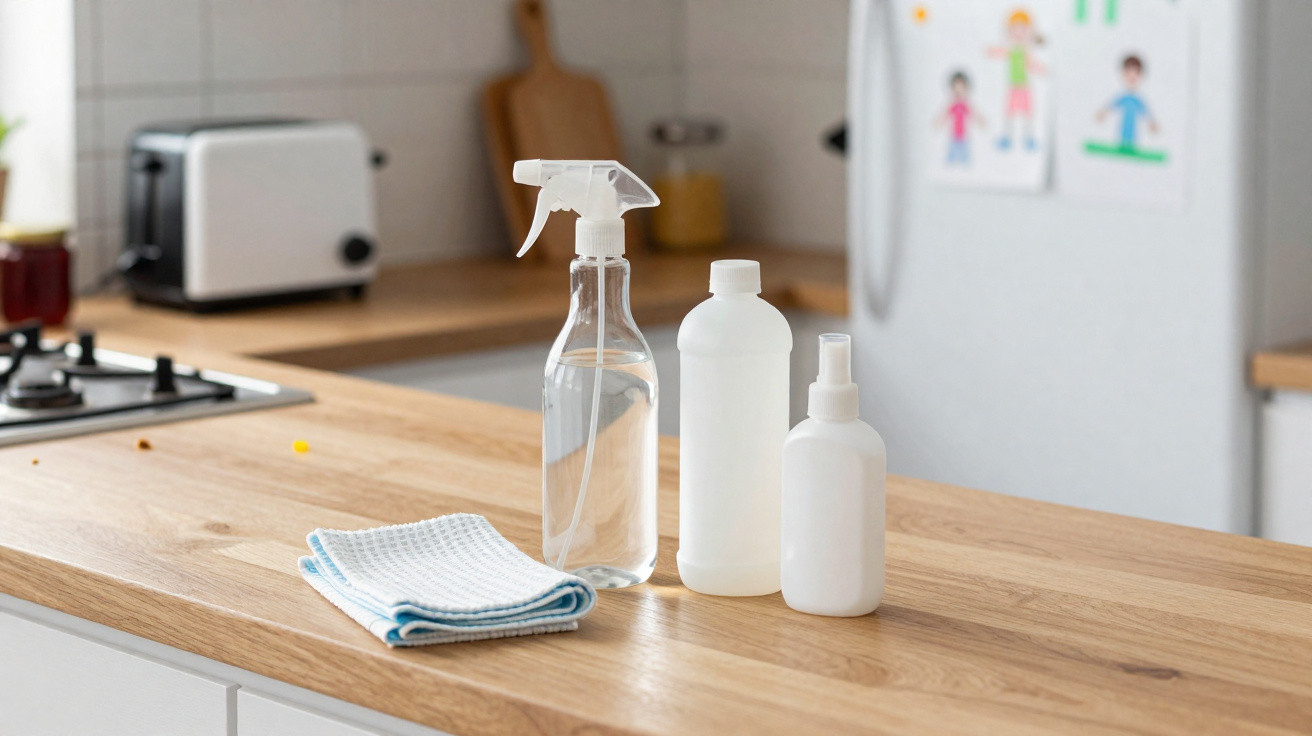
Two further habits complete the process. Alternate between two microfibre cloths so that one remains dry for polishing. Clearly label your acid spray bottle and keep it separate from bleach. This small amount of organisation prevents errors and safeguards finishes.
Shine returns when you make chemistry do the work. Short sessions, simple tools, lower exposure, lower bills.
If you prefer to measure results, make a simple before-and-after record. Time how long your shower takes to reach temperature, note whether flow is more even after aerator maintenance, and inspect kettle scale each month. Small improvements accumulate and help the habit last.
Interested in different finishes? PVD and matte coatings can look striking, but they are more easily scratched and etched than chrome. Limit acid contact, use only soft brushes and, if unsure, test an inconspicuous area before waiting a day. Patience remains more effective than force.
Comments
No comments yet. Be the first to comment!
Leave a Comment