
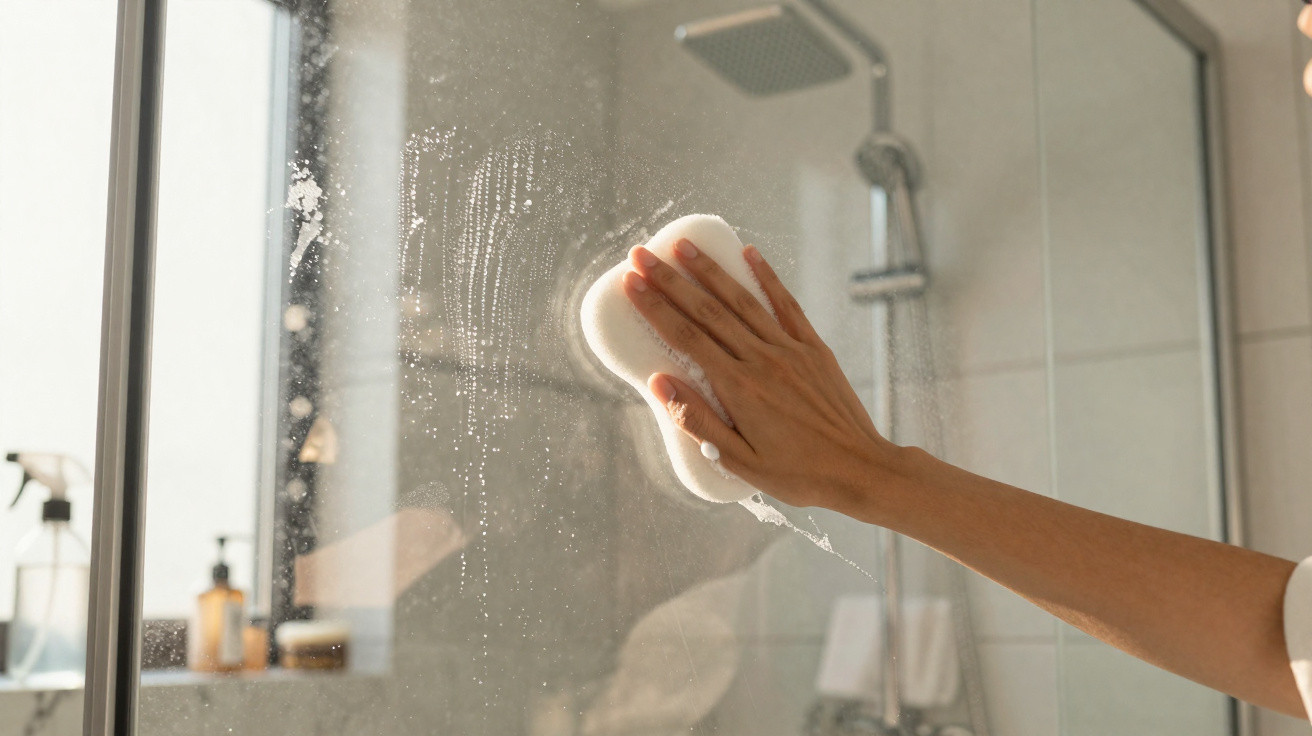
At home, shower doors rarely stay looking as spotless as they do elsewhere.
Behind those clear, streak-free glass panels is a remarkably straightforward cleaning routine used by many hotels. It does not rely on a miracle spray or industrial-strength detergent, but on an unobtrusive tool that removes limescale, soap scum and chalky white marks with little fuss.
Why shower doors become cloudy so fast
Shower screens face continual exposure to hot water, steam, shampoo and hard tap water, all of which leave deposits behind. Gradually, a fine layer develops over glass or acrylic surfaces, creating a cloudy, worn-looking finish.
The two biggest culprits are limescale left by hard water and soap residue that sticks to the surface before drying into a crust. Combined, they hold on to dirt and body oils, leaving the panel looking greasy and streaked.
A fast wipe with a sponge or ordinary bathroom cleaner often merely moves this residue about. The surface can appear cleaner while wet, yet the marks return once it dries and the glass never becomes properly transparent.
That cloudy veil on your shower door isn’t “dirt” in the usual sense. It’s a thin mineral and soap shell that needs to be gently abraded, not just wiped.
In response, many people buy increasingly powerful chemical products or scrub more forcefully with harsh scourers. This can harm seals, scratch plastic screens and irritate the skin or lungs, often without producing a result that justifies the effort.
The hotel secret: a melamine foam sponge
Hotel cleaners deal with this issue daily, so they need something fast, inexpensive and dependable across dozens of bathrooms. One tool many rely on barely stands out on a cleaning trolley: the melamine foam sponge, commonly marketed as a “magic eraser”.
What melamine foam actually does
Melamine foam is a firm polymer expanded into a very fine open-cell material. Although it resembles an ordinary white sponge, its microscopic texture is more like exceptionally fine sandpaper.
Think of melamine foam as a microscopic sanding pad: hard enough to cut through residue, soft enough to spare most smooth bathroom surfaces.
Once dampened, the foam becomes soft enough to move smoothly across a surface, while its tiny structure grips limescale, soap scum and greasy deposits. Rather than chemically dissolving the build-up, it carefully shaves it away.
Its abrasive effect is finer and more controlled than that of a green scourer. On many shower glass and plastic surfaces, it can lift years of residue without creating noticeable scratches. This is why hotels use it on walls, switches and doors as well as in bathrooms.
How to clean a shower with the sponge
You do not need a cupboard packed with products to test this method at home. The routine is simple:
- Rinse the shower walls with warm water to clear away loose grime.
- Run the melamine sponge under the tap, then squeeze out surplus water.
- Work over the glass or plastic using small circular movements, concentrating on white streaks and dull areas.
- Rinse the panel again to remove the loosened residue.
- Finish by drying it with a microfibre cloth or rubber squeegee to prevent streaks.
The same sponge can also be used with plain water on taps, shower heads and soap dishes. When the foam begins to break up and becomes thin, discard it and replace it with a fresh one.
No harsh sprays, no strong smells, and less contact with irritants for anyone who has sensitive skin or asthma.
An approach cheaper and gentler than chemical cleaners
Bathroom cleaning shelves are filled with descalers, anti-limescale sprays, “glass renovators” and strong gels. Although many are effective, the cost soon mounts up and they frequently contain harsh ingredients. Melamine sponges take a different approach: rather than adding more chemicals, they change the cleaning tool.
| Classic bathroom cleaners | Melamine sponge method |
|---|---|
| Relies on acids and detergents | Relies on very fine mechanical abrasion |
| Needs repeated spraying and rinsing | Works with plain tap water |
| Often has strong fragrances | No added scent or fumes |
| Costs build up with multiple products | Sponges are low-cost and multi-purpose |
For budget-conscious households, replacing three or four specialist cleaners with a pack of melamine sponges may noticeably lower annual cleaning costs. There are no heavy bottles to keep, and no danger of a child or pet accessing corrosive liquids.
From an environmental perspective, using fewer chemical cleaners sends less surfactant, fragrance and preservative down the drain. The sponge is still plastic-based, so it is not a completely “green” option, but it uses only a small amount of material without extra cleaning agents.
Where it works brilliantly – and where caution is needed
Because melamine foam acts as a fine abrasive, it works exceptionally well on certain materials but can be too harsh for others. Knowing which surfaces are suitable is important.
Good candidates for melamine sponges
In a bathroom, it usually works particularly well on:
- Untreated or standard shower glass panels
- Acrylic or plastic shower walls and trays
- Ceramic tiles and grout lines affected by soap scum
- Chrome taps and shower heads with light limescale
- Mirrors marked by fingerprints and dried splashes
Always begin by testing an inconspicuous small area. If the surface turns dull or develops streaks that cannot be washed away, stop and use a milder cleaning option.
Surfaces that need extra care
Certain coatings are considerably softer. On these surfaces, the tiny sanding action can cause lasting cloudiness:
- Anti-limescale coated glass or “self-cleaning” glass
- High-gloss acrylic bathtubs and basins
- Delicate plastic screens with a very shiny finish
- Natural stone like marble or limestone
If you rent your home and are unsure about the glass type or coating, carry out a brief test near the bottom of the panel, where any marks are less likely to show.
One simple rule: if the manufacturer warns against abrasives, treat melamine foam as an abrasive and test very gently, or skip it.
Keeping shower glass clear for longer
The hotel method can restore clarity, but everyday habits help preserve it. Once you have deep-cleaned with a melamine sponge, a quick regular routine can slow the return of that milky film.
Two habits have the greatest impact:
- Using a rubber squeegee on the glass after every shower to remove water droplets.
- Keeping the bathroom door or window open to improve ventilation and speed up drying.
When water is not left sitting and drying on the surface, minerals have fewer opportunities to adhere. This leads to less limescale and reduces the need for intensive scrubbing.
A closer look at what is on your shower door
For anyone tempted to accept a permanently cloudy shower screen, knowing what is attached to the glass can provide useful motivation.
Limescale consists mainly of calcium carbonate, which is left behind as hard water evaporates. Soap scum combines soap, skin oils and minerals. Together, they create a rough coating that catches bacteria and mould spores. This explains why some panels feel slightly “grippy” when you run a finger over them.
Removing that layer is not just cosmetic. It limits places where microbes can cling and grow in a warm, humid bathroom.
In a family home, where children use the same shower, clean panels and seals can also help limit the stale odour that develops in neglected bathrooms, even when the floor appears clean.
When a hotel-style trick suits everyday life
Picture a typical Sunday: you plan to clean the bathroom, spot the cloudy shower door and quietly decide to put it off. The thought that the job will take ages is often more daunting than the cleaning itself. A basic melamine sponge changes that equation. There are no bottles to arrange or powerful fumes to contend with, only a small block and tap water.
For people in a shared flat, it can be an equally practical solution. Not everyone is comfortable using bleach or strong descalers, whereas a neutral white sponge is generally acceptable. Keeping a pack close to the shower, and agreeing that whoever notices fresh white streaks spends two minutes using the sponge, can keep the glass almost hotel-clear with very few disagreements.
Comments
No comments yet. Be the first to comment!
Leave a Comment