
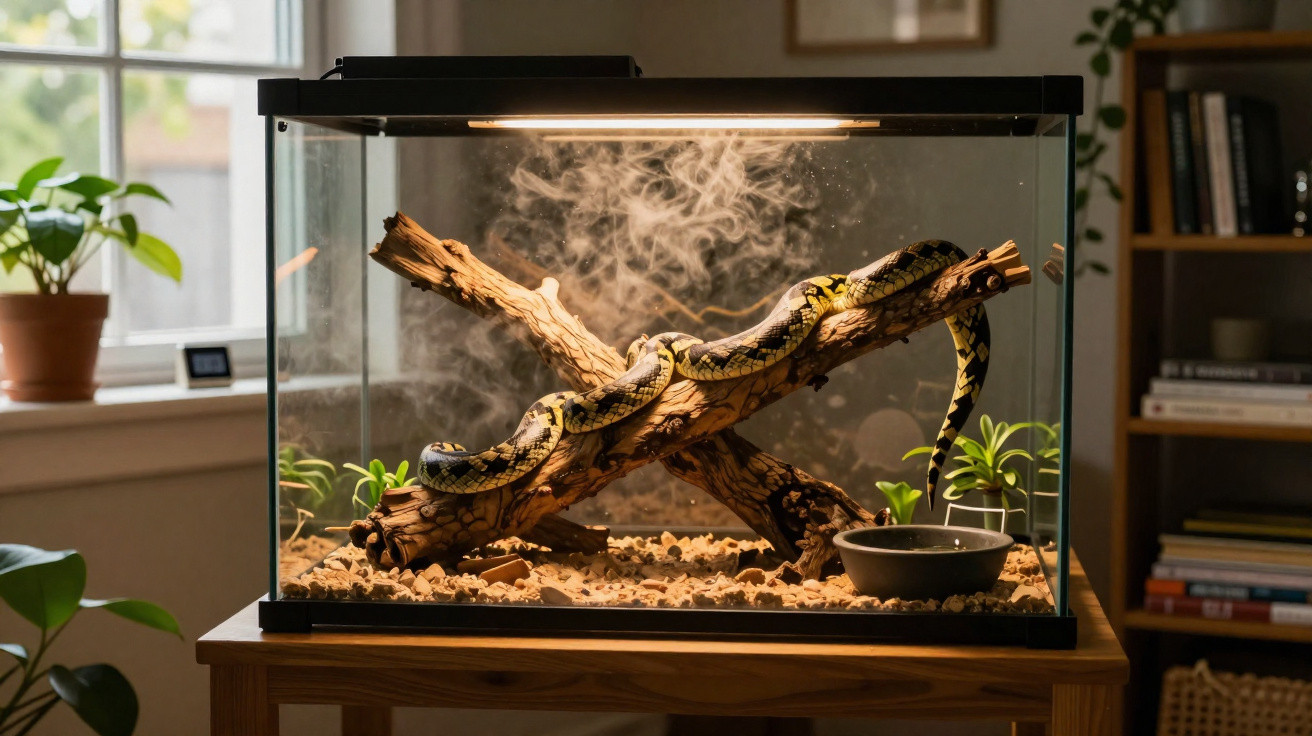
Keeping a boa constrictor in a home setting calls for close attention to details that can easily be overlooked. How the terrarium is arranged, where it is positioned in the house, and the management of light, temperature and humidity all directly affect the animal’s growth, behaviour and health. These factors can also help prevent stress, reduced immunity and feeding issues.
Where to position a boa constrictor indoors to support growth
Before selecting the best room for a boa constrictor, it is worth remembering that this is a cold-blooded reptile and relies entirely on its surroundings to regulate its body temperature. Draughts, sudden temperature changes, unsuitable lighting and constant noise can all interfere with the animal’s development and appetite.
A quiet room with limited footfall from people and other pets is best, such as a spare bedroom, a rarely used study or a secluded part of the living room. Avoid placing it near entrance doors, windows exposed to strong winds, busy hallways, kitchens with powerful smells and open balconies, where weather conditions can change quickly.
How to arrange the height, lighting and structure of a boa constrictor terrarium
The height at which the terrarium is kept affects both thermal comfort and safety. Placing the enclosure on racks, sturdy shelving or dedicated stands helps keep it away from a cold floor, makes daily checks easier and lowers the chance of vibrations or falls, provided that the support is stable and properly levelled.
Direct sunlight is not needed and may overheat the glass. Instead, the aim is to recreate a natural-like light and dark cycle, with around 10 to 12 hours of daylight each day. Use the room’s lighting and suitable lamps, but never aim them harshly at the animal. There should be brighter areas as well as more subdued spaces, allowing the boa constrictor to choose where it wants to rest.
Watch a video on the Cultivando YouTube channel about the main watering, lighting and ideal substrate techniques for keeping your pothos plants healthy and well developed:
The ideal temperature and how to keep a boa constrictor’s environment stable
Providing the right temperature is one of the foundations of keeping a boa constrictor in captivity. The terrarium should have a thermal gradient: a warmer side for digestion and activity, and a cooler side for resting. This lets the animal move between areas according to its needs at different times of the day or night.
The room itself also has an impact on temperature control, which is why many keepers choose spaces with a relatively stable climate. Several practical measures can make a considerable difference when organising the enclosure and avoiding harmful fluctuations:
- Keep the terrarium away from air-conditioning units, powerful heaters and fans blowing directly towards it.
- Prevent direct sunlight from shining on the terrarium glass for many consecutive hours.
- Fit thermometers at different points to monitor the internal temperature gradient.
- Use reptile-specific heat sources, such as lamps or heat mats controlled by a thermostat.
Extra care that helps a boa constrictor grow stronger and healthier
Once the location in the house has been chosen and the lighting and temperature have been adjusted, the internal layout of the terrarium completes the ideal setup. Hides, branches, climbing supports and an appropriate substrate provide security, reduce stress and encourage more regular feeding habits, while also supporting smoother shedding.
Humidity, cleanliness and feeding must also be monitored carefully. Maintaining suitable humidity levels, particularly during sheds, removing faeces and leftover food regularly, cleaning the substrate periodically and offering prey suited to the boa constrictor’s size at regular intervals all support more consistent development. Careful observation of its behaviour, appetite and shedding pattern makes it possible to spot changes promptly and seek specialist help when needed.
Comments
No comments yet. Be the first to comment!
Leave a Comment