
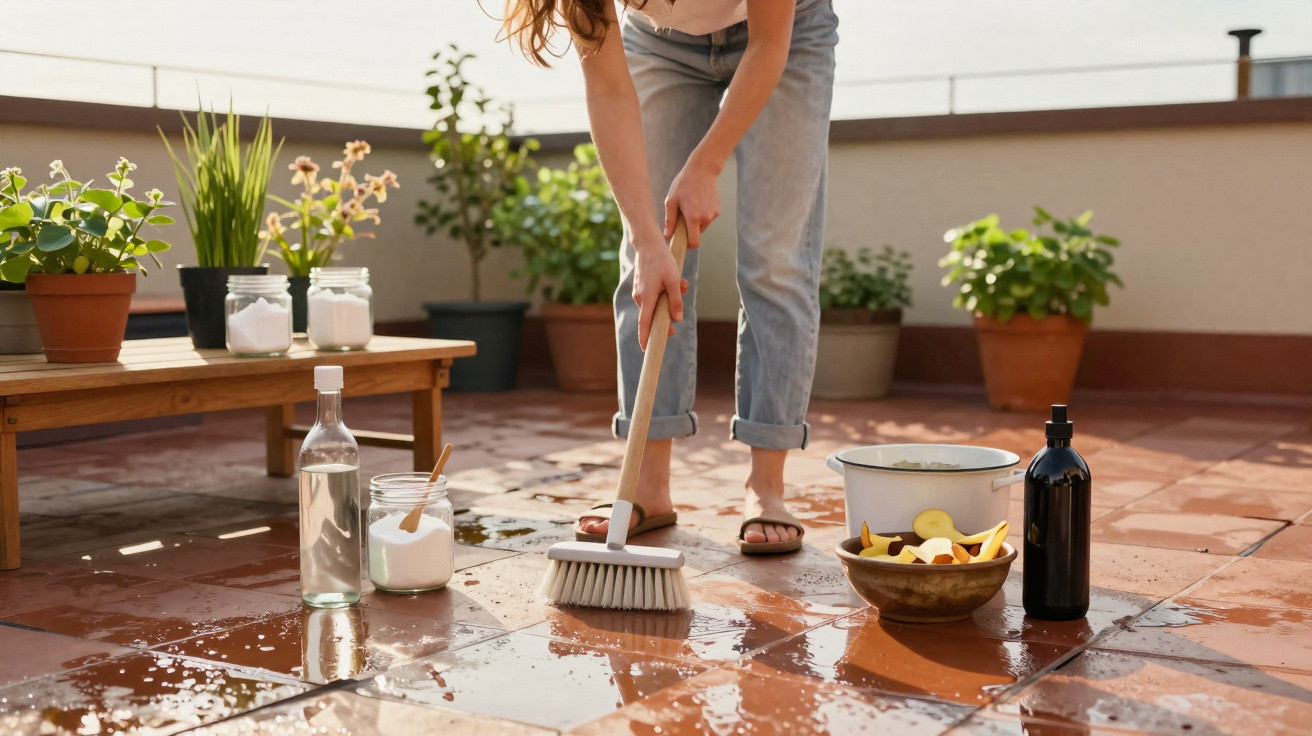
After the first warm days, stepping onto the patio can come as a shock: an area that still looked reasonably tidy in autumn may now appear dull, stained and even slippery in places. Many people instinctively reach for harsh chemical cleaners from the DIY shop. Yet simple household remedies can clean outdoor spaces while being kinder to the material, the environment and your budget.
Why harsh chemicals can do more harm than good on a patio
Chlorine-based cleaning products may work quickly, but they come at a considerable cost. Their highly corrosive action can damage joints, bleach and make surfaces brittle, and eventually finds its way into the soil or drainage system. Natural stone, concrete slabs and delicate jointing mortar are particularly vulnerable to permanent damage.
"Anyone who scrubs with aggressive products every spring risks their patio ageing far more quickly than necessary within just a few years."
There is also the fact that moss and surface growth return if the underlying causes - moisture, shade and dirt - remain unchanged. Combining natural cleaners with regular maintenance is a much more sensible approach.
Five natural helpers for a patio that looks newly laid
1. White vinegar: the classic solution for green surface growth
White vinegar - often sold in supermarkets as cleaning vinegar or household vinegar - is among the most effective household remedies for patios. Its acidity breaks down limescale deposits, algae and green growth without harming most materials.
- Mix vinegar and warm water in a 1:1 ratio.
- Apply the mixture generously to dirty areas using a watering can or spray bottle.
- Leave it to work for 15–30 minutes, avoiding direct sunshine.
- Scrub firmly with a deck scrubber or brush.
- Rinse thoroughly with clean water afterwards.
Take care with marble, limestone and highly sensitive natural stone: make the mixture weaker and test it in an inconspicuous spot first.
2. Bicarbonate of soda / baking powder: a gentle abrasive effect for stubborn stains
When moss and grime have worked deep into the pores of concrete or stone, vinegar alone is often insufficient. Bicarbonate of soda or ordinary baking powder provides a mild abrasive action that helps lift deposits without scratching the surface as a wire brush could.
Use it as follows:
- Lightly dampen the affected sections.
- Sprinkle bicarbonate of soda or baking powder generously over them.
- Add a small amount of water to create a paste-like layer.
- Leave it for 10–20 minutes.
- Rub in circular motions with a stiff deck scrubber.
- Rinse with plenty of water.
This method often delivers surprisingly good results on barbecue oil residues or dark marks on concrete slabs.
3. Black soap: gentle cleaning with a protective film
Liquid black soap made from vegetable oil has become a popular all-purpose cleaner in many homes. On patios, it cleans thoroughly while remaining gentle, making it ideal for routine care and lightly soiled surfaces.
To use it:
- Add a few tablespoons of black soap to a bucket of hot water.
- Apply it across the patio with a deck scrubber or mop.
- Allow it to work for a few minutes.
- Brush once more, then rinse with water or simply wipe over lightly.
Its grease-cutting properties remove dust, light moss residue and general dirt. At the same time, it leaves behind a thin protective film that makes slabs less prone to fresh soiling.
4. Potato cooking water: using leftovers against moss
It may sound unusual, but potato cooking water can be remarkably effective. The starch it contains has a mildly loosening effect on moss and green deposits.
Correct use is important:
- Pour the still-hot, unsalted potato water directly over the affected areas immediately after cooking.
- Leave it for 10–15 minutes.
- Work over the area with a brush.
- Rinse with water so that no sticky residue remains.
This approach is especially suitable for smaller patios or for treating individual corners where moss collects heavily.
5. Washing soda: powerful help for heavily soiled areas
Pure washing soda (sodium carbonate) is considerably stronger than bicarbonate of soda, so it should be used carefully but without fear. It breaks down stubborn deposits, old grease residues and dark layers of dirt on robust surfaces such as concrete or rough stone slabs.
"Only use washing soda where the surface is genuinely heavily soiled - and always wear gloves."
Application guidance:
- Dissolve around 1–2 tablespoons of washing soda in 1 litre of hot water.
- Apply the solution and leave it to work for 10–20 minutes.
- Keep it away from plants, as washing soda is strongly alkaline.
- Brush thoroughly.
- Rinse extremely well with water until no residue is left.
This method is not recommended for polished natural stone, wood or delicate tiles. For these surfaces, homeowners are better off using milder products such as black soap.
Keeping your patio cleaner for longer after the spring clean
Understanding the causes of moss and dirt
Moss thrives where conditions remain damp, shaded and rich in organic matter. Dense trees, areas behind building edges and spaces around guttering create ideal conditions. Other contributing factors include:
- Fallen leaves that are left in place and rot.
- Pollen, soil and dust collecting in joints.
- Constant moisture from drip edges, leaking gutters or planters.
Keeping these factors in mind makes it possible to act specifically: keep drains clear, inspect gutters and position large plant pots so that they do not continually release water onto the same spot.
Routine rather than a major effort: small maintenance tasks, big results
The best approach is not to leave dirt in place for months at a time. A regular mini-cleaning schedule saves a great deal of work in the long run.
| Interval | Task |
|---|---|
| Weekly | Sweep and remove leaves and loose soil. |
| Monthly (during the season) | Lightly mop with warm water and a little black soap. |
| Spring / autumn | Carry out a thorough clean with vinegar or bicarbonate of soda, depending on the surface growth. |
Anyone who keeps up these simple routines will reach the point where the entire patio is green and slippery far less often.
Common patio-cleaning mistakes
One frequent mistake is using a pressure washer incorrectly. Excessive pressure, holding the nozzle too close to the surface or repeatedly treating the same area can wash out joints and roughen slab surfaces. As a result, dirt settles again even faster.
Further issues arise when:
- Cleaning products are used at far too high a concentration.
- Salt is spread liberally to deal with ice and snow.
- Harsh products are applied near flower beds and damage plants.
Lower pressure, a greater distance from the surface and, where possible, a combination of a brush and natural cleaners are preferable. It may take a few extra minutes, but it protects both the patio and the environment.
Which household remedy suits which patio
Not every patio tolerates every product equally well. It is worth taking a quick look at the material first:
- Concrete and paving slabs: tolerate diluted vinegar, bicarbonate of soda and, in moderation, washing soda.
- Ceramic and porcelain tiles: generally robust, but take care around joints; use vinegar only when diluted.
- Natural stone (for example limestone and sandstone): be very cautious with acids; black soap and bicarbonate of soda are better choices.
- Timber decking: avoid aggressive alkaline products and strong acids; use a mild soap solution followed by a suitable care oil.
If in doubt, test every method on a small, hidden area first. This helps prevent discolouration or dull patches.
Extra tips for a safe, well-kept patio
Slippery surface growth should be taken seriously, particularly in households with children or older people. Damp mossy areas can quickly become a trip hazard. Once cleaning is complete, inspect steps, edges and transitions, as dirt is particularly likely to gather there.
Non-slip mats are useful at frequently used access points or by the patio door. For smooth tiles, a specialist non-slip coating available from DIY retailers may also be worthwhile.
Anyone who enjoys barbecuing or spending long summer evenings with friends on the patio should make a "mini-clean" part of the routine after every occasion: wipe grease splashes around the barbecue with a little black soap, brush drink stains briefly and clear away food leftovers. This avoids having to laboriously remove hardened stains from the previous year in spring.
Ultimately, a few well-chosen household remedies, some physical effort and a little routine can turn a patio into a clean, safe and inviting favourite place for spring without relying on harsh chemicals.




Comments
No comments yet. Be the first to comment!
Leave a Comment