
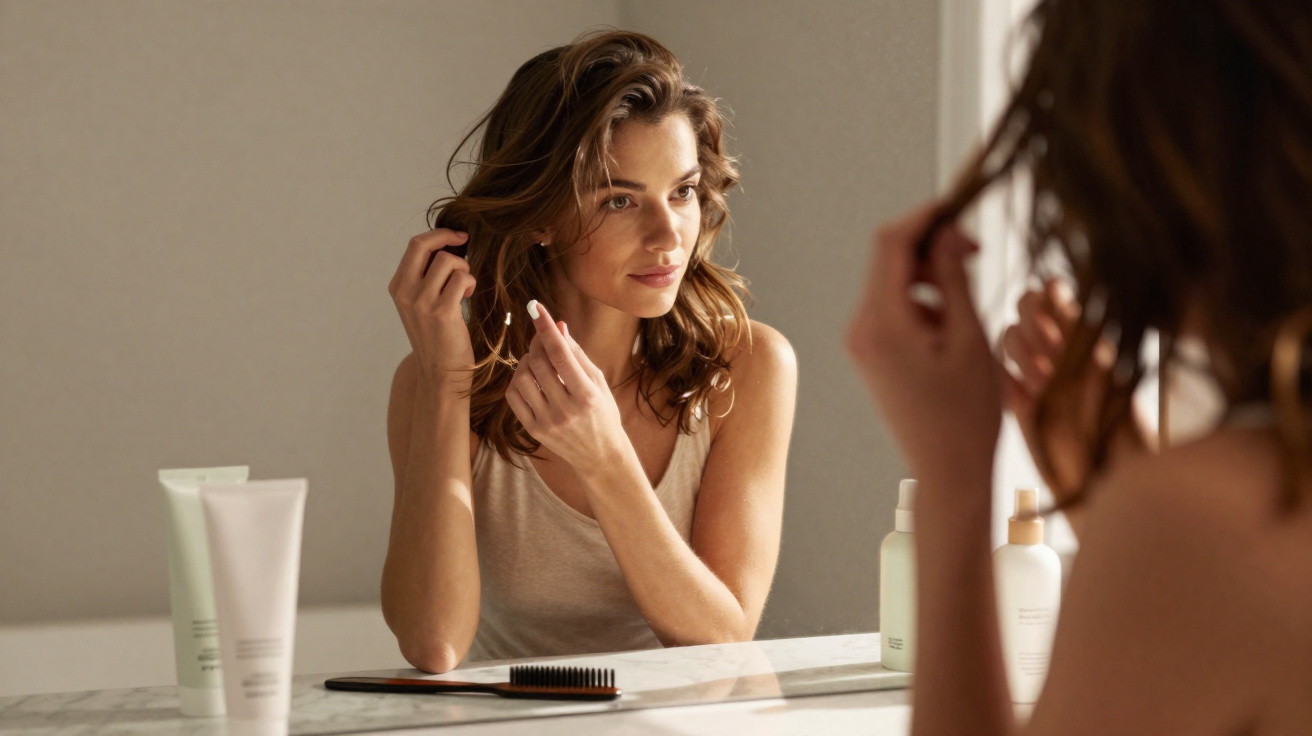
Even when hair is clean, moisturised and neatly styled, a few flyaway strands can still appear. Before reaching for a series of styling products, a simple trick may help: use a tiny amount of leave-in styling cream on damp hands and apply it only where frizz is most noticeable.
Why use so little leave-in styling cream?
If the aim is simply to tame raised strands, using too much styling product can cause a different issue: hair that feels weighed down, lacks movement and looks greasy. A small amount is usually enough to smooth the hair’s surface without coating the lengths in product.
The water on your hands makes the cream easier to distribute and lowers the concentration placed on one area. This creates a thinner layer over the flyaways, which may improve the finish without requiring another wash or a full restyle.
How can you use this trick without weighing hair down?
Lightly dampen your hands and dispense a very small amount of leave-in styling cream-less than you would normally use to style your entire head of hair. Rub your palms together until the product is almost undetectable, then gently glide them over the areas with raised strands.
- Dampen your hands only; do not soak your hair while touching it up.
- Use a minimal amount of cream and distribute it thoroughly between your palms.
- Lightly run your hands only over the strands that are sticking up.
- Avoid adding multiple layers, so that you do not lose natural movement and volume.
Your movement should be gentle, as though your hands are only smoothing the hair’s outer surface. There is no need to press, rub or tug at the strands. If frizz remains after the first application, add an almost unnoticeable amount rather than beginning with too much product.
Which areas of the hair benefit from application?
This method works best as a targeted touch-up. It can be used on flyaways at the crown, along the sides or on small sections of the lengths, while avoiding areas that are already smooth and do not need more styling cream.
The technique can also help at the ends when only a few strands are out of place, although the hair texture should be considered. Fine, straight hair generally becomes weighed down more easily, whereas curly, coily or drier hair may cope slightly better with small amounts of cream.
Watch the video shared by the YouTube channel Ficando Gata, which offers tips on how to comb your hair correctly.
When can this method leave hair feeling heavy?
The main indication of excess product is an immediate loss of lightness after application. If strands become stuck together, look oily or lose volume, too much cream was probably used. That is why starting with a tiny amount is more effective than attempting to fix hair that has been overloaded.
The product type is another factor to consider. Very thick creams, or those intended for intensive styling, may require even more careful dosing. Those with fine hair can simply touch strands with hands that have almost no product left on them, instead of making several passes over the same spot.
When is this quick touch-up worth trying?
The technique is particularly useful on days when hair is already styled but a few strands begin to lift because of humidity, wind or friction from clothes and pillows. In these situations, a localised touch-up can restore the finish without adding several products to your routine.
If frizz appears halfway through the day, there is no need to cover your whole head of hair with styling cream again. Dampen your hands, use as little as possible and focus only on the flyaway strands. This quick step can retain movement and prevent an attempt to smooth the hair from leaving it all feeling heavy.





Comments
No comments yet. Be the first to comment!
Leave a Comment