
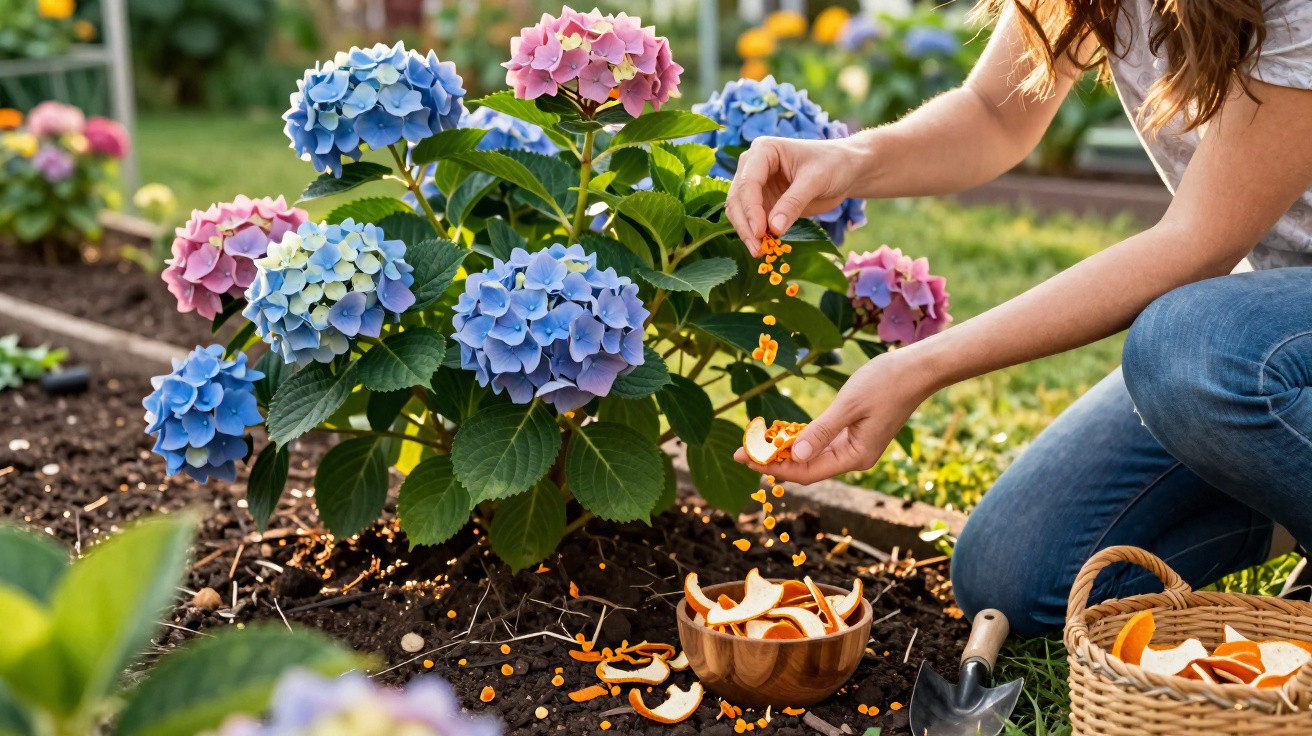
Anyone heading into the garden in summer with high hopes expects their hydrangeas to be covered in dense, vividly coloured flower heads. Yet the reality is often yellowish foliage, smaller blooms and colours that appear rather lacklustre. Before buying expensive specialist fertiliser, it is worth considering a simple kitchen leftover that can be surprisingly beneficial for these shrubs.
Why hydrangeas are so sensitive to soil conditions
Hydrangeas are classic plants for acidic, bog-like soils. They thrive when the soil is slightly acidic, with a pH of roughly 5 to 6. However, soil in many gardens contains plenty of lime, which can upset the nutrient balance.
The effects soon become obvious:
- Leaves turn pale green or yellow while the leaf veins remain darker.
- Shoots stay thin, grow less and look unstable.
- Flower heads remain smaller and are often produced less abundantly on the shrub.
This does not necessarily mean that the soil contains no nutrients. In overly alkaline soil, the roots struggle to absorb iron and potassium in particular. This is where the kitchen leftover can help gradually move the soil towards a “hydrangea comfort zone”.
The surprising helper: dried orange peel
Orange peel, which would otherwise be casually thrown into the food-waste bin, can become a quiet ally in the ornamental garden. It is mildly acidic, contains minerals and offers an additional benefit.
“Dried orange peel acts as a mild, natural fertiliser for hydrangeas – while also helping to make the soil more acidic.”
The peel contains, among other things:
- Potassium – supports flower formation and sturdy shoots
- Nitrogen – promotes strong, green foliage
- Magnesium – important for chlorophyll production
- Calcium – helps with cell formation and root development
This combination suits plants that prefer mineral-rich yet slightly acidic soil. Compared with highly concentrated fertiliser products, orange peel works gradually and gently. As a result, the risk of over-fertilising can be reduced considerably.
How to prepare orange peel properly for hydrangeas
Simply throwing fresh peel beneath hydrangeas often leads to disappointment: the pieces can easily go mouldy, attract insects and rodents, and break down slowly. The key is to dry the peel first and crush it afterwards.
Step 1: Dry thoroughly
First, dry the orange peel completely. Two methods are particularly suitable:
- In the sun: Spread the peel in thin pieces over a tray or rack and place it somewhere warm and airy. It should feel hard and brittle when ready.
- In the oven: Put it on a baking tray and dry it slowly at a low temperature, around 50–70°C, with the oven door slightly open.
Only fully dehydrated peel can be stored without problems and without becoming mouldy. Anyone who eats citrus fruit regularly can collect the dried leftovers in a jar until there is enough to process.
Step 2: Crush finely
Once the peel is dry and hard, it is ready for the next stage. The smaller the pieces, the more quickly they release their contents into the soil.
Suitable tools include, for example:
- an old coffee or spice grinder attachment
- a powerful blender
- a pestle and mortar for smaller quantities
The peel can be processed into either a coarse granulate or an almost powder-like consistency. Both forms work, although powder distributes more evenly through the soil.
Using orange peel around hydrangeas: when, how often and how much?
Applying it in the garden is straightforward and takes only a few minutes:
- Make a loose circle around the hydrangea’s root area in the top layer of soil.
- Scatter the orange-peel powder thinly over this area, without pressing it directly against the stem.
- Work it lightly into the top one to two centimetres of soil.
- Water thoroughly afterwards so that the nutrients are carried down towards the roots.
As a general guide, a small handful of powder is enough for a medium-sized shrub. Apply it once a month throughout the growing and flowering season, from around March until the end of August.
“A monthly application is sufficient: more orange peel offers hydrangeas no added benefit and may upset the balance in the soil.”
Double benefit: fertiliser and natural pest protection
Orange peel does more than provide nutrients. It also contains a fragrance compound that many pests dislike, chiefly d-limonene.
Its strong citrus scent can deter certain insects. The following are especially noticeable in their response:
- various ant species
- some aphid species
Dried, crushed peel therefore creates a light “scent barrier” around hydrangeas. It is not a replacement for treatment when pest pressure is severe, but it can offer support when ants move towards the buds or aphids settle on young shoots.
This method can also be used for other acid-loving ornamental shrubs, including:
- rhododendrons
- azaleas
- camellias
- heathers and blueberries
What gardeners should keep in mind
As with any home remedy, it pays to stay observant. A few points can prevent frustration in the flower bed:
- Use untreated peel where possible: Residues from plant-protection products on citrus fruit can end up in the soil.
- Do not spread large pieces: They can quickly attract wasps, slugs or mice and are more likely to become mouldy.
- Check use alongside other fertilisers: Anyone already applying specialist hydrangea fertiliser regularly should use orange peel sparingly.
- Monitor the soil: In very acidic soil, too much additional organic acidity can also stress the plants.
If in doubt, use a simple DIY-store pH test. This makes it easier to judge whether the soil needs further acidification at all or is already within a suitable range.
How orange peel affects hydrangea flower colours
Many hydrangea enthusiasts know the method of using a specialist blueing treatment to shift pink varieties towards blue. This depends on the interaction between pH level, aluminium availability in the soil and the characteristics of the variety.
Orange peel alters the pH only slightly and slowly. It is therefore better suited to:
- improving the plant’s overall vigour
- encouraging stronger foliage and more stable shoots
- making the existing flower colour appear clearer and more intense
Anyone aiming for a particular flower colour should continue using products designed for that purpose. The orange method is more useful for supporting the shrub’s basic health and, indirectly, the appearance of its flowers.
Why kitchen waste is becoming appealing for many gardens
Organic leftovers such as coffee grounds, eggshells and citrus peel are routinely placed in food-waste bins or compost in many households. For garden owners, however, they represent an opportunity to replace part of the fertiliser products they would otherwise buy.
Orange peel adds another advantage: its scent deters some insects without the need for chemical products. Particularly in densely built-up residential areas with small gardens, there is growing interest in natural solutions that are easy to put into practice.
So, when peeling an orange on a winter evening in future, it may be worth thinking ahead to the following summer. A few minutes spent drying and crushing it can turn an unremarkable kitchen leftover into a quiet helper that makes hydrangeas more resilient and visibly supports their blooms.


Comments
No comments yet. Be the first to comment!
Leave a Comment