
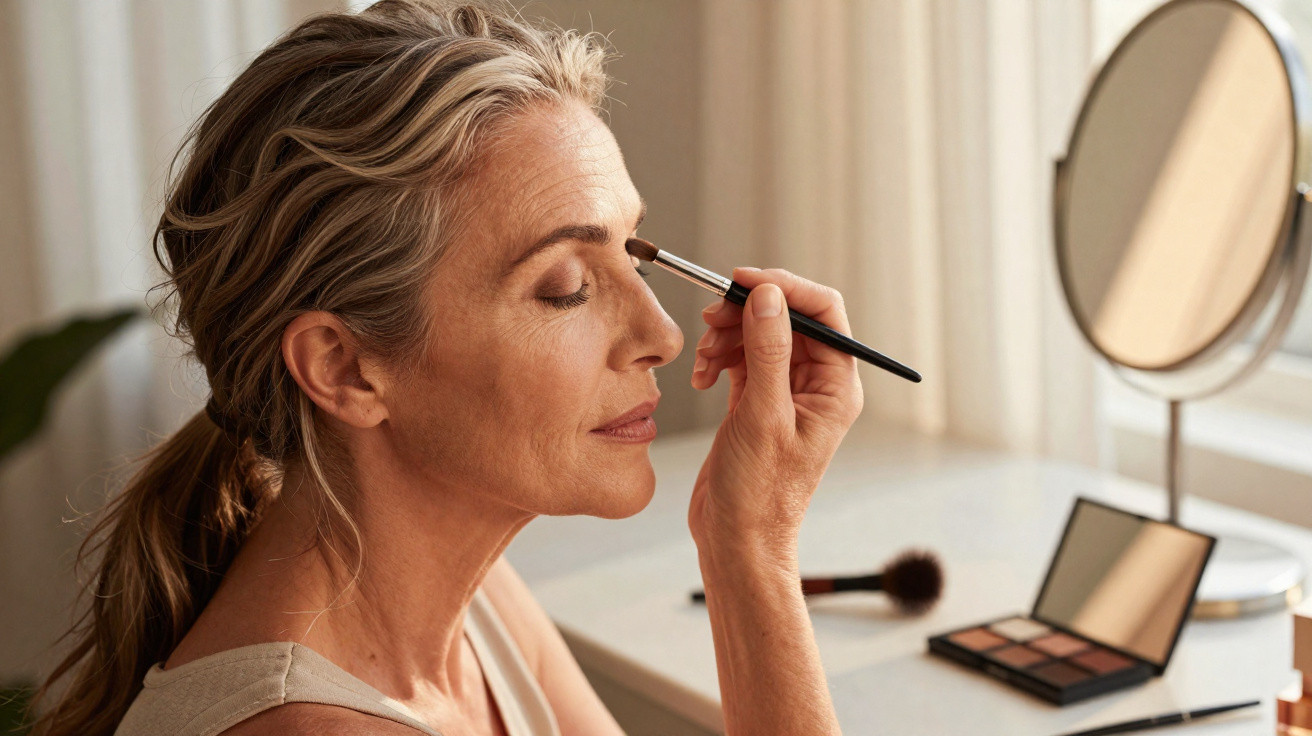
Using eyeshadow on the eyebrows can create a softer finish on mature skin, particularly when the hairs have become less dense and small sparse patches have appeared. Rather than outlining them with a highly pigmented pencil, this method builds colour gradually, follows the hairs’ natural shape and offers greater control over makeup intensity.
Why can eyeshadow look more natural on eyebrows?
Its powder texture fills small areas without forming one continuous line around the eyebrows. When used sparingly, eyeshadow creates the appearance of added density between hairs and blends easily, which is helpful when avoiding an overly defined result is the aim.
This level of control matters on mature skin, where a very dark or graphic outline can draw more attention to the makeup than to the hairs themselves. Makeup artists recommend retaining the existing brow shape and filling only the necessary gaps, building up the shade in fine layers.
- Choose a matte eyeshadow or one with a subtle finish;
- Begin with only a small amount of product on the brush;
- Focus on filling the areas where hairs are missing;
- Blend before deciding whether more pigment is needed;
- Avoid turning the brow edge into a harsh line.
How should the hairs be prepared before applying makeup?
Brow gel can be applied first to brush the hairs into place and clearly reveal any sparse areas. Positioning each hair in the preferred direction makes it easier to see which sections genuinely need eyeshadow. This approach also prevents you from filling areas that already have enough density.
Which eyeshadow shade prevents an overly heavy expression?
The eyeshadow should complement the hair colour and the desired finish, without necessarily matching a very dark tone. Browns, greys and shades close to the eyebrow colour generally make gradual application easier. The key practical rule is to begin with a lighter shade, increasing intensity only where it is needed.
An angled brush helps place pigment precisely in targeted areas, while a clean brush or spoolie can soften away excess. Since eyeshadow does not immediately deliver the same intense coverage as some pencils and pomades, any mistakes are also easier to blend out.
- Do not start with the darkest colour in the palette;
- Use the angled brush with a minimal amount of eyeshadow;
- Add more definition where sparse patches are present;
- Keep the front of the eyebrow more diffused;
- Blend any area that looks too strongly defined.
Why does the direction of the eyebrow tail matter too?
Alongside the product selected, the way the hairs are brushed affects the outcome. One guideline used by makeup artists is not to extend the eyebrow tail too far downwards, instead directing it subtly towards the temple. This gives a more lifted visual line without needing to draw a new shape onto the skin.
- Brush the hairs before filling them in;
- Follow the eyebrow’s natural arch;
- Do not overextend the outer end;
- Use only enough brow gel to keep the hairs in position.
Fine layers create the most natural effect on mature skin
The key is not simply replacing a pencil with eyeshadow, but changing how the makeup is built. On mature skin, applying small amounts of pigment, assessing the result and blending before adding another layer lowers the risk of eyebrows looking overly dense or artificial.
Eyeshadows can work well for this purpose when their colour and finish are suitable, although eyebrow-specific products, fine pencils and gels can also give natural-looking results when applied lightly. The aim is to retain existing hairs, fill less dense areas and keep the edges soft, so the eyebrow blends with the rest of the makeup rather than becoming the most prominent feature on the face.





Comments
No comments yet. Be the first to comment!
Leave a Comment