
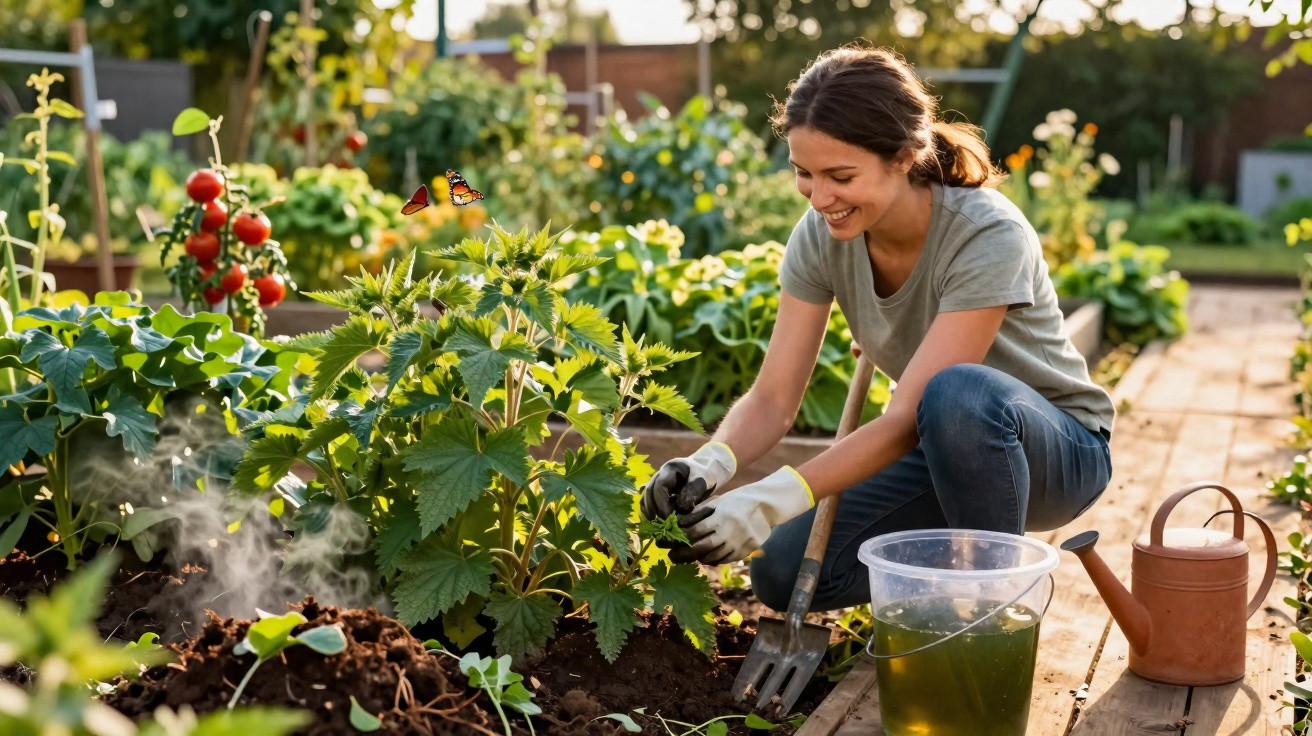
Many amateur gardeners instinctively pull up nettles as soon as they appear in a flowerbed or vegetable patch. That reaction is understandable if you are thinking of stinging hands or children with red welts. Yet removing nettles entirely is detrimental to the soil, vegetable crops and even biodiversity in the garden.
Why nettles are underestimated in the vegetable garden
Nettles are commonly dismissed as weeds that should be removed as quickly as possible. They look untidy and unruly, and they sting when touched – for many people, that is reason enough to reach for the hoe. In most cases, however, their presence indicates just one thing: the soil is fertile and full of life.
Those very qualities are what make this plant so useful. Nettles accumulate considerable quantities of minerals and trace elements in their leaves and roots. Rather than throwing them away, gardeners can put these nutrients to purposeful use.
“Anyone who plans for nettles wisely saves on fertiliser, strengthens their plants and automatically supports garden wildlife.”
A natural boost for vegetables: nettles as fertiliser
The best-known garden use is nettle liquid feed, often called nettle brew. It acts as both a highly concentrated natural fertiliser and a form of pest deterrent.
What nettles contain
Their leaves are rich in:
- Nitrogen – encourages vigorous leafy growth
- Potassium – reinforces cell structure and fruit production
- Calcium – helps to build strong plant tissues
- Magnesium – essential for photosynthesis
- Iron – promotes deep-green leaves without deficiency symptoms
When these substances ferment in water, they create a fertiliser that is often more powerful than many shop-bought products.
Making nettle liquid feed – a practical method
To make straightforward nettle liquid feed, you need only three things: leaves, water and a container. Nothing else is required.
- Roughly chop about 1 kg of fresh nettles, preferably while wearing gloves.
- Put them into a bucket or barrel, then pour over about 10 litres of rainwater.
- Cover the container loosely so that gases can escape.
- Leave it for 7 to 10 days, stirring daily. The liquid feed is ready when it no longer foams heavily.
- Dilute it with water at a ratio of 1:10 before watering.
You can then use it to water tomatoes, cabbages, pumpkins, berry bushes or roses. Plants respond with strong growth and resilient foliage. When heavily diluted, the liquid can also be sprayed on plants, where it has a mildly deterrent effect on aphids and spider mites.
“One bucket of nettle liquid feed can fertilise many square metres of vegetable garden – entirely without chemicals.”
Compost gold: how nettles heat up the heap
It is less widely known that nettles are also an excellent addition to compost. They speed up decomposition, warm the heap and improve the nutrient content of the finished compost.
Why compost benefits from nettles
The plant provides an especially high level of nitrogen. For compost microorganisms, this nutrient is like fuel. They work faster, the temperature rises, and kitchen and garden waste breaks down more quickly into fine soil.
Adding chopped nettles in thin layers to the compost regularly provides:
- quicker decomposition of leaves and garden cuttings
- a better balance between carbon-rich materials, such as twigs and dry leaves, and nitrogen-rich matter
- darker, more crumbly compost with greater nutrient content
There is no need to worry that the compost will still sting. As nettles rot down, their stinging hairs disappear completely. The finished compost is entirely harmless – and extremely valuable.
The hidden soil network: what nettles do underground
Above ground, all you see is dense, sometimes stubborn greenery. Below the surface, nettles quietly work for the benefit of the whole garden. Their root system loosens the soil and, together with microorganisms, forms a living network.
| Area | Effect of nettles |
|---|---|
| Soil structure | Fine roots create pores, improve aeration and make it easier for rainwater to penetrate. |
| Nutrient cycle | They take up minerals and store them in their foliage, which later returns to the soil as fertiliser. |
| Soil life | They provide food and habitat for bacteria, fungi and earthworms, supporting humus formation. |
By not tearing nettles out harshly, but instead leaving them in selected places or cutting back only the top growth, you preserve this underground network. The soil remains looser, holds water more effectively and dries out less rapidly – an important advantage during hot summers.
Nettles as habitat for butterflies and beneficial insects
Many well-loved butterfly species deliberately lay their eggs on nettles. Their caterpillars depend on this plant, so when nettles disappear, the butterflies often vanish too.
These include colourful species such as the peacock butterfly, small tortoiseshell and red admiral. Their caterpillars feed exclusively on nettle leaves. Without this food plant, they can barely develop.
Small stands of nettles also offer shelter and a nursery for numerous other insects. These insects, in turn, attract birds that eat insects in the garden and thereby help to keep pests under control.
“A nettle corner in the garden works like a small nature reserve – right beside the vegetable patch.”
Edible, healthy and free: nettles in the kitchen
Once you overcome your hesitation, you soon discover that young nettle shoots are an excellent wild vegetable. Prepared properly, they taste slightly like spinach, but with a robust green flavour.
Popular ways to use them
- Soup: prepared like a traditional spinach soup, but more aromatic
- Pesto: blended with olive oil, nuts and cheese into a bold green paste
- Tea or infusion: pour hot water over dried or fresh leaves
- Mixed vegetables: combine with chard, spinach or lamb’s lettuce
The leaves provide plentiful minerals and vitamins, including vitamins A, C and K, as well as iron. Many people drink nettle tea to feel stronger after winter or to give themselves a little lift when tired.
Important: always harvest with gloves, use only young and tender shoots, and avoid gathering plants directly beside busy roads.
How to use nettles in the garden in a controlled way
Of course, nettles should not be allowed to take over the entire vegetable patch. A little planning lets you benefit from them without allowing them to become a nuisance.
Choose the location carefully
Suitable places include, for example:
- a slightly wilder corner behind the shed
- a strip along a fence
- a dedicated small area at the back of the garden
- a large planter or builder’s mixing tub
If you want to restrict the spreading roots, use a root barrier or grow the plants in a large container from the outset.
Stay in control with shears and a scythe
Regular cutting prevents nettles from setting seed and spreading unchecked. The advantage is that the cut material can immediately be used again – for liquid feed, mulch or compost.
A few simple rules will help keep the balance:
- Do not cut down every stand drastically at once, so insects retain places to shelter.
- In a vegetable garden, leave only individual plants in border areas.
- Remove runners that begin to spread into sensitive beds.
Practical tips from everyday gardening
Many gardeners intentionally create a small nettle station: an area where the plant can grow, be harvested regularly and provide fertiliser or kitchen ingredients. This keeps everything manageable while leaving the rest of the garden largely clear.
For households with children, the area can be marked out and the reasons for leaving these plants can be explained. It also becomes a small nature project: watching caterpillars, identifying butterflies and understanding garden cycles.
Nettles are also worth another look during dry spells. If they remain reasonably vigorous while other plants wilt, this indicates spots with a better water supply and higher nutrient levels in the soil. Such areas are often particularly suitable for demanding crops such as tomatoes or pumpkins.
Why pulling nettles up is often a mistake
Anyone who removes every nettle without compromise gives up a free, local resource. Nettles provide fertiliser, improve compost, support soil life, feed butterflies and other beneficial insects, and can even end up on the plate.
So, rather than cutting everything down on your next walk around the garden, it is worth looking again: which nettles are genuinely in the way – and which could remain elsewhere, quietly supporting a healthier, more vibrant garden ecosystem?




Comments
No comments yet. Be the first to comment!
Leave a Comment