
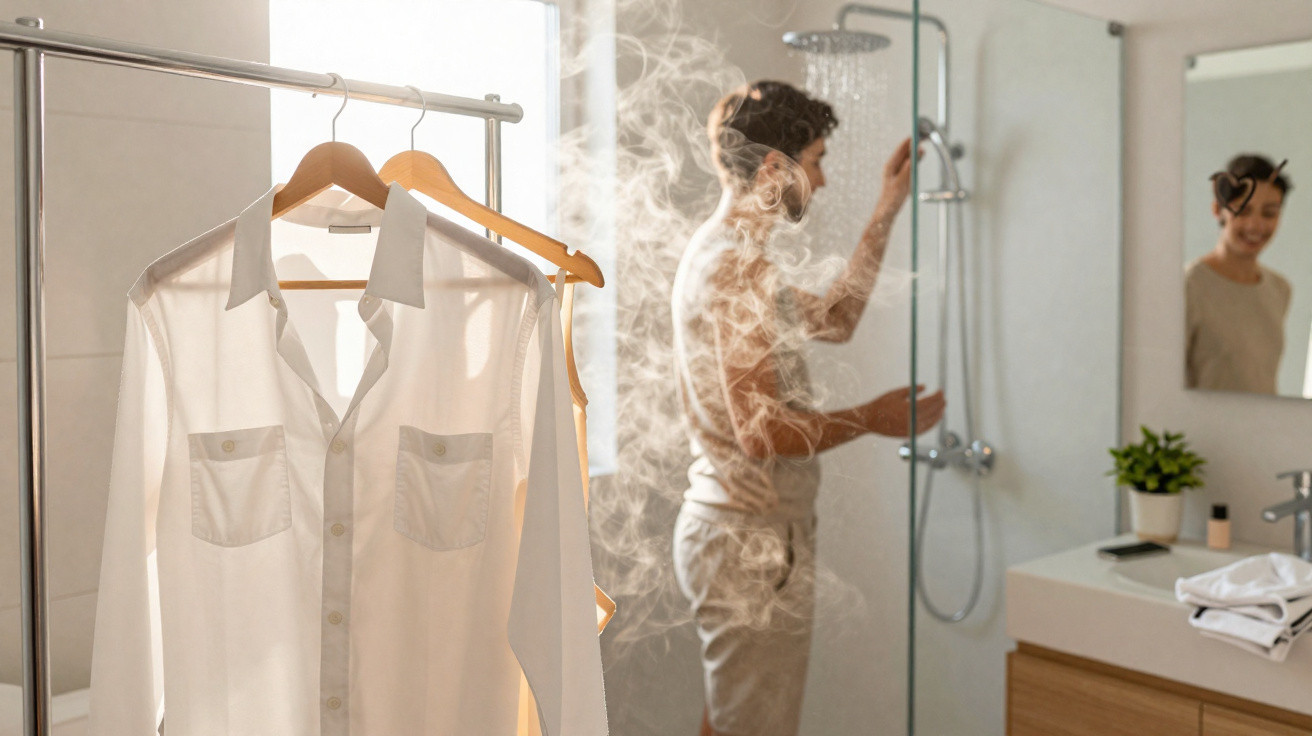
The T-shirt droops from the shower rail, almost forgotten.
Steam starts to billow upwards, turning the bathroom mirror into a cloudy white haze. Beads of moisture settle on the material before vanishing as its fibres gradually loosen. When you reach for your towel, the T-shirt appears… changed. Not as crumpled. Softer. Ready to wear.
You have not used an iron or unpacked a steamer. You have simply had a very hot shower, then got dressed.
Although it seems like an idle shortcut, it is actually a small physics experiment taking place in your bathroom. Once you understand the process inside that misty room, you may view your towel rail rather differently.
Why your bathroom becomes a natural clothes steamer
Stay beneath a hot shower for longer than a minute and the shift in the air is obvious. Your skin feels damp, your hair may begin to frizz, and the mirror steams up. The room becomes a warm, humid cocoon in which fabrics suddenly respond in another way.
This is when clothes on a hanger begin to change. Fibres made rigid by sitting in the wardrobe start to relax. Pronounced folds around the shoulders and waist soften. A shirt that previously looked like it had been “washed then forgotten in a pile” begins to seem more like “I kind of meant to wear this”. The change is gradual and understated.
On a hectic weekday morning, this can spare you the familiar “I have nothing to wear” panic. Turn on the shower, step into the steam, and a once-creased blouse can look nearly presentable. It will not be catwalk-ready, but it may be perfectly adequate for a Zoom call or informal dinner, without singeing your fingers on an iron or searching a rarely opened drawer for a creased travel steamer.
The explanation is straightforward: hot water meets cooler air and forms warm vapour, which spreads through every part of the small room. That moisture-rich air works its way between your clothing fibres. Combined heat and humidity relax the tiny internal bonds in the fabric that keep creases fixed in place.
Once the fibres have softened, gravity quietly takes over. The garment’s own weight draws those loosened fibres downwards, reducing sharp folds. Think of it as a gentle stretching session for your clothes. There is no direct contact or ironing-board fuss, only steam and time.
Naturally, materials react in different ways. Lightweight cotton and viscose commonly improve fast, whereas heavy denim tends to resist completely. Wool may appear smoother, but it does not tolerate remaining damp for too long. Some synthetic blends can go from a “crumpled mess” to “office-ready” during one shower. Your bathroom effectively becomes an improvised laboratory where you gently bargain with your wardrobe.
How to use your shower as a practical mini-steam room for clothes
The essential method is wonderfully simple: put your clothes in the bathroom, then take a hot shower. The finer points, however, make a difference. Choose a place that allows the garment to hang at full length, such as the back of the door, the shower rail, or even a tension rod placed across the room.
Set the shower hotter than you normally would, at least for its opening minutes. You need visible steam to build, rather than merely lukewarm moisture. Shut the door, block any draught from beneath it with the bathmat if necessary, and allow the room to fill. You are aiming for a fogged mirror, noticeably dense air, and fabric that has only just begun to feel damp when touched.
Keep the clothes there throughout your shower and, preferably, for a few additional minutes as the steam remains. Do not immediately pull them into a cold corridor. Letting the material briefly cool in warm, moist air helps its fibres settle into their smoother new shape. It is effortless laundry magic happening in the background.
There are pitfalls to avoid. Placing clothes directly beneath the showerhead is a textbook beginner’s error. They require steam rather than a soaking. Water marks, soap splashes and spots of shampoo will spoil both the result and your mood.
It is also unwise to crowd the bathroom with five or six garments simultaneously. Steam needs room to move around. Where items overlap or press against one another, the layers inside remain creased and can become oddly damp in places. Steaming one or two priority pieces during each shower is far more effective than turning the room into a disorderly pop-up wardrobe.
Let’s be honest: nobody genuinely does this every day. Some mornings are too frantic, some bathrooms too cramped, and some showers are simply quick post-gym rinses. That’s fine. Treat this method as an emergency fallback rather than a rigid habit. It is especially useful on travel days, Sunday evenings, or during those “meeting in 20 minutes, shirt is a disaster” situations.
“My bathroom is basically my second wardrobe now,” laughs Anna, 32, a consultant who travels with hand luggage only. “I hang tomorrow’s outfit in the shower every night. I take a hot shower, scroll my phone way too long, and by the time I’m brushing my teeth, my dress looks like it’s been pressed.”
When used sensibly, this small ritual can cut down on time, money and even a few kilowatts of electricity. Follow a few basic rules, though, so that the steamy shortcut does not make your bathroom a playground for mould. Leave the door ajar once you finish, and move clothes to a dry room to dry fully if they feel more than slightly damp.
- For the best result, hang only 1–2 items during each shower.
- Keep clothing away from direct spray and soap.
- Prefer a very hot shower for a short period to a lengthy lukewarm shower.
- Air the bathroom thoroughly afterwards.
- Briefly test delicate materials before relying on steam for them.
What this small habit reveals about modern life
There is something faintly symbolic about turning a shower into a steamer. It suits a life of short bursts, overlapping jobs and small hacks. Within the same 10-minute period, you wash yourself and “kind of” refresh your clothing. There is no diary planning or specialist equipment, just ordinary chaos made a little more manageable.
We are also seeing a subtle reaction against immaculate, sharply pressed outfits with every fold erased. A shirt that appears naturally relaxed rather than flawlessly ironed can feel more authentic. It suggests, “I have a life, not a valet.” This bathroom steaming method moves clothes towards that softer, lived-in finish: less boardroom, more real person.
There is a compromise involved. Taking a hot, steamy shower every day merely to smooth one shirt is not particularly environmentally friendly. Long showers quickly consume water and energy. The ideal scenario is more like this: you were going to take the shower anyway, and you bring one garment along for the ride. Viewed this way, the trick occupies an intriguing middle ground between laziness and quiet efficiency.
Perhaps that explains why people mention this habit almost confidentially, as though admitting something. “I just hang my dress in the bathroom and let the steam deal with it,” somebody says at work, half-joking. People look round. Half of them already do it, while the other half are sending themselves a reminder to try it.
Strictly speaking, your bathroom will not replace a professional steamer or a proper iron when a dress code is formal or the material is luxurious. That is the reality. Yet for the everyday middle ground-school runs, co-working days, casual dates and camera-on meetings-this method reaches an emotional sweet spot. It feels like making life easier with what you already have.
The next time you put a shirt on the back of the bathroom door before getting into the shower, you will understand what is actually happening inside that drifting cloud of warmth. It is not merely steam. It is you quietly rewriting the rules of what getting ready is meant to involve.
| Key point | Detail | Benefit for the reader |
|---|---|---|
| Steam relaxes fabric fibres | Heat and moisture loosen the bonds that keep creases in place | Understand why clothes appear smoother after hanging in a steamy bathroom |
| Placement matters | Hang garments where they cannot be splashed and leave space around them | Maximise the effect without water marks or damp patches |
| It is an “as-you-go” ritual | Use showers you are already taking, rather than making them extra long | Save time and energy while still looking more put-together |
FAQ:
- Does hanging clothes in the bathroom really replace ironing? Not entirely. It reduces light to moderate creasing and refreshes fabrics, but sharp folds or formal shirts will generally still require a proper iron or steamer.
- How long should clothes hang in the bathroom during a shower? Most garments benefit from a 10–15 minute hot shower with plenty of steam, followed by 5–10 minutes left in the steamy room before being moved to a dry area.
- Which fabrics respond best to bathroom steaming? Cotton blends, viscose, lightweight synthetics and certain wools respond well. Thick denim, heavy linen and highly structured garments change very little.
- Can this cause mould or musty smells in the bathroom? It can if the room is never allowed to dry. Ventilate properly: open a window, use an extractor fan, and do not leave damp clothes in the bathroom for hours.
- Is it safe for delicate or “dry clean only” clothes? Gentle steam from a distance is normally less risky than harsh ironing, but always test a hidden area briefly and avoid allowing the material to become genuinely wet.
Comments
No comments yet. Be the first to comment!
Leave a Comment