
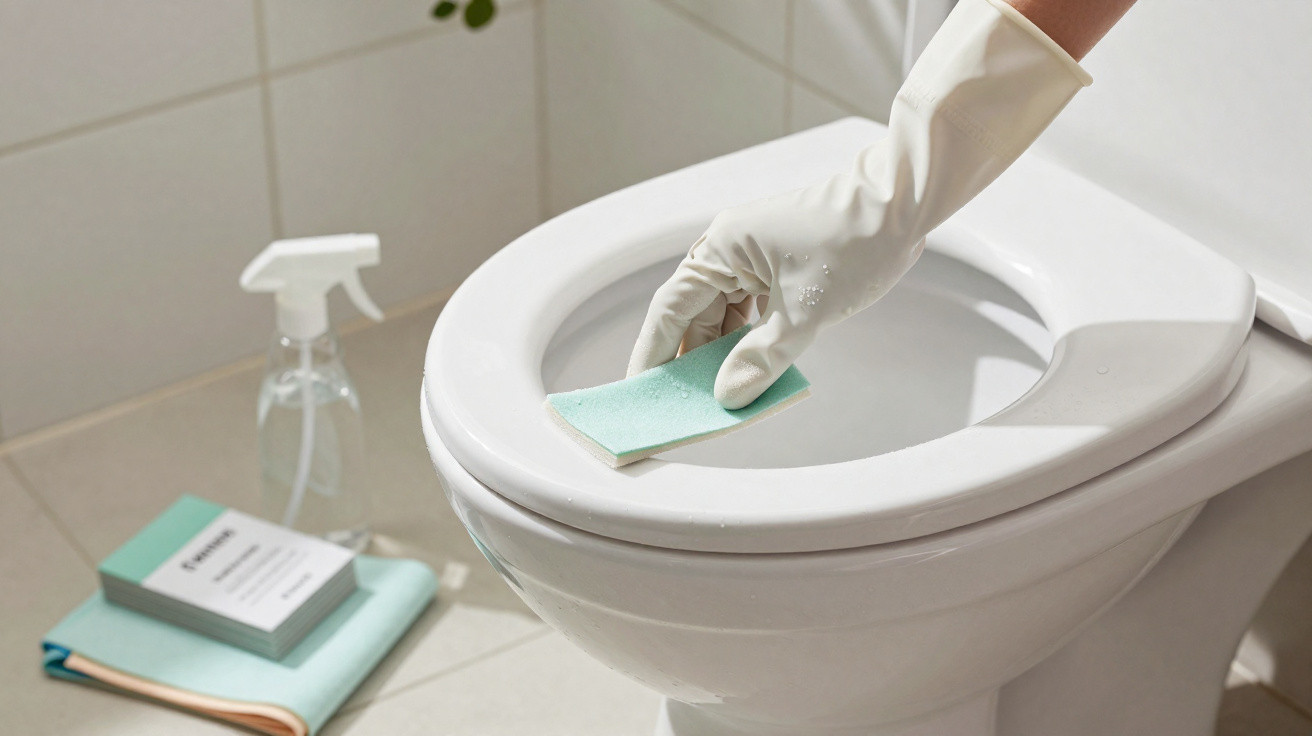
For decades, people have tackled toilet bowls with thick gels and powerful bleach. Now, a growing number of cleaning hacks suggest that a low-cost product from the hardware shop - one you would probably never associate with a toilet - can make a stained bowl look “like new”.
The low-tech toilet cleaning trick trending in a high-tech world
Toilet-cleaning videos, particularly on TikTok, attract millions of views. Beneath the quick edits and striking before-and-after moments, one theme keeps emerging: the most effective answers are often remarkably straightforward. There is no subscription pod or premium spray involved, only a basic material used more cleverly.
One of the most widely shared techniques uses an item more commonly found in a toolbox than a bathroom cupboard: extra-fine wet sanding paper, also known as wet-and-dry sandpaper. Used properly, it can remove years of mineral build-up from inside a porcelain toilet within minutes while leaving the surface unscratched.
Wet sanding paper in a very fine grit can polish off limescale and rings mechanically, instead of trying to dissolve them with aggressive chemicals.
Why ordinary toilet cleaners reach their limit
Most shop-bought toilet cleaners use acids and surfactants to tackle minerals, organic marks and bacteria. They tend to work well on recent dirt, yet stubborn staining can remain even after repeated cleaning.
Typical causes include:
- Hard-water deposits that form a chalky white or grey layer.
- Iron staining that produces orange or brown trails running down from the rim.
- Established rings at the point where the water level meets the bowl.
- Tiny scratches that collect dirt and become discoloured over time.
Strong chemical products may fade these marks, but they do not always remove them completely. People often react by scrubbing more forcefully with rigid brushes or pumice stones. Over time, this harsh treatment can roughen the glaze, allowing it to trap still more dirt and minerals. In other words, more effort can lead to poorer hygiene in the long run.
The product that discreetly removes stains
What wet sanding paper really is
Wet-and-dry sandpaper is an abrasive sheet made for use with water. At very fine grades - usually 800, 1000, 1500 or even 2000 grit - it performs more like a polishing pad than conventional sandpaper.
Combined with water, the grit moves across glazed ceramic or porcelain and removes a microscopic layer of mineral residue without cutting into the surface below. When used correctly, it works on the build-up rather than the bowl itself.
| Grit size | Texture | Recommended use in toilets |
|---|---|---|
| 400–600 | Medium-fine | Too aggressive for most glazes; avoid inside bowl. |
| 800–1000 | Fine | Suitable for mineral rings and light limescale. |
| 1500–2000 | Very fine | Polishing and finishing, safe for delicate areas. |
For toilet use, only very fine wet-and-dry paper makes sense. Anything rougher risks dulling the glaze and making stains worse over time.
How the technique works in practice
The principle is straightforward: rather than applying ever more chemicals to a stain, you remove the hardened layer that cleaning products have failed to shift. Water lubricates the process, allowing the abrasive to lift deposits while gliding over the glaze.
It is more like buffing a car body panel than cleaning a bathroom. There is no foam and no strong odour, while the change becomes visible as the ring gradually disappears with gentle, repeated movements.
Step by step: from stained to “like new”
1. Prepare the bowl correctly
First flush the toilet, then use your normal cleaner and a standard toilet brush. Any loose dirt should be removed before you begin sanding. If the water level covers the stained section, use the brush to push some water down the drain so that the most marked rings are exposed.
2. Select and prepare the paper
Cut off a small piece of extra-fine wet-and-dry sandpaper. Choose at least 800 grit, or opt for a finer grade if the bowl has a highly glossy finish. Place the piece in clean water until it is pliable and fully saturated.
3. Treat only the stained areas
Wrap the paper around two or three fingers. Keep both the bowl and the paper wet, then use light circular motions over the affected areas, such as the water-line ring, beneath the rim or along mineral streaks. At first, you may notice slight resistance; as the deposit wears away, the paper should move more smoothly.
The right pressure feels more like polishing a glass than scrubbing a pan. If you hear grinding, stop and add more water or choose a finer grit.
4. Rinse and monitor the result
About every minute, wash the area with water using a small cup or a brief flush. This removes loosened particles and shows you how much staining remains. Light to moderate rings will usually fade noticeably after only a few passes.
5. Finish with a soft cloth
After the mineral residue has gone, wipe the inside of the bowl with a damp microfibre cloth. This clears away any remaining grit and brings out the glaze’s actual finish. A mild toilet cleaner should then be sufficient for maintaining the refreshed surface.
Why this approach appeals to so many people
A number of reasons explain why this inexpensive method has spread so rapidly on TikTok and Instagram Reels:
- Speed: Long-standing marks that survived several chemical treatments may lift in one session.
- Cost: A packet of fine wet sanding sheets is inexpensive and provides enough material for numerous cleans.
- Control: It lets you focus on troublesome patches rather than soaking the entire bowl in harsh chemicals.
- Less smell: The process avoids heavy bleach fumes and acidic odours.
Many people post before-and-after photos in which yellow rings have disappeared and the glaze has regained its reflective finish. The benefit is clear for renters preparing for deposit inspections and homeowners dealing with older plumbing.
Precautions experts would highlight
Not every surface should be handled alike
Toilets are not all the same. Certain modern bowls have specialist glazes or coatings designed to repel dirt. Others use vitreous china with a highly even finish, while some lower-cost models have slightly softer surfaces.
This difference is important. Although very fine wet sanding paper is generally gentle, incorrect use can reduce the gloss of the surface. At a microscopic scale, that may add texture that future stains can cling to.
Sensible safeguards include:
- Trying it first in a hidden area, such as deep in the trap where it cannot be seen.
- Keeping away from decorative painted logos and coloured features.
- Avoiding plastic or coated seats and lids altogether; this technique is intended only for the ceramic bowl.
Combine mechanical and chemical cleaning
This method addresses one particular issue: stubborn rings and hardened mineral deposits. It is not a substitute for regular disinfection. Toilet bacteria exist not only on visible surfaces, but also in the water and beneath the rim.
Think of wet sanding paper as a reset button for surfaces that cleaners alone can’t rescue, not as a weekly shortcut for overall hygiene.
Routine care still requires mild cleaners, good ventilation and regular flushing. A bowl with a polished finish but an unpleasant smell is not a success.
Beyond sandpaper: creating a smarter toilet routine
Using wet-and-dry paper once or twice annually can be useful when it is paired with improved day-to-day habits. Small actions can greatly reduce the frequency of mineral crusts.
Simple longer-term measures include:
- Flushing soon after use so that waste and paper are not left to sit and create stains.
- Not flushing non-flushable items, including wipes, cotton pads and sanitary products, as they can cause blockages and retain residue.
- Giving the toilet a quick brush each week rather than waiting for an urgent cleaning job.
- Looking into a water-softening system in hard-water areas, which reduces mineral deposits throughout the home.
Environmentally, the method also reduces dependence on continual use of strong acids and bleach. Physically removing scale, alongside targeted chemical use, can reduce the quantity of harsh substances entering household plumbing while keeping bathrooms hygienic and sanitary.
The same principle can work elsewhere in the home. Fine abrasives are already used to revive cloudy glassware, marked sinks and tarnished chrome when other methods fall short. In every case, success depends on respecting the material below the dirt: select the appropriate grit, use water and allow patience to replace brute force.



Comments
No comments yet. Be the first to comment!
Leave a Comment