
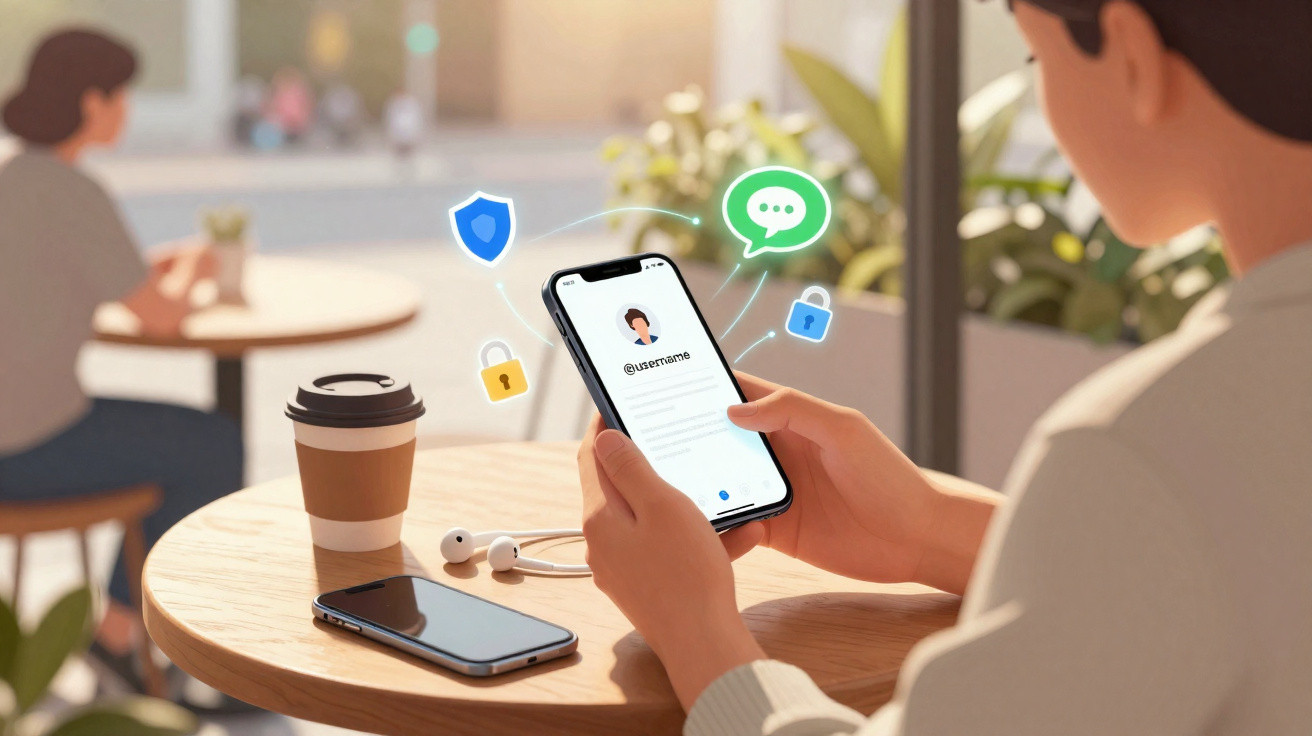
Meta is working on a feature that many users have wanted for years: a genuine WhatsApp username that allows people to find and message contacts without revealing their private mobile number. The first accounts have already been enabled, with a broader roll-out expected to follow.
What is fundamentally changing on WhatsApp
Until now, WhatsApp has operated entirely through phone numbers. Anyone wanting to chat has had to share their number or appear in someone’s contact list. The new feature addresses exactly this: usernames are intended to act as an additional identifier, much like on Telegram or Signal.
Instead of saying, “Send me your number”, a unique username will soon be enough – while the number remains in the background.
Meta has been testing the feature internally for several months. According to WABetaInfo, a platform specialising in WhatsApp, it is now appearing for the first users in the current version. Initially, only a small group will receive access, before availability is likely to expand gradually.
How to create your WhatsApp username
Setup will be handled through the profile section in Settings. Users with access to the feature will see a new field for their username in their profile. They can enter a name of their choice there, provided it follows several clear rules.
- between 3 and 35 characters
- at least one letter
- lower-case letters only
- full stops and underscores permitted
- no “www” and no special characters such as @, # or %
WhatsApp will also display buttons that let users adopt the same name they use on Facebook or Instagram. Anyone wishing to keep their social-media branding consistent across platforms will be able to do so with a single tap.
Meta-wide reservation: one name, one account
There is one catch: the selected name must be available across the entire Meta ecosystem. If it is already taken on Instagram or Facebook, it will be blocked. A name can only be reserved for WhatsApp through the Meta account if it is not in use anywhere else.
Anyone using a very common pseudonym online will therefore need to be inventive. More distinctive and slightly unusual names have a far better chance of being available.
Why the WhatsApp username feature is good for privacy
The real breakthrough is not technical, but lies in data protection. At present, a phone number is always disclosed as soon as a chat begins – whether that is in a group chat, through classified adverts, while dating or for work.
With a username, people can communicate on WhatsApp without strangers immediately having their private number in their address book.
This reduces several risks at once:
- fewer unwanted calls and SMS messages
- no direct link to other services using the same number
- more distance in short-term interactions, such as on marketplaces or while travelling
- easier management of public profiles, for example for creators or self-employed people
The update is likely to be watched closely by people who have previously preferred alternative messengers for privacy reasons. Signal and Telegram have offered similar functions for some time; WhatsApp is now catching up, backed by its enormous reach.
A separate username for greater anonymity in the Meta ecosystem
Meta may be aiming to connect identities across its own services at a technical level, but users should not automatically go along with that. Anyone who uses WhatsApp more intensively for private communication benefits from choosing a different name from the one used on Instagram or Facebook.
For example:
- Instagram: @max_musiker – public profile with photos, concerts and Stories
- WhatsApp: maxchat83 – a neutral name with no obvious connection to the stage
This makes it easier to keep work, family and social-media contacts separate. Outsiders will not immediately see that the person behind a WhatsApp account is the same as the person behind an Instagram profile.
Extra security with optional four-digit contact keys
Alongside usernames, WhatsApp is also testing a form of second verification step: an optional four-digit key. Users who activate the function assign an additional code that should only be known personally.
To contact someone for the first time through their username, two things will soon need to be correct: the right name and the secret four-digit key.
In practice, it works like this: someone asks for your username and you give them both details – the name and the code. If they enter both correctly, the chat can begin. If only the name is correct but the code is not, no contact is made.
This lowers the risk of attackers or spammers trying usernames in bulk and messaging people at random. The four-digit key acts like an extra lock on the door, without making the process too complicated for ordinary users.
What the change means for everyday life and communication
The new options are likely to make a difference in many everyday situations. Here are several scenarios where usernames could replace the current requirement to share a number:
- Classified adverts and marketplace apps: Contact a seller solely through a username, with no number visible in a screenshot or advert.
- Professional contacts: Start a project chat with freelancers or clients without handing over a private number.
- Dating and social media: Share only a username initially, rather than a number, until trust has developed.
- Public appearances: Creators, streamers and artists can publish a business username without exposing their real number.
Over time, this could establish a second identity system alongside the phone number. The number will remain the basis for registration in the background, but will play a much smaller role in everyday visible interactions.
What users should consider now
Although the feature has not yet been rolled out across the board, it is worth looking ahead. Anyone wanting to avoid an unpleasant surprise later can prepare now:
- Choose a name: Make it memorable, not embarrassing, not overly long and, if in doubt, neutral enough to keep for years.
- Plan the separation: Do you want the same name as on Instagram, or deliberately a different one?
- Keep screenshots in mind: A public username can easily appear in chats, Stories or photos. It is better to avoid real names.
- Remember the code: If you use the additional four-digit check, do not choose an obvious code such as 0000 or 1234.
Older chats and groups in particular may contain a mix of saved numbers and usernames in future. People who keep their address book reasonably well organised will find the transition easier.
How WhatsApp is positioning itself against Signal & Co.
By introducing usernames, WhatsApp is responding directly to criticism from privacy-focused users. Signal has long relied on pseudonyms and does more to hide phone numbers from strangers. Telegram also makes extensive use of usernames and public profiles.
WhatsApp is taking a middle path: the service retains its existing number-based model in the background, while offering an additional, more privacy-conscious interface for new contacts. This is likely to appeal to many users who do not want to switch entirely to another messenger but would like more control over their data.
Ultimately, the value of this update will depend heavily on how each person uses it. Those who select a well-considered username, use it selectively and activate a second code where appropriate can turn WhatsApp into a significantly more protected communication channel – without having to move their entire contact list to another messenger.






Comments
No comments yet. Be the first to comment!
Leave a Comment