
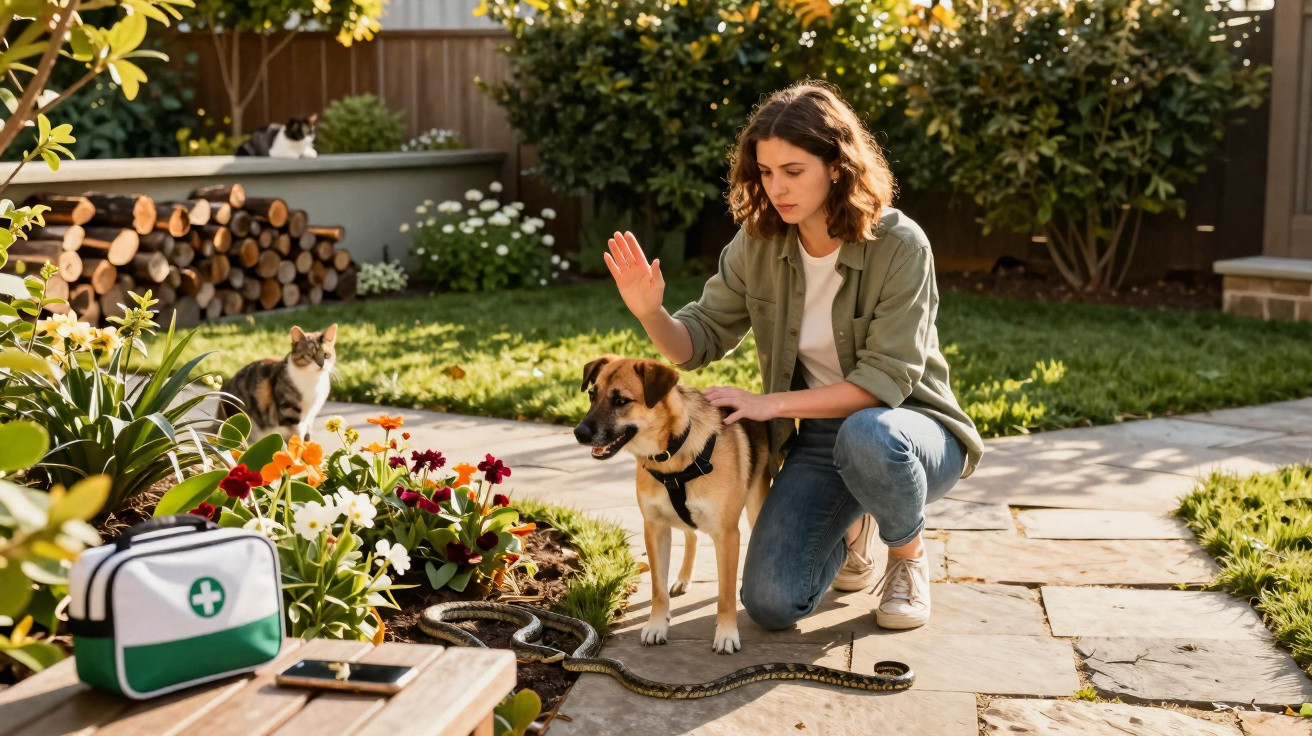
For dog and cat owners, an encounter like this can be a real test of the nerves.
Anyone sharing their home and garden with four-legged companions should understand how often snakes actually appear locally, which species can pose a danger and what to do in an emergency. Panic never helps, but a clear response does. This guide puts the risk into perspective and explains how to protect animals effectively – without turning every garden into a fortress.
Which snakes really appear in the garden
Many people still imagine “highly venomous monster snakes”. The reality in Central Europe is far more sober. Across much of the German-speaking region, including southern Germany, Austria and Switzerland, the situation is similar to that in France: several harmless grass snake species occur alongside a small number of venomous species that should be taken seriously.
Natural gardens are most commonly visited by grass snakes and other non-venomous snakes. At first glance, they can seem threatening when they rear up, hiss or appear to strike – but in almost every case, they simply want to get away.
“Most snakes in the garden are harmless to people and pets – the main risk comes from venomous viper species.”
How grass snakes and vipers differ
To help owners judge what is slithering through the garden, it is useful to know the usual identifying features:
- Grass snakes (for example, the grass snake and Aesculapian snake): slim bodies, rounded heads, round pupils and generally elongated markings. They are non-venomous, although they may bite in defence – usually without serious consequences.
- Vipers (for example, the adder and asp viper in certain parts of Europe): stockier, more compact bodies, clearly defined triangular heads and vertical pupils. Their venom can seriously harm animals.
Snakes are mainly seen during the warmer months. From April to September, the likelihood of an encounter rises considerably, especially on warm mornings and afternoons when the animals are basking or searching for prey.
Why a garden can become a meeting point for snakes
Some types of garden are much more appealing to reptiles than others. The following features create ideal conditions for snakes:
- tall grass and corners that are mown infrequently
- woodpiles, stone heaps and old boards that provide shelter
- damp, compost-rich areas with plenty of mice or lizards
- open water sources such as ponds or shallow bowls
For snakes, an area like this is an ideal hunting ground – but for inquisitive pets, it can become a hidden danger zone.
When a dog or cat encounters a snake
While snakes generally try to escape, pets often react in precisely the opposite way. Many dogs want to sniff, while cats switch into hunting mode. Those few seconds can determine whether the incident remains a brief fright or whether a venomous snake bites.
Animals most at risk
- Inquisitive dogs that put their noses everywhere and react to movement in the grass.
- Hunt-driven cats that instinctively regard small, rapidly moving animals as prey.
- Very small or elderly animals whose circulatory systems are less able to cope with venom.
A bite from a non-venomous grass snake is uncommon and usually resembles a scratch. Viper bites are very different: their venom can cause swelling, pain, circulatory problems and, in severe cases, organ damage.
“When a viper bites, every minute matters: a rapid visit to the vet can save a life when in doubt.”
Warning signs after a possible snake bite
The bite itself is not always visible. A dog or cat may dash into undergrowth, return agitated and show the first symptoms a few minutes later. Common signs include:
- sudden limping or protecting one paw
- noticeable swelling on the muzzle, paw or leg
- a strong pain response when touched
- lethargy, panting, circulatory problems or vomiting
Anyone noticing these signs after seeing a snake shortly beforehand should not attempt home remedies. Instead, contact a vet immediately and let the practice know you are on the way.
First aid: what owners should and should not do
Numerous myths about snake bites persist: sucking out venom, applying a tourniquet or cutting the wound open. None of these belongs in 2026. Such actions are more likely to cause harm than provide help.
Practical steps in an emergency
- Secure the animal – put the dog on a lead, place the cat in a carrier or carry it, and move away from the snake.
- Stay calm – frantic movement speeds up the spread of venom through the body.
- Keep the bite area as still as possible – do not massage it or apply ice directly to the skin.
- Call a vet straight away – describe the symptoms, give your expected arrival time and, if possible, take a photograph of the snake from a safe distance.
- Travel directly to the surgery – take no detours and do not stop to consult Dr Google.
| Action | Recommendation |
|---|---|
| Sucking out venom | No, it does not help and carries a risk of infection. |
| Applying a belt or cord as a tourniquet | No, it can damage tissue. |
| Cooling with water or a damp cloth | Yes, in moderation, if the animal remains calm. |
| Giving painkillers from the medicine cabinet | Only after consulting the vet. |
How owners can make their garden less attractive to snakes
Anyone hoping to banish reptiles completely from their garden will not succeed. Many species are protected, form part of the ecosystem and help control mice. The aim should therefore be to reduce the chance of a dangerous encounter.
Practical measures around the home
- Keep the lawn short: Regular mowing reduces hiding places and makes the garden less appealing to snakes.
- Cut back hedge borders: Undergrowth, dense scrub and tall perennials beside paths are popular resting places for reptiles.
- Limit wood and stone piles: Where possible, stack them further away from the patio and sunbathing area.
- Reconsider water sources: Open water bowls attract not only birds, but also thirsty grass snakes.
- Keep an eye on pets during the hottest hours: Snakes are active in the midday heat – as are dogs and cats.
“A tidy, easy-to-see garden reduces the risk – without destroying the nature on your doorstep.”
Training and knowledge: protection starts with awareness
The better owners can assess a situation, the more quickly they can respond in an emergency. In areas where snakes are frequently present, vets, dog-training schools and conservation organisations sometimes offer specialist courses. These teach owners how to identify native species and assess typical danger spots.
There is even training for dogs that teaches them to avoid snakes. Through scent work and controlled situations, dogs learn to associate the reptile with keeping their distance rather than curiosity. This does not replace supervision, but it lowers the risk of a four-legged companion charging directly towards a snake.
Perspective: how great is the danger really?
Snake-bite poisoning in pets remains relatively rare, even in recognised risk areas. Dogs are far more likely to be injured by broken glass, step on nails or get into a fight with another dog. Even so, when a bite does happen, it often catches owners unprepared.
Owners who recognise the usual signs, know the first-aid steps and plan their garden thoughtfully can remove much of the fear. Snakes then remain what they are: shy wild animals that bite only when they feel cornered – not the silent monsters they are so often made out to be.





Comments
No comments yet. Be the first to comment!
Leave a Comment