
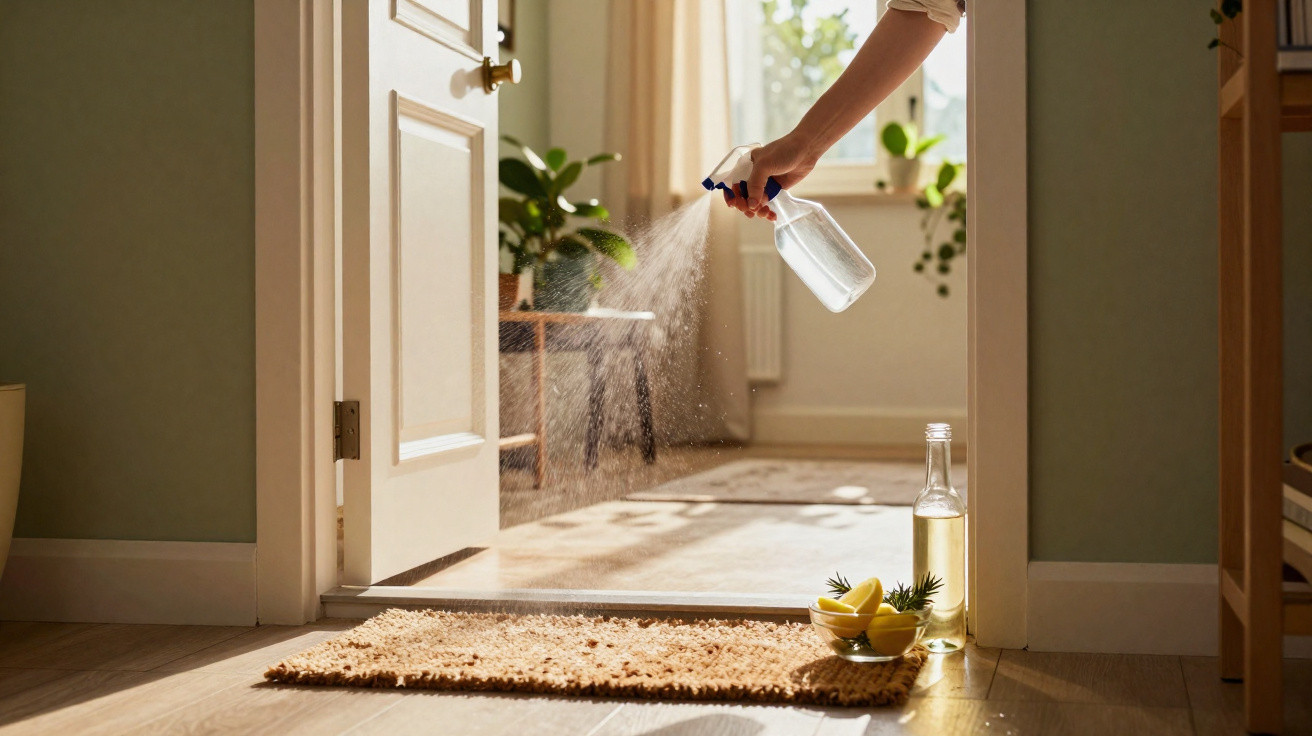
What began as a traditional household cleaning tip has become an unusual blend of pest prevention, odour control and even “energy cleansing” at the entrance to the home.
Why do people spray vinegar at the front door?
White vinegar has been a familiar cupboard essential for cleaning ovens, kettles and bathroom tiles for years. More recently, however, it has moved from being an unseen cleaning helper to a more noticeable, symbolic use: spraying it where visitors enter the home.
Supporters of this approach point to three key advantages: it may deter insects, neutralise odours around the entrance and provide a straightforward eco-friendly substitute for stronger sprays. For some, it also serves as a small everyday ritual for refreshing the atmosphere at home.
Used at the front door, vinegar acts as a low-cost shield: it deters pests, refreshes the air and signals a “clean slate” as you walk in.
How vinegar creates a natural barrier
In practical terms, its clearest potential benefit concerns small pests in the home. White vinegar has a strong acidic odour that many insects find unpleasant, so they often avoid places where the smell remains.
Insects that often avoid vinegar
- Ants – As they follow scent trails, vinegar can interfere with these pathways and make the space less appealing.
- Spiders – Although they are helpful predators, many people would rather not encounter them by the front door; vinegar may discourage them from making nests nearby.
- Cockroaches – Because they are sensitive to intense odours, they commonly avoid areas that are treated repeatedly.
This is why the doorstep and hallway can be sensible places to use a vinegar spray: these are key entry points where insects can pass through small openings.
The front door is a strategic line of defence: treating it with vinegar helps reduce the number of bugs that ever make it inside.
How to apply vinegar at the entrance
This approach is simple and costs very little when compared with branded insect repellents or scent diffusers.
Basic spray recipe
| Ingredient | Suggested ratio | Notes |
|---|---|---|
| White vinegar | 1 part | Choose plain distilled vinegar rather than cleaning vinegar containing added agents. |
| Water | 1–2 parts | Adding more water creates a milder smell and lowers the chance of damage to sensitive surfaces. |
| Optional: a few drops of essential oil | Per 250 ml of mix | Lavender, lemon or eucalyptus may make the vinegar odour less sharp. |
Decant the mixture into a clean spray bottle. Give it a short shake before every application, particularly when essential oils are included, as they may separate.
Where to spray around the front door
Natural-cleaning specialists generally advise concentrating on the places insects are most likely to travel across or conceal themselves:
- Along the door frame, particularly near the bottom.
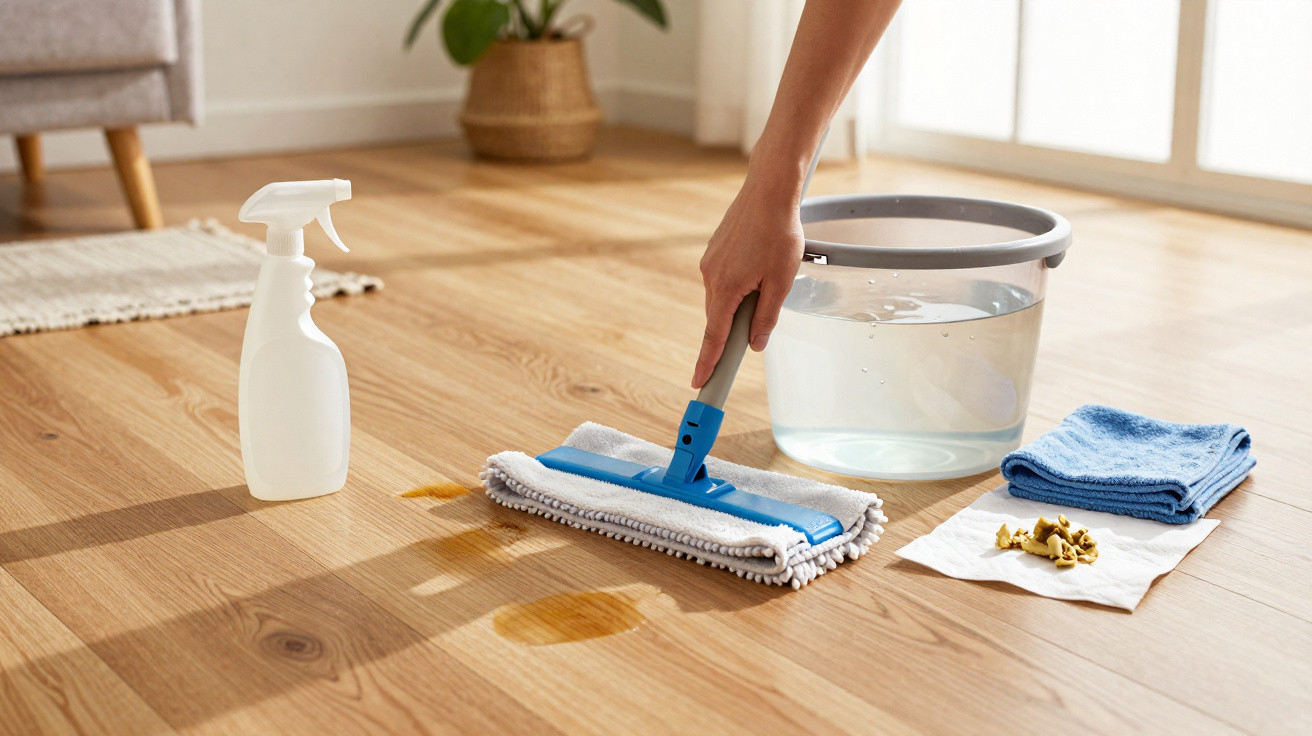
- On the floor immediately inside and outside the threshold, provided the surface can cope with mild acidity.
- Into small cracks or gaps around the frame, where ants and other insects frequently get through.
- Across skirting boards and in dark corners near the entrance.
Test the mixture in an inconspicuous area before wider use, especially on natural stone, untreated timber or fragile finishes. Over time, vinegar may etch marble and harm certain varnishes.
Front-door vinegar as an “energy cleaner”
As well as its physical uses, vinegar has gained another image: that of a product for clearing a home's “energy”. People who follow feng shui and other balancing traditions sometimes describe heavy or stagnant vibrations gathering around entrances, where the exterior meets the interior.
For those who hold this belief, the front door represents more than wood and metal. It is regarded as a symbolic filter, and a quick vinegar spray on the threshold or frame can become a modest ritual for renewing the atmosphere.
In household rituals, vinegar spray is seen as washing away the emotional residue of the day before anyone steps further inside.
Even those unconvinced by the language of energy may value the psychological benefit. Taking a deliberate moment to spray and wipe the entrance can provide a short pause and mental reset after work, school or a stressful journey.
Odours, cleanliness and the importance of the entrance
The area around a front door often absorbs some of the less pleasant parts of daily living: damp shoes, pet odours, cigarette smoke from outdoors, cooking smells from neighbours and even hallway dampness in older properties.
Vinegar is widely used to neutralise smells rather than merely conceal them. Its acidity interacts with molecules that create unpleasant odours, particularly those linked to smoke and cooking fats. Using a diluted spray near the entrance may help stop the stale, enclosed smell that can greet people at the door.
Household surveys in German-speaking countries indicate that people apply vinegar at their entrances for a range of purposes, including odour management and insect deterrence, while many also mention environmental considerations. This reflects a wider shift away from heavy chemical aerosols and towards biodegradable, multipurpose products.
Environmental and health considerations
In comparison with many shop-bought sprays, white vinegar has a brief and uncomplicated ingredient list. It biodegrades readily and does not usually leave persistent residues in the air or on household surfaces.
This may be particularly appealing in homes with children, pets or allergies. A number of plug-in fragrances and insect sprays contain synthetic perfumes or insecticides that can irritate sensitive skin or lungs. Vinegar has a strong initial smell, but this generally disappears as it dries.
However, vinegar is not suitable for everyone. Those with asthma or fragrance sensitivities may find its first odour too harsh. Ventilating the space well, diluting it lightly with water and reducing the amount used at once can help.
Possible risks and limitations
Like any household tip, this method has restrictions and points to consider.
- Surface damage – Avoid applying undiluted vinegar to marble, limestone, unsealed grout or waxed floors, as it can cause etching and dull patches.
- Serious infestations – Vinegar might deter occasional ants or cockroaches, but it cannot replace professional pest control where there are clear signs of an infestation.
- Metal fittings – Frequent, heavy application to particular metals near the door, such as untreated brass, may encourage corrosion.
- Overpowering smell – In small hallways with poor ventilation, begin with a weaker solution and use fewer sprays.
Vinegar spray works best as a supportive habit: part cleaning, part prevention, not a magic cure-all for every problem at the entrance.
Practical situations where it can help
Consider a ground-floor flat near a bin area. Ants arrive every spring, while the entrance can carry a faint rubbish smell on warm days. A daily or weekly vinegar routine around the doorstep and skirting boards, alongside standard cleaning, may make the flat less appealing to insects and reduce odours.
Alternatively, picture a busy family home with pets. Muddy paws, damp coats and sports shoes build up in the hallway. After larger outings, spraying and quickly wiping the door frame and floor with diluted vinegar can help the entrance feel fresher before the rest of the home receives a full clean.
Related habits that can strengthen the effect
Those who make vinegar spraying at the door part of their routine often pair it with other straightforward measures to enhance the overall result.
- Put a durable doormat outdoors and a washable mat indoors to trap moisture and dirt.
- Seal noticeable gaps around the frame with caulk or rubber strips to limit the number of insects getting inside.
- Keep a small shoe rack or tray by the entrance to prevent outdoor dirt from being carried through the home.
- Place a bowl of baking soda nearby to absorb lingering odours further, particularly in narrow hallways.
Taken together, these measures create a modest yet useful barrier: less dirt, fewer insects, fresher air and a more managed transition between outdoors and indoors.
Terms and concepts worth explaining
When advocates describe vinegar as an “energy cleaner”, they generally mean it metaphorically. They may not be talking about measurable physics, but rather the sense a room creates after it has been aired, organised and wiped clean. With its sharp scent and association with thorough cleaning, vinegar becomes a convenient symbol of this renewal.
From a more technical perspective, the important term is “acidic”. Vinegar is a diluted acetic acid solution. Its acidity helps remove mineral deposits, soap scum and certain organic residues, explaining why it works well in kitchens and bathrooms and, by extension, around the frequently overlooked front-door area.
When used with an understanding of its restrictions and the materials in the home, an ordinary vinegar spray at the entrance can function both as a practical aid and as a small daily action that makes arriving home feel slightly lighter.





Comments
No comments yet. Be the first to comment!
Leave a Comment