
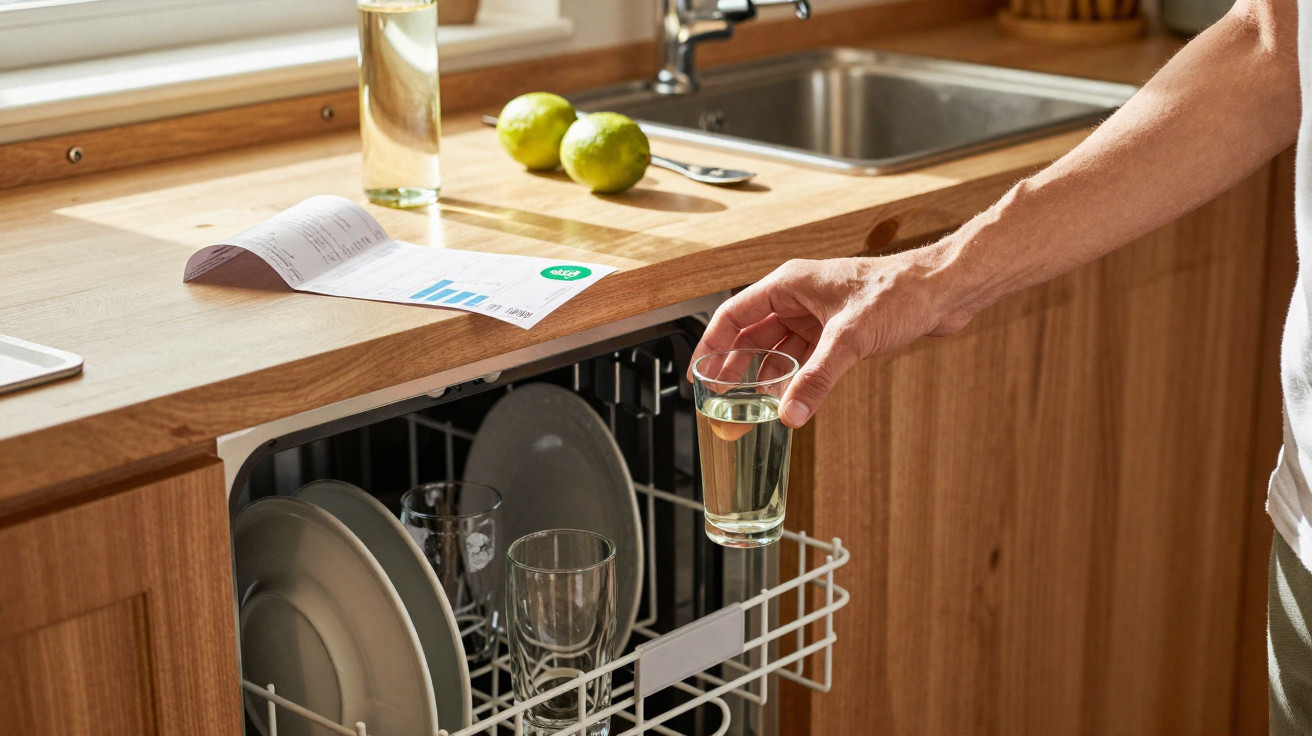
Your dishwasher may seem indispensable on hectic evenings, yet it can also add a consistent, easily overlooked amount to your energy bill. As electricity costs increase across Europe and the US, many households want practical, fast ways to cut consumption without replacing an otherwise functional appliance. One notably useful solution begins with an ordinary cup you are likely to have at home.
Why your dishwasher costs more than you think
A modern dishwasher may not appear costly to operate at first glance. Many full-sized household models use approximately 1 kWh for each cycle. If it runs on most days, this totals around 200 to 260 kWh annually.
With average household electricity costing about £0.25 or $0.18 per kWh, dishwashing alone costs roughly £50 / $40 per year. That figure excludes future price increases and any changes to how often you use the machine.
However, many people do not realise that this cost can gradually rise as the appliance gets older and accumulates blockages.
About 80% of a dishwasher’s electricity use goes into heating the water, not spraying it.
When grease and limescale collect on internal pipework and the heating element, the dishwasher must use more effort to achieve the same temperature. Even a 1 mm layer of scale can increase energy use by roughly 10%. Across several years, this may leave you paying for the equivalent of an additional dozen cycles annually simply to overcome unseen dirt.
The simple object that changes everything: a cup of vinegar
The “magic” item is nothing more than a cup or mug positioned on your dishwasher’s upper rack. What makes the difference is the liquid inside it: ordinary white vinegar.
How the cup trick works
The process could hardly be simpler. Run an empty dishwasher with a heatproof mug, cup or bowl standing upright and filled with vinegar.
This cup slowly releases vinegar during a hot cycle, helping to descale, degrease and deodorise the entire machine.
Inside the dishwasher, the following takes place:
- Hot water and steam cause the cup to overflow gradually, blending the vinegar into the wash water.
- The acidic solution loosens limescale from the pipework and heating element.
- It breaks down greasy deposits and soap scum attached to the spray arms and tub.
- Smells produced by trapped food debris are reduced.
A heating element free from build-up transfers heat more effectively. This allows the appliance to reach its required temperature sooner and reduces the time spent drawing electricity.
Step-by-step: using a cup of vinegar in your dishwasher
No specialist cleaning tablets are required for this approach. Follow these steps to use it safely:
- Pick a robust, heatproof mug, cup or small bowl that will remain stable.
- Fill it with 150–200 ml, or around 2/3 to 3/4 of a standard mug, of white vinegar.
- Stand it upright on the top rack, preferably around the middle.
- Check that the dishwasher contains no dishes, cutlery or detergent.
- Choose a hot programme of about 60–65 °C, or the closest “intensive” or “hygiene” option.
- Start the programme and allow it to finish completely.
Where water is particularly hard, you can sometimes place a tablespoon of bicarbonate of soda directly in the tub for extra degreasing power. Adding a squeeze of lemon juice to the cup may improve the scent, although heavy essential oils should be avoided because they can leave deposits.
How often should you do it?
| Usage / water hardness | Recommended frequency |
|---|---|
| Daily use + hard water | Once a month |
| Several times a week + medium water | Every 2–3 months |
| Occasional use + soft water | Every 4–6 months |
Following this routine can help the dishwasher remain close to its original energy label rather than moving into a more costly, higher-consumption range.
How much money can this actually save?
The benefit is not created by the vinegar cycle itself, since that programme also requires electricity. Instead, it comes from avoiding the progressive loss of efficiency caused by grime and limescale.
Consider a household dishwasher that normally uses 260 kWh each year. If limescale increases consumption by 10%, annual use rises to approximately 286 kWh. At £0.25 / $0.18 per kWh, the yearly cost would increase from around £65 / $47 to about £72 / $52.
Keeping the heating element clean can mean paying for 260 kWh instead of 286 kWh every year, without changing your habits dramatically.
In addition, a cleaner dishwasher will generally clean more effectively during one programme. This means fewer “oh no, those glasses are still cloudy” incidents and fewer repeated washes, reducing both water and electricity use.
Multiply the gains with eco mode and good habits
The vinegar cup method represents just one element of lower-cost dishwashing. The programme you select and the habits you adopt each day can reduce electricity use much further.
Eco mode: slower, cheaper, still effective
Most current dishwashers offer an “eco” or energy-saving programme. It commonly takes longer than an intensive or standard cycle, leading some users to question its value. In reality, the extended duration allows the appliance to heat water more gradually and at lower temperatures.
For a properly maintained machine, this can lower electricity consumption by 30–45% per cycle compared with the quickest, hottest programmes.
- A typical intensive programme may consume nearly 1 kWh.
- Depending on the model, an eco programme may fall to around 0.6–0.7 kWh.
Using eco mode alongside regular descaling with a vinegar cup can reduce a typical 260 kWh/year dishwasher into the 130–180 kWh range. At current prices, annual electricity costs could therefore be nearer £33–£45 / $23–$32, rather than £50–£70 / $40–$52.
Everyday tips that make your dishwasher cheaper to run
Several small changes in behaviour can reinforce the benefits of the vinegar cycle, with no need to purchase additional equipment.
- Always run full loads: Running partly filled cycles wastes water and energy. Most modern dishwashers cope well with combined loads of glasses, pans and plates.
- Skip pre-rinsing under hot water: Simply scrape food into the bin. Rinsing items beneath a hot tap uses additional energy and is generally unnecessary.
- Use the delay start during off-peak times: Where your tariff provides lower overnight prices, programme the dishwasher to run late in the evening or during the night.
- Clean the filter regularly: A blocked filter makes the pump work harder and may leave deposits that require items to be washed again.
- Open the door at the end: Opening the door slightly lets dishes air-dry and saves energy compared with high-temperature drying stages.
Vinegar, limescale and safety: what you need to know
Vinegar’s acidity is precisely what makes it so effective at dissolving limescale. In sensible amounts, it is suitable for most dishwashers, but several considerations remain important.
- Do not apply undiluted vinegar directly to rubber seals every week; it should be used occasionally rather than continuously.
- For most appliances, a monthly or quarterly cup cycle is usually regarded as safe.
- Follow the manufacturer’s guidance if the manual specifically advises against vinegar.
- Never combine vinegar with chlorine-based products because this may produce irritating fumes; do not add bleach to a dishwasher containing vinegar.
Certain brands market their own “dishwasher cleaner” bottles rather than suggesting vinegar. Although these cleaners are designed to be kind to seals and plastics, they cost more. For many households, a cup of supermarket vinegar costs only a fraction of a commercial cleaner while still producing noticeable results.
Running a quick scenario at home
Picture a family using its dishwasher six times weekly on a mixed programme, with a standard electricity tariff of $0.18 per kWh. With no maintenance, limescale gradually develops and consumption rises from 0.9 kWh per cycle to nearly 1 kWh.
That amounts to around 280–300 cycles per year, meaning annual electricity use can reach 300 kWh. By making three adjustments - a monthly vinegar cup cycle, eco mode as the usual setting and no repeat washes - it may be possible to bring each cycle down to approximately 0.6–0.7 kWh.
Over a year, that shift can equate to roughly 90–120 kWh saved, the energy content of several full loads in your washing machine or a small fridge running for months.
There is also a less obvious advantage: repairs or replacement may be postponed. A heating element repeatedly restricted by limescale operates at a higher temperature and deteriorates more quickly. Low-cost vinegar maintenance can extend the useful life of an appliance that might otherwise cost hundreds to replace.
For households under pressure from every utility bill, an overlooked cup carefully placed on the upper rack can become a discreet helper, reducing energy use with almost no effort once it becomes routine.






Comments
No comments yet. Be the first to comment!
Leave a Comment