
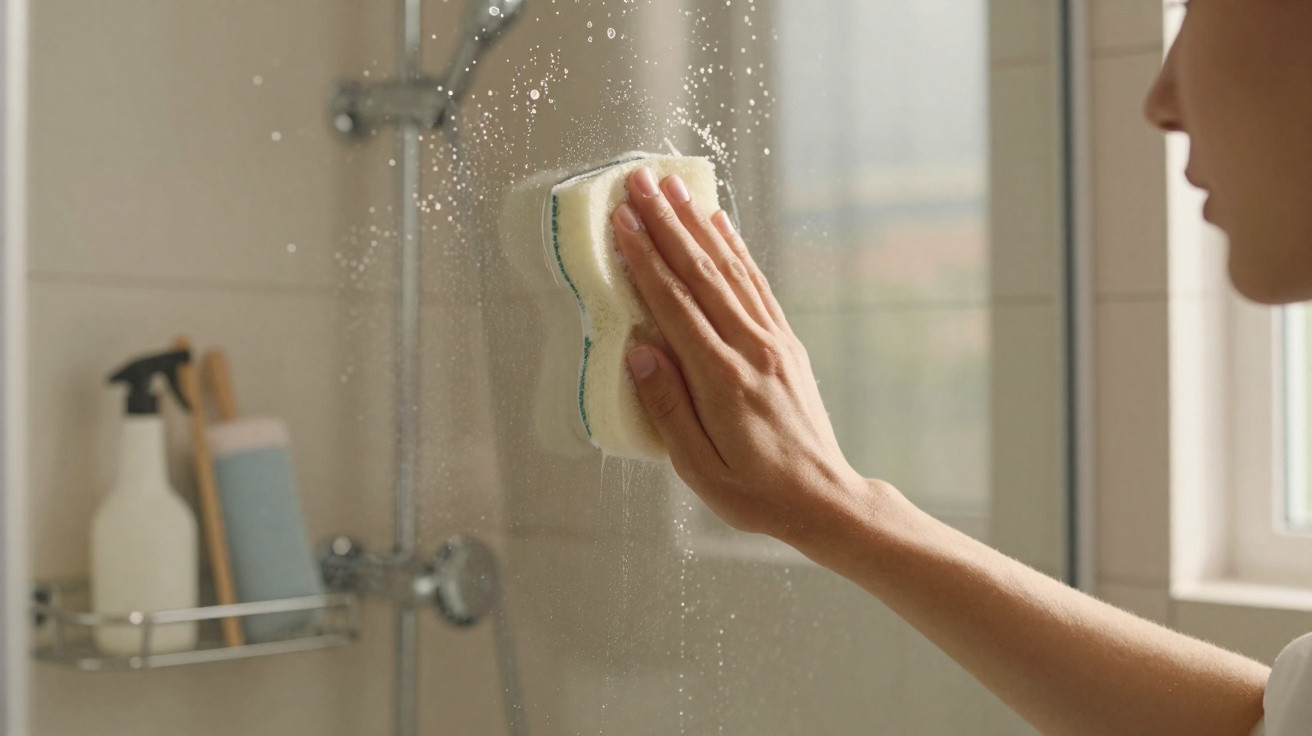
Behind this quiet magic is a small, often overlooked tool.
After a night in a quality hotel, the bathroom can seem almost staged: the glass is transparent, there is no unpleasant smell and no cloudy marks. At home, meanwhile, shower screens mist over, streaks build up and cleaning turns into an unwelcome weekend chore. The difference is not stronger products, but a more intelligent routine and one remarkably straightforward material.
Why hotel showers remain clear while ours lose their shine
A shower is closer to a chemistry experiment than a spa retreat. Hard water, soap, shampoo, conditioner, body oils and steam all come together on warm glass and tiles. They create a layer that starts with a slight sheen, becomes cloudy, then dries into the stubborn grey coating that appears to defeat every cleaning spray.
In homes, this layer is often left in place for several days. People leave the bathroom in a hurry, keep the door shut and do not use a squeegee. Moisture remains in the room, limescale sets and a light biofilm of microbes mixed with soap residue begins to develop. Musty odours can appear sooner than expected, particularly in compact bathrooms with poor ventilation.
Hotel teams do not wait for dirt to look dramatic. They interrupt the film before it hardens, so cleaning never becomes a battle.
Professional housekeepers follow a defined approach based on ventilation, timing and equipment that lifts deposits at a microscopic level. While many households choose a more powerful cleaner, hotels often use an unassuming tool more familiar from stationery shops than cleaning aisles: the melamine sponge, commonly marketed as a “magic eraser”.
The “magic” material: melamine foam
At first glance, melamine foam is simply a plain white block. Microscopically, however, it has a compact, firm, open-cell structure. This construction allows it to act rather like exceptionally fine sandpaper, mechanically removing build-up without the rough sensation of a scouring pad.
On shower glass, this micro-abrasion works on:
- limescale rings caused by hard water
- soap scum and residue from conditioner
- oily fingerprints and body oils
- fine dirt that ordinary cloths merely spread around
When used with ample water and light pressure, the foam works on the edges of the layer rather than the glass itself. This is why hotel glass appears “new” rather than “power-scrubbed”. The sponge handles the close-detail cleaning, enabling staff to work swiftly without resorting to harsh chemicals.
Melamine foam cleans by physical micro-scraping, not by harsh solvents. That shift from chemistry to texture changes the whole routine.
How to use the hotel trick at home
A step-by-step routine for everyday life
The approach is almost disappointingly easy, and that simplicity is precisely what makes it effective. Instead of setting aside time for a major clean, make it part of your usual post-shower routine:
- Rinse first: Once you have showered, give the glass a quick rinse with warm water to loosen soap residue and wash away grit.
- Prepare the sponge: Dampen the melamine sponge, then squeeze it so that it is only slightly wet. It should not be dripping.
- Use long strokes: Move the sponge in straight top-to-bottom passes. Do not scrub quickly in circular motions.
- Clean the edges: Use a sponge corner on metal frames, silicone seals and tight corners.
- Rinse once more: Run fresh water over the glass to remove the loosened deposits.
- Dry the surface: Remove droplets with a squeegee or microfibre cloth before they become water spots.
- Optional cool finish: In areas with very hard water, a brief rinse with cold water may help limit fresh limescale marks.
Doing this two or three times each week keeps the layer “young”, making every clean a light task. Avoid the marathon clean and depend on regular repetition instead.
Where caution is needed
Although melamine foam feels soft, it functions as a micro-abrasive. Testing it first is therefore essential. Take particular care with:
- high-gloss acrylic baths and shower trays
- decorative plastic edging
- delicate coated shower glass, often labelled “easy-clean”
- natural stone, including marble and limestone
- mirror surfaces with vulnerable backing around their edges
On these materials, apply very little pressure in a discreet test area and stop if dull patches appear. Always use the sponge when wet. Using it dry creates more friction and may leave visible dulling, particularly on glossy plastic surfaces.
Check the surface before you commit. A 10-second test patch is cheaper than a replacement panel.
What cleaning professionals actually use
Out of sight, hotel housekeeping focuses on consistency rather than new products. Their cleaning kits are seldom complicated. A standard “clear glass” collection may include the following:
| Tool | Main role |
|---|---|
| Melamine sponge | Microscopic removal of limescale film and soap scum |
| Microfibre cloth | Drying edges and polishing taps and metalwork |
| Squeegee | Quickly clearing rinse water from glass panels |
| Mild all-purpose cleaner | Dealing with everyday dirt on tiles, floors and handles |
| Descaler (sparingly) | Focused treatment for heavy limescale on fittings |
This balance is important for air quality indoors. Powerful bathroom products can give off irritating fumes, especially in small, humid rooms. Mechanical cleaning with foam and cloth means fewer heavy chemicals are needed and can make breathing easier for people with asthma and allergies.
Turning hotel tricks into home habits
Micro-rituals for a clear shower screen
Many bathroom-cleaning routines fail because they depend on finding motivation at the weekend. Housekeepers succeed by making the job smaller and linking it to actions that already happen. This same method works in a flat or a family home.
Three straightforward habit anchors can help:
- Keep the sponge in sight: Put it on the side of the bath or on a small shelf instead of shutting it away in a cupboard.
- Link it to an action: Use the sponge in the final minute while the warm water is still running.
- Leave the door open: Prop open the bathroom door after showering so moisture can escape more quickly.
These small actions reduce drying time, slow mould development in grout and prevent the glass from “aging” into the lasting haze that seems impossible to remove.
What hard water does to a shower
Across many parts of the UK and US, hard water is quietly responsible for much of the damage. Minerals including calcium and magnesium become embedded in the layer and crystallise when water evaporates. This produces the chalky dots and vertical streaks familiar from kettle elements and taps.
Where water is particularly hard, limescale may eventually become difficult for melamine foam to tackle on its own. At that point, an occasional descaling treatment is useful: apply a mild citric-acid solution to glass and ceramic tiles, leave it for a few minutes, then rinse thoroughly. Do not use acids on marble, limestone or certain metal finishes, as they can etch or tarnish them.
Think of limescale like dental plaque for your bathroom. Daily “brushing” with gentle tools beats rare, aggressive treatments.
Beyond the glass: the broader benefits of a clearer shower
A spotless shower screen changes more than the bathroom's appearance. Transparent glass bounces light back into the space, helping a small bathroom feel bigger and less gloomy. That added light may also help reduce mould, because dark corners tend to remain damp for longer.
There is a safety benefit too. Deposits and film can make shower trays and floors more slippery. Frequent mechanical cleaning improves traction, especially near drains where shampoo tends to collect. This subtle, unseen safety improvement is particularly useful for families with small children or older relatives.
Energy use is part of the equation as well. Using fewer strong sprays means fewer plastic bottles, fewer chemicals entering the drain and less transport of water-heavy cleaning products. A packet of melamine sponges is very lightweight and can often take the place of several separate cleaners during its lifespan.
For tenants, the hotel trick can help protect a deposit. Landlords scrutinise bathrooms during end-of-tenancy inspections. Glass marked by old limescale film can appear “unclean” even after scrubbing. Starting a gentle, consistent routine early keeps surfaces nearer to their original condition, which is important when every mark is photographed.
The technique also works elsewhere in the home. This soft yet firm foam can remove marks from light switches, door frames, fridge handles and scuffed walls, provided a test patch is carried out first. Used carefully, one small block reduces the gradual build-up of wear that can make a home seem more tired than it truly is.



Comments
No comments yet. Be the first to comment!
Leave a Comment