
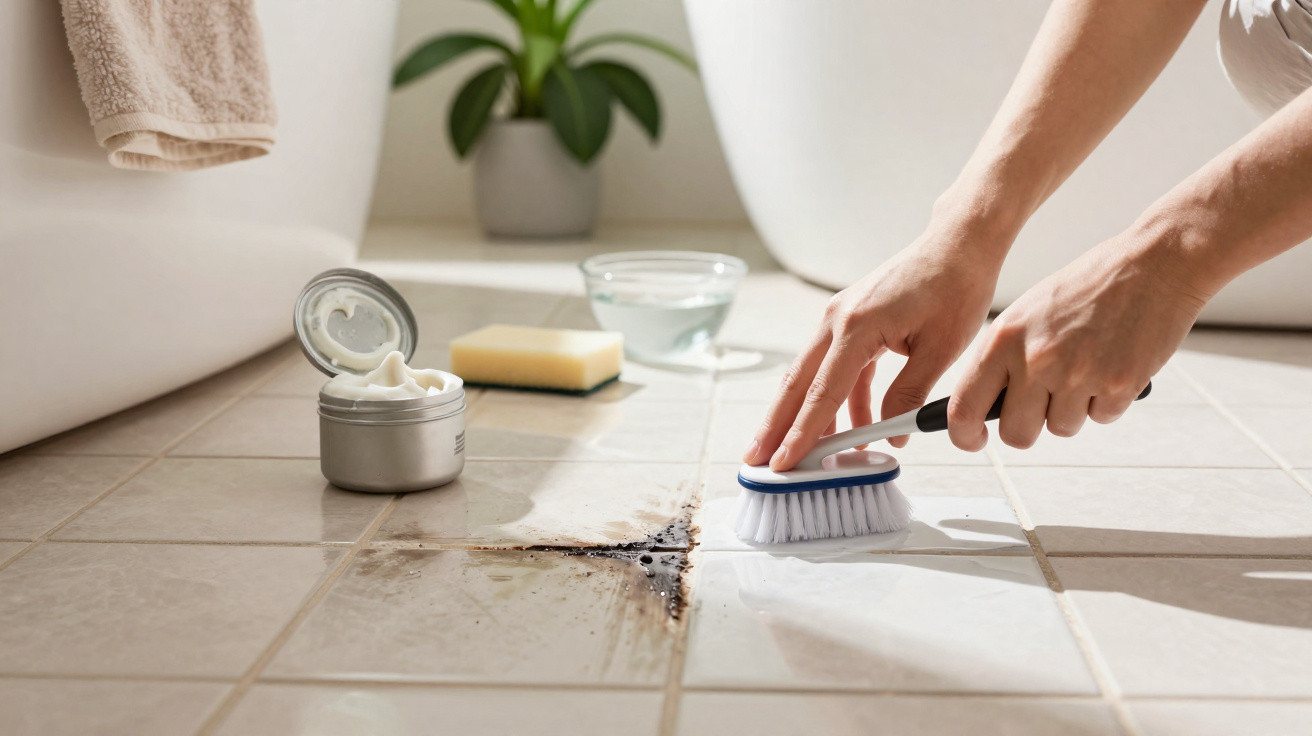
Across bathrooms and kitchens, homeowners are putting aside pungent cleaning solutions in favour of a clay-based product called “white cleaning stone”. This dense paste, long trusted by professionals, quickly brightens grout, removes built-up dirt and avoids harsh fumes. It may appear traditional, but its performance feels thoroughly modern.
Why grout becomes dark so quickly
Grout is porous, meaning it readily holds onto soap residue, dust, cooking vapours and dirty water from mopping. Over time, this combination works its way into the surface and remains there.
Moisture makes matters worse. Steam and condensation encourage mildew, particularly in showers and around basins, which can leave dark marks behind.
Glossy tiles can give a false impression of cleanliness. Even when the tile surface is spotless, the grout lines may still be collecting residue and starting to look dull.
Why vinegar and bleach are poor choices for grout
Because vinegar is acidic, it may etch cement-based grout and take the shine off adjacent surfaces. It can also harm natural stone and certain sealants.
Chlorine bleach may remove stains rapidly, but repeated use can weaken grout and cause pitting on metal trims. Its fumes can also remain in the room.
Strong acids and chlorine whiten on contact, but they also bite the very material you are trying to preserve.
A gentler alternative can provide a deep clean, a light polish and a very thin protective layer to help prevent future grime.
White cleaning stone: the understated grout cleaner
White cleaning stone is a concentrated paste containing finely ground white clay, mild soap flakes, plant-based fats, a small amount of sodium compounds and, often, a touch of citrus. It contains no phosphates or strong acids, and stores well on the shelf.
When used on grout, it works in three ways: it loosens residue, microscopically smooths the surface and leaves behind a discreet protective film that helps resist fresh deposits.
Only a small amount is needed, and it does not evaporate. Even with regular bathroom cleaning, one tub can last for many months.
No vinegar, no bleach: a clay-based paste restores grout brightness in minutes and keeps buildup from sticking again.
How to use white cleaning stone on tile grout
What you will need
- A damp sponge or soft-bristled brush
- White cleaning stone paste
- A microfibre cloth for drying
- An old, soft toothbrush for awkward corners
Method
- Dampen the sponge, then sweep it across the paste to make a light, creamy lather.
- Apply it along the grout lines using short, consistent strokes. Allow the product to lift the dirt rather than pressing hard.
- For persistent marks, use the soft toothbrush and repeat with gentle strokes.
- Leave the paste on older stains for 30–60 seconds, then rinse thoroughly with clean water.
- Wipe dry with a microfibre cloth to prevent fresh water marks and reveal the renewed colour.
In a typical shower, grout lines should look brighter after the first application. The rinse water becomes clearer with each pass, while the finished surface feels smooth rather than chalky.
Noticeable results and less frequent re-cleaning
Following treatment with white cleaning stone, freshly cleaned grout usually becomes dirty again more slowly. Its micro-smooth finish gives soap scum fewer places to cling to.
Regular maintenance is therefore easier: keeping the lines neat and even should take minutes rather than an entire afternoon.
How white cleaning stone compares with common solutions
| Method | What it does | Risks on grout | Odour and handling | Best use |
|---|---|---|---|---|
| Vinegar solution | Breaks down mineral film and light soap scum | May etch cement grout and damage stone | Pungent smell; requires good ventilation | Glass, some tiles, not porous grout |
| Chlorine bleach | Lightens organic stains and mildew | Weakens the grout structure; corrodes metals | Irritating fumes; requires careful mixing and PPE | Localised mould treatment, brief contact only |
| White cleaning stone | Removes build-up, micro-polishes and creates a light barrier | Low, when applied with gentle tools | Mild fragrance; rinses away easily | Regular grout care and restoration |
Other surfaces where it can be used safely
- Stainless-steel sinks and taps
- Hob surfaces and splashbacks
- Shower trays and enclosures
- Baths and vitreous ceramic
- PVC window frames and washable cupboard fronts
- Light rust marks on certain metals
Always carry out a test in an inconspicuous area first, particularly on coated metals, lacquered surfaces or very old grout. A 10-second check can avoid problems.
Spot test, go gentle, rinse well. Those three habits keep delicate finishes safe while you clean hard.
Preventing black grout lines from returning
- After showering, use a squeegee on walls and joints to remove surplus water.
- Air bathrooms to reduce condensation, keeping the extractor running until mirrors remain clear.
- In the kitchen, wipe away splashes and cooking residue before they set.
- When mopping floors, change the bucket water regularly and do not use excessive detergent.
- Give grout a light pass with white cleaning stone every few weeks; regular small jobs are better than intensive restoration work.
When cleaning is not enough
Very stained or crumbling grout may need more than a paste treatment. Start with several gentle applications, then consider a grout stain-sealer to restore colour and add protection.
Where joints are loose, powdery or missing, remove the top layer and regrout the lines. A narrow grout saw and careful work can create a solid base again.
Further advice and context
Check which grout you have. Cement grout is absorbent and benefits most from gentle polishing and sealing. Epoxy grout is more compact and generally needs only a surfactant wipe, rather than polishing.
Once grout lines are clean and dry, a breathable sealer can provide protection for months. For the best durability in wet areas, reapply it annually.
A simple routine is useful: spend five minutes drying surfaces after showers, do a light weekly clean with the paste and carry out a deeper rinse each month. Costs remain modest, while the results stay noticeable.
One safety warning: never combine chlorine bleach with acids or ammonia, as this mixture releases dangerous gases. Keep cleaning products straightforward and use them separately.
For tenants, white cleaning stone is particularly useful because it is not runny and is easy to control. It can be applied directly to grout without splashing nearby walls or damaging trims.





Comments
No comments yet. Be the first to comment!
Leave a Comment