
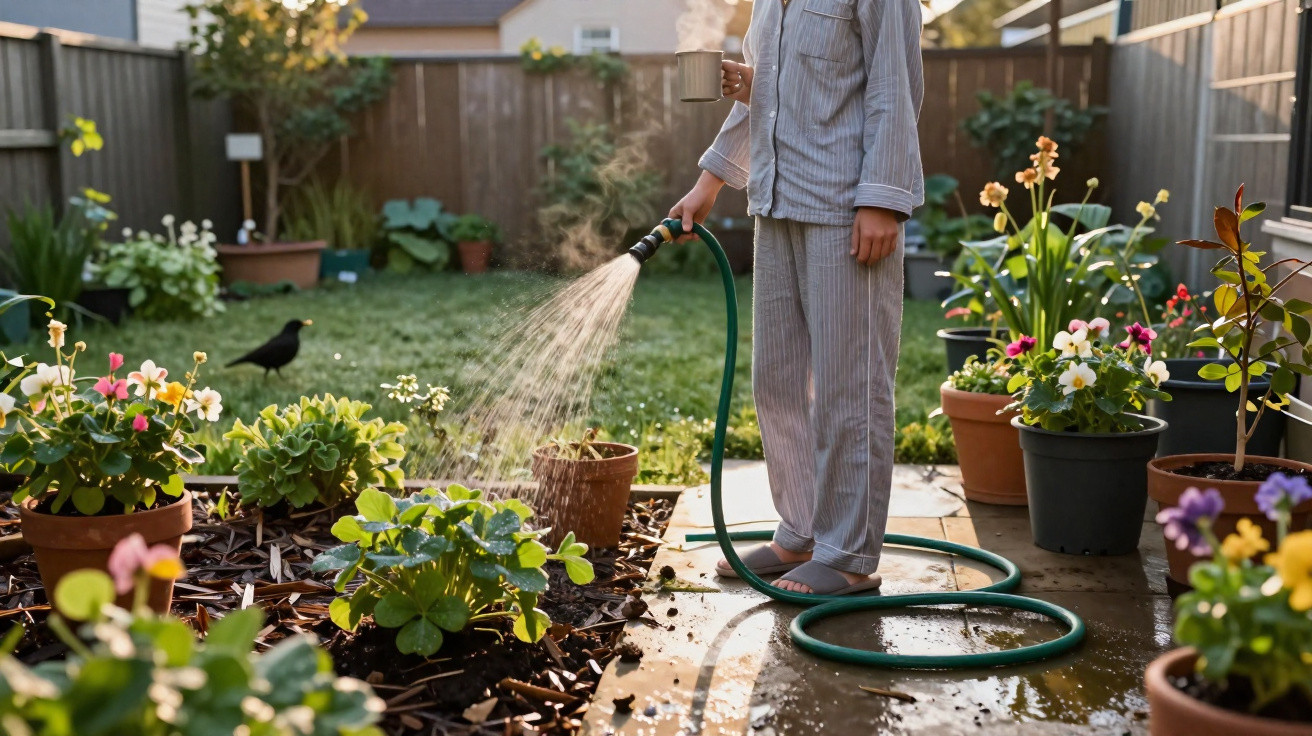
With a hose in one hand and coffee in the other, it is easy to look at drooping leaves and ask whether a quick watering this evening will put things right. Yet the timing matters as much as the watering can. For outdoor plants to take in water rather than simply become wet, choosing the right moment is an understated advantage.
A blackbird may hop along the border as the hose makes its gentle sound and water steadily enters the soil. At midday, however, that same ground can feel hot, with water seeming to skim across it and disappear like steam before it has time to penetrate.
I watered at sunrise on one occasion and after work on another. The plants were the same, but the results felt entirely different. The morning watering appeared to reach the roots, whereas the evening sprinkle was more like dressing a salad.
Timing makes all the difference.
Morning beats midday - and by more than you think
The early morning brings cooler ground, still air and a less severe sun angle. Water has an opportunity to travel downwards while roots are active, rather than spreading sideways under intense sunshine. As the day warms, the leaves can dry gradually, helping to keep mould at bay.
Gardeners often see the same pattern: water before breakfast and plants remain lively beyond lunchtime. Put it off until mid-afternoon and you may be watering again by six o’clock. In tests using a simple moisture probe, beds watered at 7am retained usable moisture for several hours longer than those watered at 1pm.
Sunshine accelerates evaporation, wind carries away droplets and heated surfaces drive water upwards as vapour. Apply that same litre at dawn and a larger share moves through capillaries to the areas where growth takes place. Dew may briefly rinse the foliage before it dries, reducing the period in which fungi thrive on wet surfaces.
How to water for deep uptake (in any weather)
Apply water slowly and direct it to the plant’s base rather than its leaves. Think of it as a “long drink”, not a “quick sip”. A gentle five-minute trickle is more beneficial than a forceful thirty-second blast.
With containers, water until the first run-off appears, leave it for two minutes, and then water once more. This second application carries moisture beyond the dry surface crust and into the root zone. In beds, use a soaker hose or a watering can with its rose set to a low flow, working in a circle around the drip line.
Most of us have rushed outside with a hose and declared the job finished. Realistically, no one manages that every day. A modest adjustment to your pace can have a remarkable effect. Water before 10am, keep the flow slow and top up the mulch lightly afterwards to retain the moisture.
“Water is a courier. Give it a calm road at dawn, and it will reach the roots with most of the parcel intact.”
- Best window: sunrise to mid-morning
- Second-best: early evening, with care for leaf drying
- Avoid: midday heat, windy spells, heavy leaf-wetting
- Aim for: deep, infrequent soaks, not daily spritzes
- Bonus: add 5–8 cm of mulch to reduce evaporation
Season, soil, and shade: when the ‘best time’ shifts
Clay, sand, slopes and shade all alter the timetable. Sandy soils drain rapidly, making morning especially important because there is less margin for poor timing. Dense clay retains water, so early evening can be suitable provided the leaves have time to dry before nightfall.
During hot spells, move the watering window earlier. On a scorching July day, watering close to sunrise allows several hours of gentle drying and leaves less wind to steal the droplets. In cool, overcast periods, late afternoon may still suit the roots while allowing foliage to dry sufficiently before dusk.
When unsure, push a finger into the soil to the first knuckle. If it is dry, water; if it is cool and damp, wait. Shade gardens lose less moisture through evaporation and can cope with slightly later watering. Patios in full sun require an earlier start and a deeper mulch layer. Avoid a midday sprinkle: even if it is convenient, it is the least efficient time to water.
Morning vs evening: the real-world trade-offs
Morning is best for both water absorption and plant health. Roots receive moisture just as stomata begin their daily activity, and foliage has time to dry. It is also gentler on your water bill, as less of each hard-won litre is lost to the air.
Evening is the next-best choice. Temperatures are lower, winds often settle, and the root zone can still be hydrated. The drawback is that leaves and crowns may remain wet overnight, encouraging mildew on roses, rust on lawns and slug activity in borders.
When evening is your only available option, water earlier rather than later and keep the flow close to the soil. Gently lift the foliage by hand and send the water beneath the canopy. Evening is not a bad option, merely one that demands more careful technique.
Tools and tiny habits that change everything
Replace a high-pressure nozzle with a soaker hose or a watering can fitted with a rose head. Both naturally encourage a slower approach. An inexpensive mechanical timer on a drip line can make early watering easy.
Mulch is the overlooked champion. A 5–8 cm layer of composted bark or straw can reduce evaporation and keep the surface cooler. Even covering a single square metre can help during busy weeks.
Add a short heatwave reminder to your calendar: “Water dawn, deep.” During cool, damp weeks, water less often. Plants do not need a rigid timetable; they need an ongoing conversation. The soil will always respond when you check it with a probe, a finger or a simple glance.
Why leaves don’t need a shower, and roots do
Plants take up the overwhelming majority of their water through their roots, not through their leaves. Foliar sprays generally cool a plant briefly before vanishing. The roots, rhizosphere microbes and soil structure do the real work.
Wetting foliage can be useful for dealing with pests and dust, but it is no substitute for a deep soak. It also extends the period for which leaves stay wet, giving disease an opportunity to take hold. Focus most of your effort on the soil, where capillary action delivers water to the fine feeder roots.
For most ornamental plants and vegetables, aim to moisten the soil profile to a depth of 15–20 cm, going deeper for shrubs and young trees. Brief bursts seldom achieve that. A slow, steady application wins the unseen race.
Soil types: read the ground before the sky
Sandy beds benefit from regular, deep morning watering because they drain quickly. Clay retains moisture for longer, so be alert for waterlogging and schedule evening sessions earlier. Loam is the ideal middle ground-lucky you-and responds well to a dependable dawn routine.
Raised beds and containers become miniature deserts in hot weather. They heat and cool quickly, while wind strips away their moisture. If possible, move them away from harsh gusts, insulate them with mulch and water at sunrise for the strongest uptake.
On slopes, water runs away before it can soak in. Interrupt the flow by forming small basins around plants, or water in short rounds and allow each one to absorb before making the next pass. It may look slower, but it saves time in the end.
What about rain, wind, and surprise heatwaves?
Rain does not necessarily reach the root zone. A light shower may dampen the top centimetre while everything underneath remains thirsty. Once a week, dig a small inspection hole to find out what is really happening.
Wind is a thief, removing droplets as they travel and drying the upper soil layer. On blustery days, hold the spout closer and place even greater emphasis on morning watering.
Heatwaves make the safe window smaller. Target the calm period just after first light and give a deeper drink less often. Plants do not need a daily sprinkle; they need a proper refill.
Seasonal rhythms: spring sap, summer stress, autumn roots
Spring is the time to build momentum. Roots reawaken, leaves open and light dawn soakings keep growth moving steadily. Summer requires a different strategy: water more deeply in the morning and do it less frequently.
In autumn, roots continue to grow as the upper parts of plants settle down. Morning remains the best time, while the gaps between watering sessions can become longer. Winter watering is important for evergreens during dry, mild periods, provided the ground is not frozen.
There is a subtle choreography involved: you, the sky, the soil and the roots all following a clock that is not displayed on the wall.
One small ritual that keeps you honest
Keep a jug or cup beside the tap and set a phone reminder saying: “Soak at sunrise.” It need not be flawless. Establish the habit, and your plants will reveal the rest.
Observe, listen and touch. Leaves that recover by mid-morning, soil that remains cool a knuckle down and stems that stay firm through the afternoon are all green signals of approval.
You do not need sophisticated equipment to water effectively, only attention at the appropriate hour. That hour is early.
Why the best time is really a best window
Treat watering time as a window instead of one exact minute. From sunrise until mid-morning is the broadest and safest period for maximum absorption in most gardens. Early evening offers a shorter window that requires more care.
That window varies according to season, soil, wind and shade. It also depends on your own circumstances-working hours, family chaos or the school run. The key is to fit your routine into the day’s calmer period instead of battling against it.
Plants will not judge you for being human. They will respond well to a simple, consistent rhythm that respects their roots and the changing moods of the weather.
Keep the conversation going
There is something calming about going outside while the day is still young and giving your plot a thorough drink. You notice the air and light, and spot small changes that would be missed later. The more often you water during that quiet period, the less you will have to battle stress at noon.
Share the methods that work in your street. A shaded London courtyard is not the same as a wind-exposed coastal allotment, yet both can be managed successfully. Your neighbour’s approach could become your next ritual.
Plants are patient teachers. The clock is their chalkboard. Tune in and they will show you precisely when they need a drink-and how much of it remains where it is needed.
| Key point | Detail | Benefit for the reader |
|---|---|---|
| Water at dawn | Cooler air, calmer wind, active roots | More water reaches the root zone |
| Deep, slow soaks | Use soaker hoses, double-pass for pots | Stronger plants, fewer top-ups |
| Adapt to conditions | Soil type, shade, and season shift the window | Fewer mistakes, healthier growth |
FAQ:
- Is morning always better than evening? Yes for most gardens. Morning reduces evaporation and disease risk. Early evening can work if leaves dry before night.
- How long should I water each plant? Water for long enough to moisten the soil 15–20 cm down. For pots, water to the first run-off, pause, then water again.
- Does watering at midday harm plants? It loses water through evaporation and wind. It rarely scorches leaves, but it is the least efficient time.
- Should I wet the leaves? Focus on the soil. Wet foliage increases disease risk unless you are washing off pests or providing brief cooling during extreme heat.
- How can I use less water without stressing plants? Add 5–8 cm of mulch, water at dawn and switch to deep, infrequent soaks. Keep thirsty plants together.






Comments
No comments yet. Be the first to comment!
Leave a Comment