
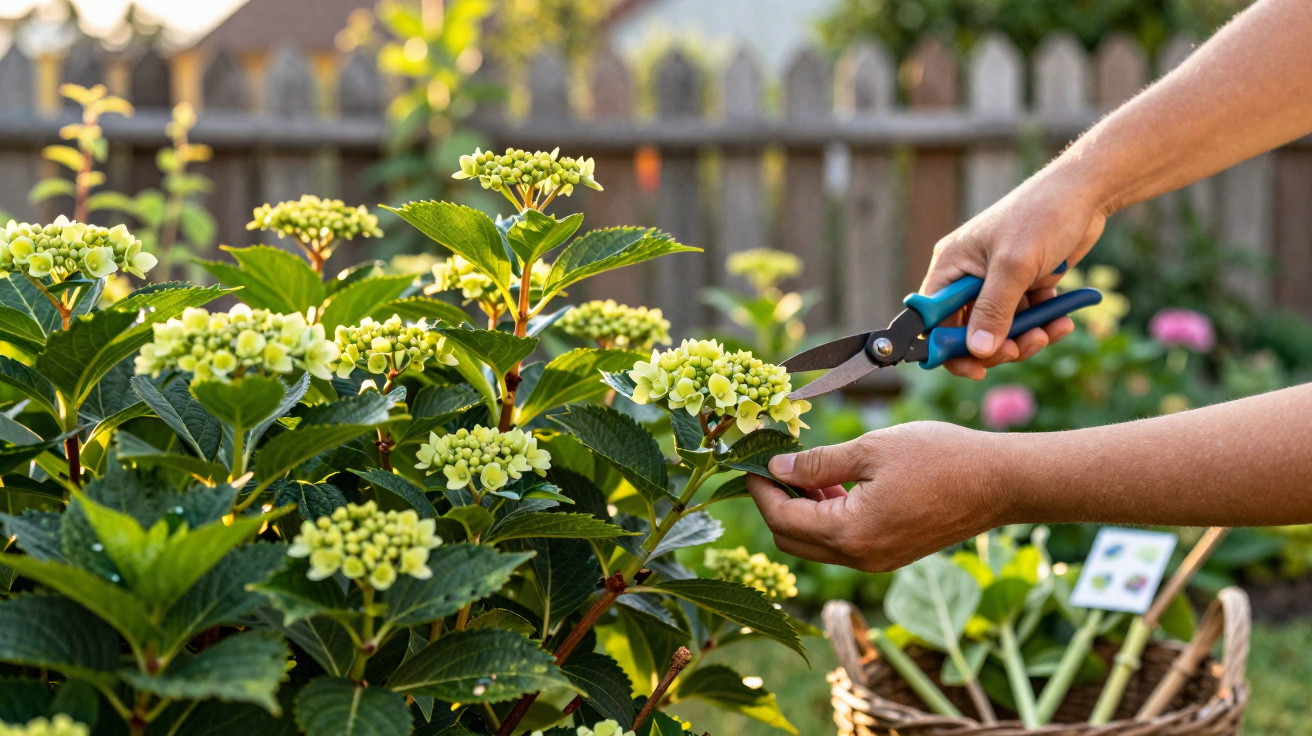
A hydrangea can go from a season packed with blooms to one with few or no flower heads when pruning removes the stems that would have produced the following flowers. The reason is straightforward but often overlooked: not all hydrangeas produce flowers on the same type of growth.
Why can a hydrangea stop flowering after pruning?
Some hydrangeas, particularly many Hydrangea macrophylla varieties, develop flowers on growth made previously. In practice, stems that appear to be nothing more than old wood may hold vital structures for the next flowering period.
If these stems are cut back severely before the plant blooms, the buds that would have formed flowers may be removed as well. The following year, the hydrangea will remain alive and put out leaves, but it may flower far less abundantly.
Should every hydrangea be pruned in the same way?
No. This is one of the most important considerations when caring for the species. Different hydrangea types have different flowering habits.
Bigleaf hydrangeas, for instance, may flower on old wood, whereas certain Hydrangea paniculata and Hydrangea arborescens varieties flower chiefly on new growth. Using one pruning rule for every type can therefore mean cutting away the stems responsible for flowering.
How to identify the stems that should be kept
Before carrying out heavy pruning, it is essential to establish which hydrangea species or cultivar is growing in the garden. Looking at the shape of its leaves and flower heads, as well as how the plant grows, can help, although correctly identifying the variety provides greater confidence.
On hydrangeas that bloom on old wood, older stems may bear the buds that will open later. In these cases, hard pruning should be avoided, particularly if it is being done without understanding the plant’s growth cycle.
When is the best time to prune a hydrangea?
The right timing depends on the hydrangea type and the purpose of the pruning. For varieties that flower on old wood, the general advice is to prune immediately after flowering, giving the plant sufficient time to produce the stems that will support the next season’s blooms.
Species that flower on new growth, by contrast, can tolerate pruning at different times. The schedule should not be based on the month alone: the species, local climate and flowering habit must all be taken into account.
What should you do if the hydrangea has already lost its buds?
When a hydrangea once produced plenty of flowers but begins flowering sparsely after heavy pruning, check whether old stems have been removed. Other factors also need consideration, including light levels, water, temperature and soil conditions.
A lack of flowers is not always caused by pruning. However, if the plant is growing normally, producing healthy leaves, and flowering declines after a substantial cut, the timing and method of pruning should be investigated.
Before cutting back a hydrangea once it has finished flowering, it is therefore worth finding out which type you are growing. Keeping the right stems can ensure that the buds responsible for the next season remain on the plant.




Comments
No comments yet. Be the first to comment!
Leave a Comment