
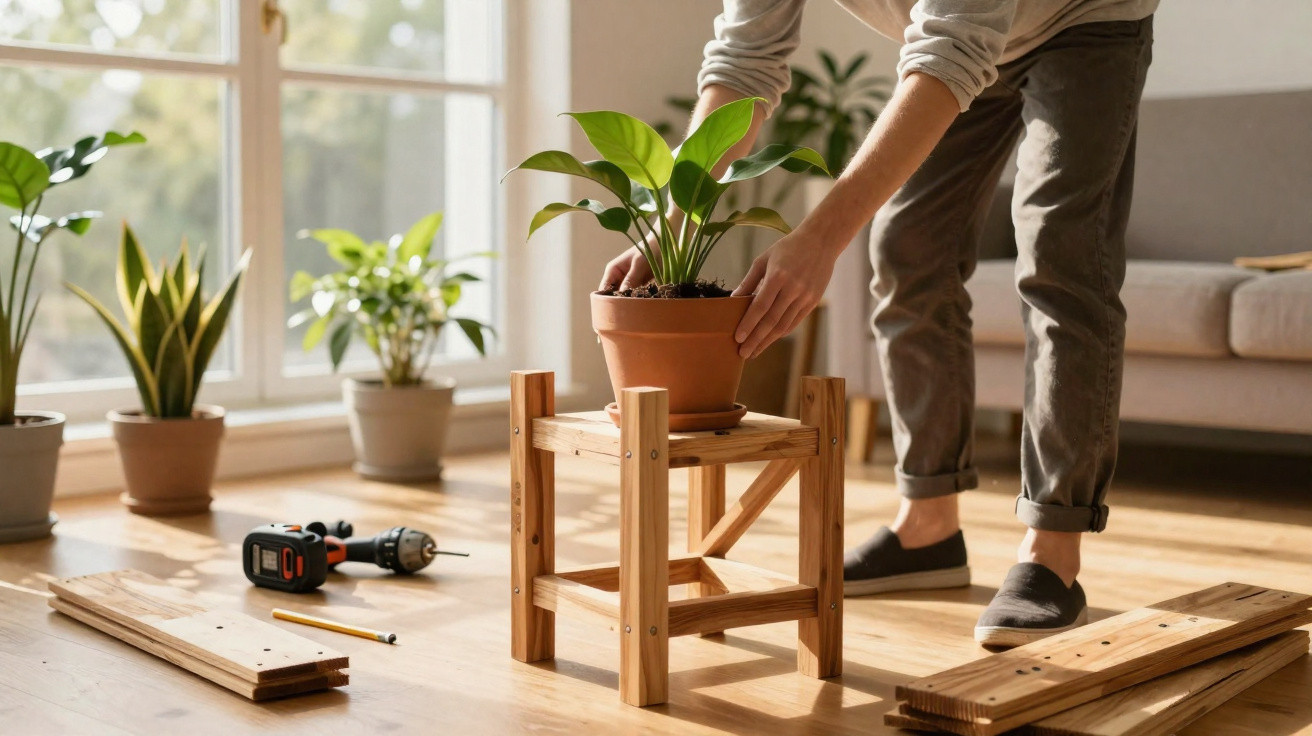
A wooden plant pot stand can be made from offcuts that might otherwise be thrown away, turning basic pieces into a practical structure for arranging plants. The project need not be complex, but the choice of timber, the finish and, above all, stability are important for preventing pots from toppling over.
Why can reclaimed timber work for a plant pot stand?
Leftover timber can be suitable for small projects provided it is sound, dry and free from significant cracks. As well as cutting waste, using reclaimed pieces makes it possible to tailor the stand’s size to the available space, whether on a balcony, in a garden or indoors.
Its strength must, however, match the weight of the pots. A small container may seem light when empty, yet damp growing medium, water and the plant itself considerably increase the load. For this reason, very thin or damaged timber is unsuitable for structures intended to hold several pots.
What makes a wooden plant pot stand stable?
Measurements should take account of both the pots’ dimensions and how their weight will be spread. The base must be wide enough to stop the structure from tipping, while the shelves need a length and thickness appropriate to the load they will carry.
The joints require careful attention too. Suitable screws and well-placed fixing points help keep the components secure. Before adding the plants, test the stand’s stability and check that it does not wobble or lean under weight.
How do you build a plant pot stand from reclaimed timber?
First, measure the available area and the pots that will sit on the structure. Next, cut the timber to suit the design, sand each surface to remove splinters, and assemble it while keeping every part aligned. A straightforward design can consist of two side sections and one or more horizontal shelves.
Once assembled, apply a finish suited to the location where the stand will be used. Outdoors, timber is more exposed to moisture and sunlight, so it is important to use a product recommended by its manufacturer to protect the material. Allow it to dry fully before placing the pots on it.
Who should adapt this project, and for which settings?
Anyone planning to use the stand in a flat or indoor space should consider the total weight and protect the floor from watering runoff. A tray beneath the pots can help prevent excess water from reaching the timber and the surrounding surface directly.
For outdoor areas, the design must take wind, rain and sun exposure into account. Very tall or heavy pots can increase the risk of tipping, particularly on lightweight structures. Adjusting the dimensions and reinforcing the base for the intended use is more important than following fixed measurements for every project.



Comments
No comments yet. Be the first to comment!
Leave a Comment