
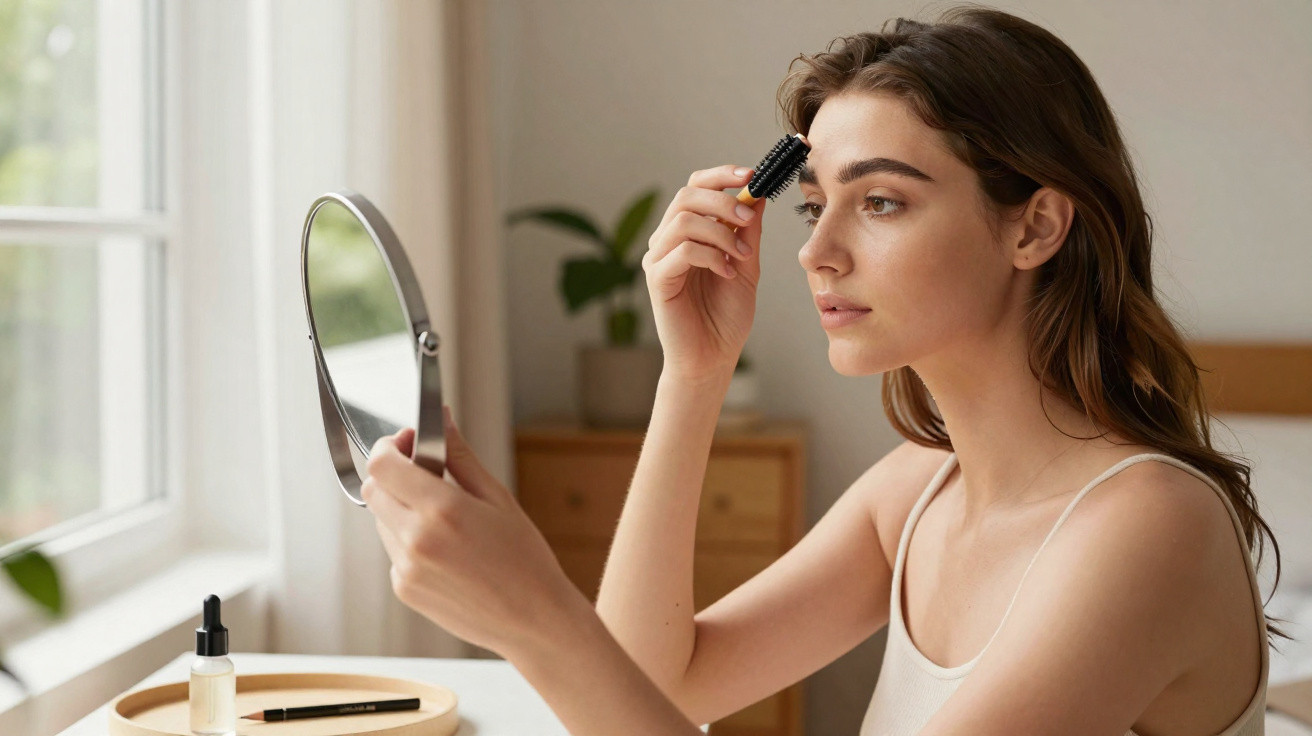
TikTok’s ultra-slim arches and the bleached brows seen on red carpets have left many people studying the mirror and hoping their eyebrows will grow back as they once did. Whether years of plucking have left your brows sparse or they were never particularly dense, a handful of steady, understated habits can gradually restore more volume without booking a salon appointment.
Why thin brows are back – and why you might regret them
Beauty fashions are cyclical. Full, brushed-up “boy brows” ruled much of the 2010s, but ultra-thin, Y2K-style arches have returned to TikTok and Instagram since late 2025. Meanwhile, celebrities have experimented with bleached brows, making the hairs appear almost invisible on camera.
Although these styles can look dramatic in photographs, they may be harder to wear day to day. Eyebrows frame your face, balance the forehead and draw attention to the eyes. If they become too fine or too light, other facial features can suddenly seem more severe. It is then that many people begin to miss softer, fuller brows.
Eyebrows are not just decoration. They shape the entire expression of your face and influence how rested, kind or strict you appear.
Fortunately, even brows over-plucked with tweezers can often recover a visible amount of density with patience, time and purposeful care. You will not wake up tomorrow with Cara Delevingne’s brows, but you can move closer to the best version of your natural brows.
Step 1: Call a truce with your tweezers
The first step is straightforward, although it can be difficult: stop over-plucking. Follicles need relief from repeated trauma before they can resume a healthy growth cycle. This requires allowing the untidy regrowth stage to happen, even when hairs emerge in areas you would rather they did not.
How long to pause hair removal
- 3–4 weeks: you may see early, soft regrowth, particularly if you normally groom weekly.
- 6–8 weeks: your natural eyebrow line starts to become clearer.
- 3–6 months: slower, deeper follicles may begin growing visible hairs again.
If you truly must tidy your brows, remove only hairs that are obviously beyond your natural brow area, such as an isolated hair at the temple or high on the forehead. Do not reshape the upper or inner edges, since these areas have a major effect on how full the brows appear.
The everyday “just one more” use of tweezers does more damage to brow density than any one big shaping session.
Step 2: Brush your brows like you brush your hair
After putting your tweezers aside, add a simple but effective daily habit: brush your brows. Use a clean spoolie, the brush shaped like a mascara wand, and approach your eyebrows as you would a miniature scalp.
Why brushing helps
- Boosts circulation: light friction increases blood flow around the roots, helping to support growth.
- Instant volume: lifting the hairs disguises small gaps and makes brows look denser.
- Trains the shape: frequent brushing encourages hairs to grow in a more balanced direction.
Use small strokes, brushing hairs upwards from the root before directing them slightly outwards towards the tail. Do this on clean skin in the morning, then repeat it at night before applying any treatment. Do not scrub forcefully, as this may irritate skin or snap fine hairs.
Step 3: Feed the follicles with targeted care
Like eyelashes and the scalp, eyebrows benefit from regular, concentrated care. There are two main approaches: natural oils and cosmetic serums. Many people use a combination of the two.
| Type | What it does | Best for |
|---|---|---|
| Peptide-based serum | Helps support the hair-growth cycle while strengthening the hair shaft. | Fragile eyebrow hairs that break easily. |
| Fortifying gel | Covers hairs, provides gentle hold and conditions them over time. | People new to brow care who want a 2-in-1 styling product. |
| Castor or argan oil | Conditions the skin while giving hairs shine and flexibility. | Dry skin, brittle brows and affordable routines. |
At night, apply your preferred product to clean, dry skin. With a cotton bud or slim brush, draw a fine line over the hairs and any sparse areas. Then use your fingertip to massage gently for 30 seconds, supporting absorption and circulation.
Brow treatments rarely show dramatic changes in a week. Most people start noticing a real difference after six to eight weeks of nightly use.
Step 4: Master the “hair by hair” makeup trick
As you wait for fresh growth, well-placed makeup can bridge the difference between your existing brows and your desired shape. The aim is to recreate individual hairs rather than filling in a heavy, stencilled block.
Build a believable brow in three moves
- Sketch the outline: Using a fine eyebrow pencil close to your natural hair colour, lightly define the lower brow edge. Remain within the limits of your natural brow.
- Add hair strokes: With the same pencil or a micro-tip pen, make short upward marks through sparse sections, following the direction in which your hairs naturally grow.
- Fix with tinted gel: Brush a subtly tinted gel through the brows to merge the natural hairs with the drawn strokes. It adds texture and keeps the adjusted shape in place.
Look for formulas labelled “micro-tip”, “precision” or “pen-like”. Pencils that are too creamy can smear, resulting in the unwanted sharpie effect. Work slowly, step back from the mirror and assess both brows at once: they should look like sisters, not identical twins.
Setting realistic expectations for regrowth
Not every eyebrow will regain the thickness it had during your teenage years. After prolonged aggressive waxing or threading, some follicles can become permanently inactive. Density may also be affected by hormonal changes, certain medicines and health conditions including thyroid disorders.
Dermatologists generally outline three main possibilities:
- Temporary thinning: brows recover within several months after picking and over-plucking end.
- Partial loss: the overall shape returns, but some patchiness remains, particularly at the tails.
- Permanent gaps: particular sections remain sparse and may require ongoing makeup or professional treatment.
If gentle care produces almost no regrowth after six months, or your brows are coming out in clumps, consider seeing a dermatologist or trichologist. They can investigate possible underlying causes and discuss treatments such as prescription serums or, in some cases, eyebrow transplants.
Helpful definitions: density, shape and texture
Brow professionals commonly separate eyebrows into three aspects: density, shape and texture. Knowing what these mean can help you identify where to direct your efforts.
- Density means the number of hairs in a given area. The four nightly habits chiefly aim to improve this.
- Shape concerns where the brow begins, arches and finishes. Careful grooming and makeup can alter this.
- Texture refers to whether individual hairs are thick, fine, straight, curly or coarse. Brushing and nourishing care can affect this element.
A person may have thin brows with an attractive shape and texture, needing only a modest increase in density. Someone else may have plenty of hair but an irregular outline, meaning professional mapping could be more useful than growth serums.
When to consider professional treatments
If months of at-home care still leave you disappointed, there are professional options available, each with advantages and disadvantages.
- Brow lamination: a salon procedure that straightens hairs and sets them upwards to create the appearance of added volume. The results last around six weeks.
- Tinting: colours pale, fine hairs more deeply, helping brows appear thicker without creating new growth.
- Microblading or brow tattooing: semi-permanent pigments designed to imitate hairs. These treatments require a carefully chosen artist and involve small but genuine risks of infection or allergic reaction.
Your home routine remains important even if you choose one of these options. Healthy skin and existing hairs produce better, more natural-looking results, and may help professional work last longer.
Four simple gestures done nightly – backing off the tweezers, brushing, nourishing and faking hair by hair – rarely go viral, yet they quietly rebuild the brows that extreme trends keep trying to erase.





Comments
No comments yet. Be the first to comment!
Leave a Comment