
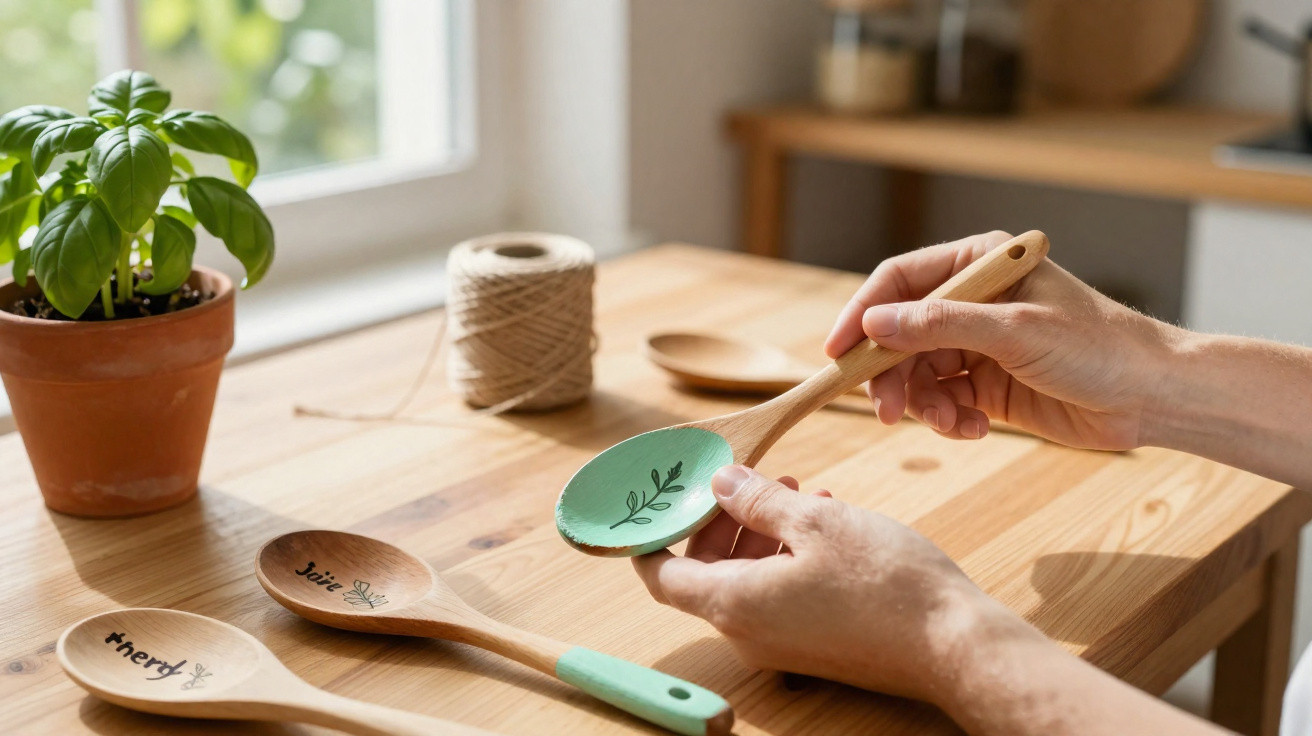
An old wooden spoon can remain useful long after it is no longer used for preparing food. Depending on the condition of the wood, the utensil can become a decorative feature, a plant label or even a way to organise small items, extending the life of a piece that might otherwise be thrown away.
Why can an old wooden spoon be repurposed?
Its long shape and handle make a wooden spoon suitable for a range of adaptations. In the garden, for instance, it can act as a small sign for identifying herbs and seedlings. Indoors, it may form part of a decorative arrangement or provide support for certain lightweight objects.
Wood also works naturally in rustic or nature-inspired interiors. Before repurposing it, however, assess the item carefully, as heavily worn wood may have cracks, splinters or signs of deterioration.
What should be checked before reusing it?
Inspect the entire surface for deep cracks, mould, softened areas or splinters. If the spoon has been used in the kitchen for a long time, it is also important to clean it thoroughly before turning it into another item.
If the wood is in good condition, light sanding can make the surface more even. For decorative purposes, a wood-compatible finish may be applied, provided that the product instructions and drying time are followed.
How can you turn an old wooden spoon into something useful?
One straightforward option is to write the names of herbs or plants on the handle or spoon bowl and use it as a label in plant pots. Alternatively, several spoons can be attached to a base to create a decorative display, as long as the structure is secure.
Around the home, the piece can also be incorporated into themed organisation or used as decoration in the kitchen, utility room or balcony. Avoid using an old wooden spoon to hold heavy items, though, as the material may not be strong enough.
Who should repurpose it, and in which situations?
If the spoon shows excessive wear, cracking or mould, it is best not to use it anywhere that particles could come loose or where it could come into contact with food. Damaged pieces may also break during installation.
Outdoors, wood is exposed to rain, moisture and sunlight, all of which can speed up deterioration. For this reason, an old wooden spoon is best used as a decorative feature or lightweight plant label, with maintenance suited to its environment.


Comments
No comments yet. Be the first to comment!
Leave a Comment