
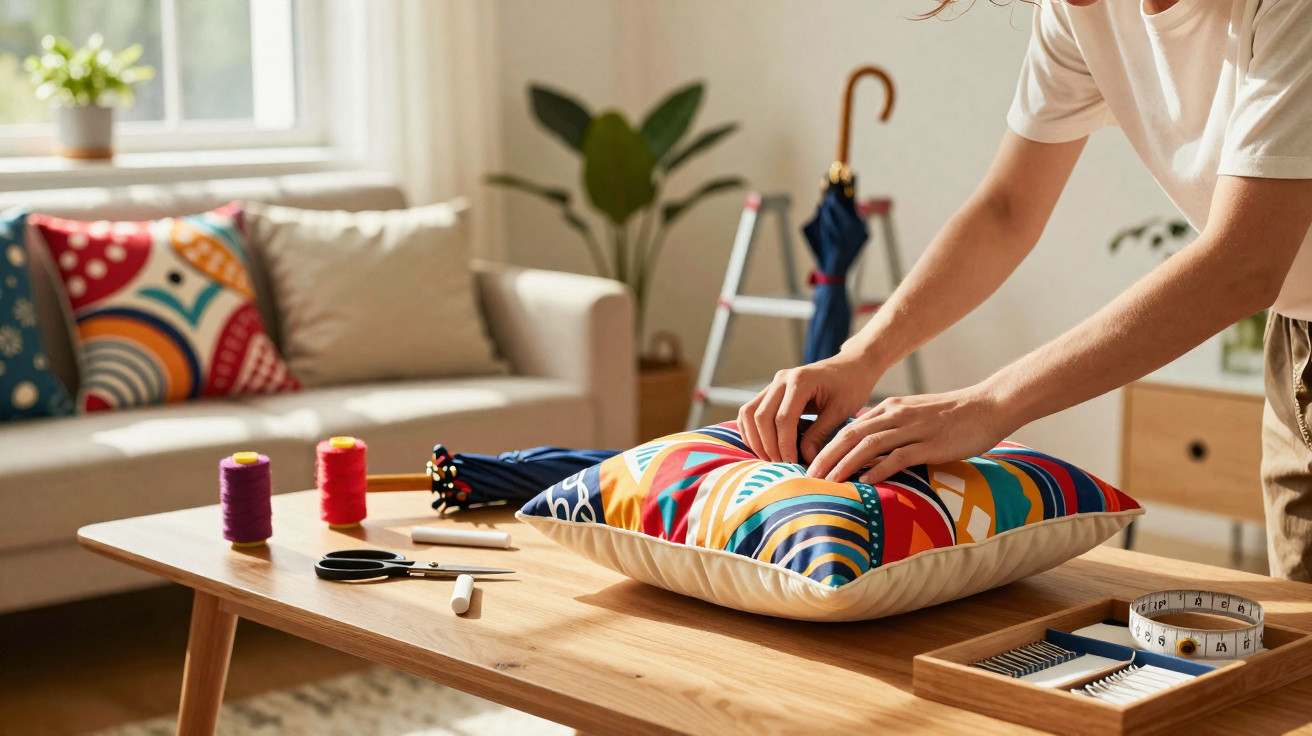
Many people throw away broken umbrellas without recognising the considerable decorative potential of their hard-wearing materials. With creativity and straightforward sewing techniques, these overlooked items can take on new uses, turning waterproof fabric into functional pieces that add practicality and style to any home.
Why reuse fabric from damaged umbrellas?
The synthetic fabric used in umbrellas is highly durable and offers excellent resistance to everyday moisture. These technical qualities make it ideal for a range of craft projects, preventing the needless disposal of components that still retain their structural integrity and vivid colours.
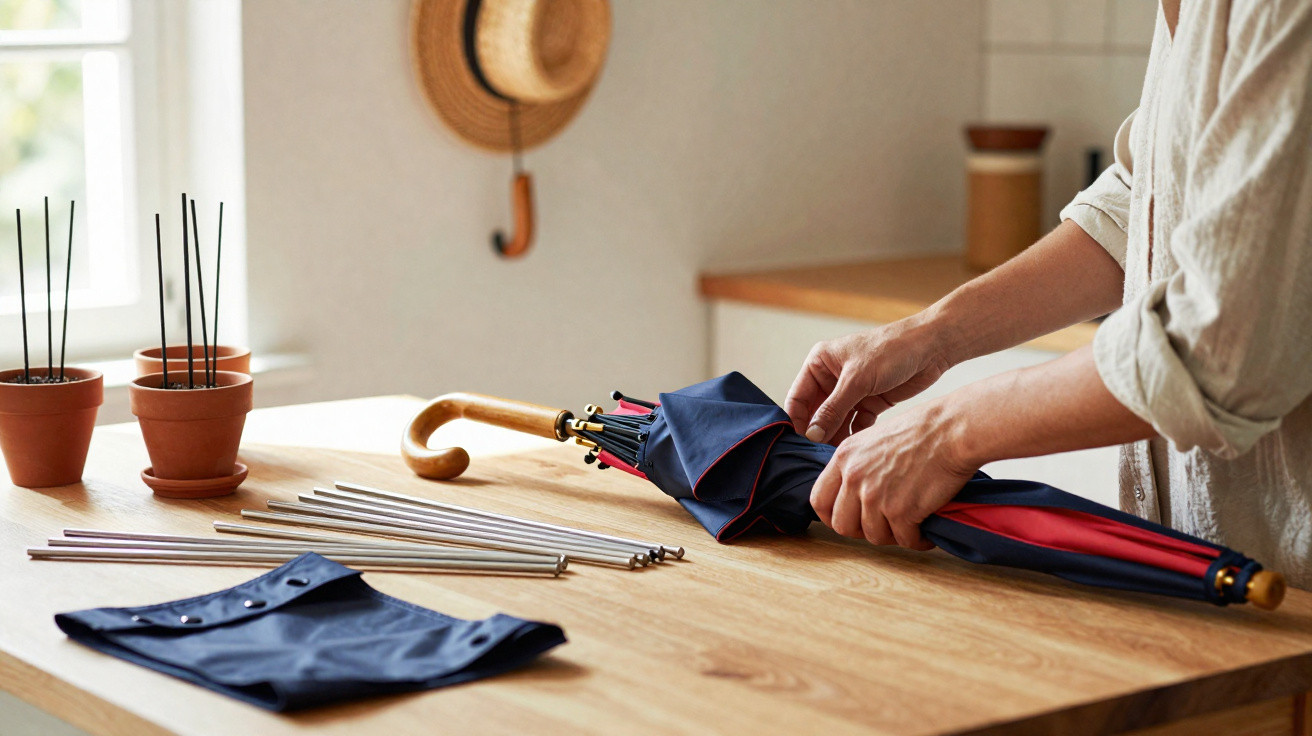
Once the damaged metal frame has been taken apart, the maker has a generous piece of material for creating protective covers or cushions. This approach supports conscious consumption, encourages handcrafting and delivers direct financial savings when refreshing interior spaces without excessive spending.
How can old ladders be transformed into decorative pieces?
Old wooden ladders have significant aesthetic potential when adapted into rustic shelving, hanging organisers or practical stands that… Read more
How do you make a decorative cushion from an old umbrella?
Making a round cushion begins with carefully unpicking the seams that hold the fabric to the ribs. After washing and ironing the material, sew a continuous running stitch around its entire edge to form the base for the voluminous filling.
Placing siliconised fibre in the middle provides softness and an ergonomic shape, allowing the piece to sit comfortably on armchairs or sofas. Finishing the centre with covered buttons creates a refined look, concealing the thread ends and enhancing the appearance of the homemade creation.
Below is a video from the TV Aparecida YouTube channel that explores the points covered in this topic in greater detail:
What materials are needed to transform the structure?
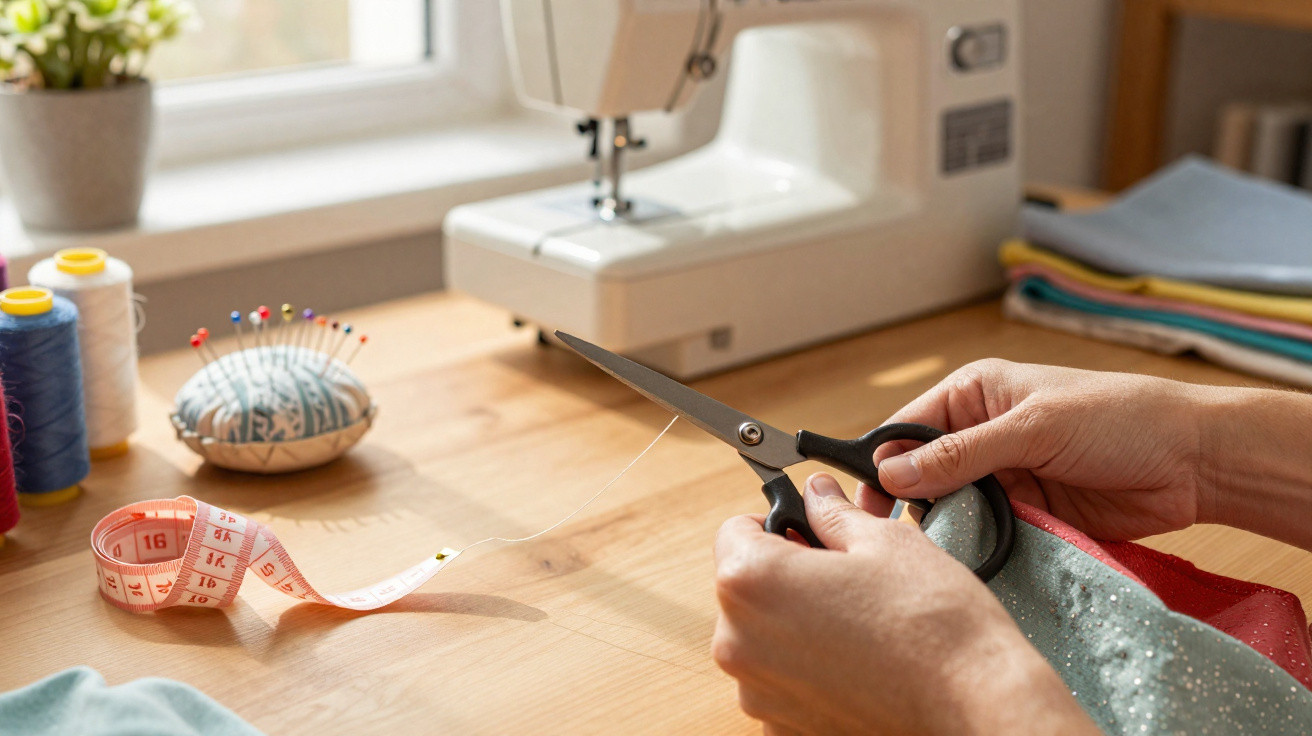
Gathering the right tools before starting the manual work ensures speed and safety at every stage. Strong upholstery thread and long needles make it easier to sew the synthetic fabric securely, preventing unwanted tearing as the piece is gathered.
Small pliers help release the wires fixed to the main frame without injuring the maker’s hands. Decorative details, including ribbons and reused buttons, also complete the aesthetic finish, giving every newly made item its own distinctive personality.
Essential Making Kit
Materials for the project
Collect the following items to make your piece:
- Number ten upholstery thread and a sturdy needle;
- Soft siliconised fibre for internal structure;
- Cutting scissors and pliers for dismantling the ribs.
What other creative ideas can use the remaining parts?
The metal ribs and plastic or wooden handles also present excellent opportunities for sustainable household projects. These structural parts can be used as supports for climbing plants or as organising hooks for keys in smart entrance halls.
Any remaining waterproof fabric can become protective covers for fans or foldable eco-friendly bags. This versatility means that no component needs to be placed in general waste, encouraging practical and environmentally responsible solutions for daily life.
A few practical reuse options can help make the most of these parts:
- Protective fan covers to prevent dust build-up;
- Hanging supports for organising small items;
- Strong waterproof bags for carrying shopping.
How can the durability of reused objects be maintained?
Synthetic fabrics should be cleaned regularly with mild soap and cold water to preserve their colour. Avoiding abrasive chemicals prevents premature fibre wear, ensuring that the craftwork retains its original appearance for years.
Keeping the finished pieces away from excessive direct sunlight prevents the material from drying out and the threads from weakening. Small day-to-day care measures keep the items impeccable, highlighting the effort invested in every detail of this sustainable handmade project.
Comments
No comments yet. Be the first to comment!
Leave a Comment