
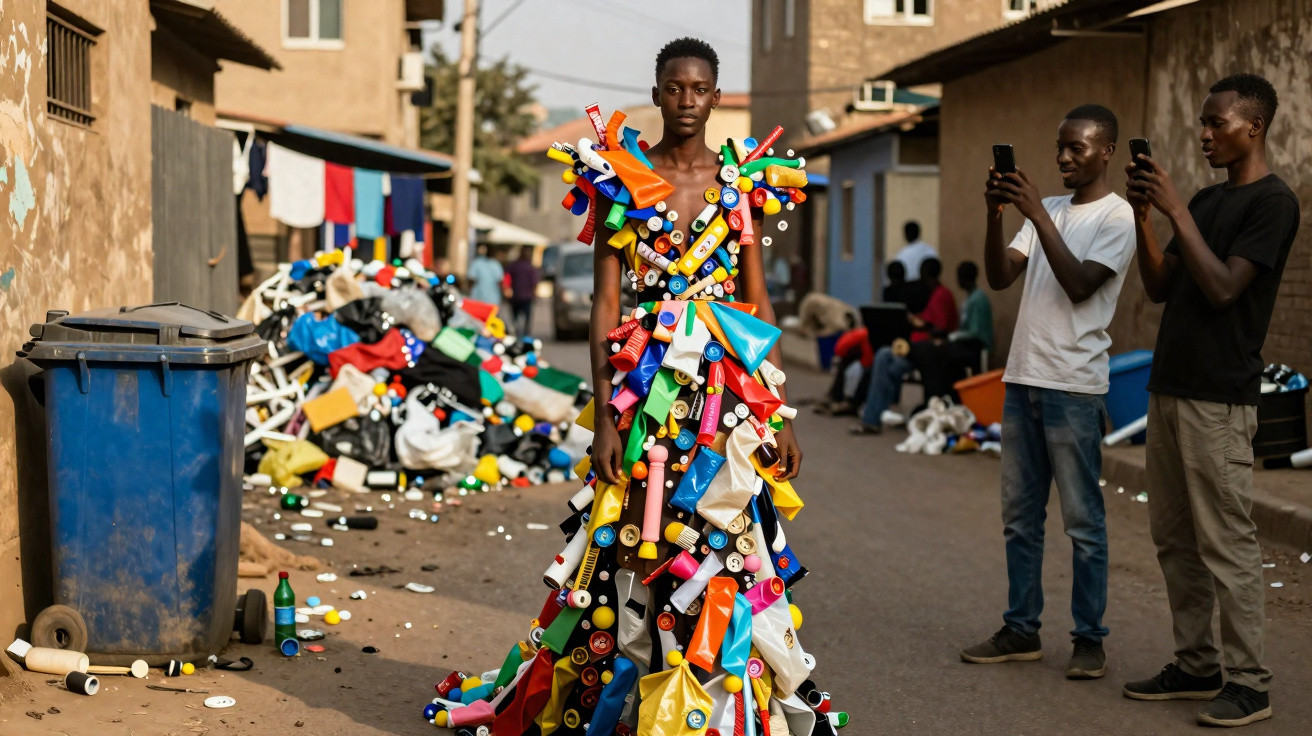
Turning discarded materials into sophisticated visual art signals an innovative shift in modern recycling. In Ethiopia, a young creator has astonished audiences worldwide by producing luxurious fashion editorials using nothing but urban waste and considerable creativity in viral productions.
How does Kalu Putik turn waste into high fashion?
The 15-year-old designer uses old tyres and pieces of cardboard to build garments with a striking visual presence. This inventive process brings together discarded plastic and electrical wires to create sculptural pieces with an extraordinary luxury aesthetic.
Every design begins with the careful choice of scrap found in the streets, which is then shaped into unexpected, voluminous forms. Through this list of resources, the creator communicates urgent environmental messages, showing that abandoned material holds immense aesthetic potential.
- Old tyres: Give the outfits dramatic weight and structural grandeur.
- Cardboard and plastic: Used to construct the essential volume of each piece.
- Electrical wires: Provide internal support, mimicking bone anatomy.
- Discarded footwear: Incorporated to create visually powerful works of art.
- Mixed scrap materials: Complete the finishing details, adding movement and rich textures.
What impact has social media success had?
His digital audience grew at an explosive pace in April 2026. In one single day of major global attention, he gained the remarkable total of two million new followers.
Within two months of activity, his overall audience had swiftly passed six million connected admirers. This vast exposure reflects a shared appetite for bold visual ideas that easily cross geographical borders through the talent of this young creator.
How does global pollution underline this artistic initiative?
This extraordinary success has emerged alongside serious debates about excessive textile waste in contemporary society. Global figures reveal the true scale of the environmental challenge confronting major cities, as shown in the following information block.
Global Textile Waste
The worldwide waste picture
The United Nations Environment Programme estimates that around ninety-two million metric tonnes of textile waste are generated worldwide each year.
In the United States alone, official data from 2018 shows that more than eleven million tonnes of this material went directly to landfill.
These immense figures help put the importance of public awareness into context, without relying on tiresome speeches or rigid rules. Art made from repurposed materials offers fresh perspectives on consumption habits and points to solutions through the following actions and guidelines.
- Reduce the overproduction of clothing within the global fashion industry.
- Encourage the continued repair of used items before they are finally discarded.
- Strengthen local systems for sorting and recycling discarded materials.
What makes this visual content so powerful?
The fast-moving format of short videos draws viewers in through brisk, rhythmic transitions. Their straightforward presentation reveals the raw material before its remarkable aesthetic transformation, creating an engaging experience filled with style and sophistication.
Leading international music figures and prominent digital influencers have helped distribute the content across platforms. This continuous sharing network has generated hundreds of millions of views, establishing the project through the following highlight topics.
- Active support and engagement from specialist fashion-world pages.
- Notable online mentions involving celebrities such as singer SZA.
- Rapid circulation of the videos among photography professionals and global fashion designers.
What is the real lesson behind the videos?
Although the creator does not have a formal corporate recycling brand, he has been able to profoundly change social perceptions. His innovative initiative demonstrates that items regarded as disposable carry immense hidden value, depending only on the artist's vision.
The project's brilliance lies in its ability to turn everyday debris into a purely visual, universal language. This inspiring work proves that genuine sustainability flourishes when true imagination is combined with deep respect for protecting our environment.
References: Ethiopian teen turns waste into high fashion as online following soars





Comments
No comments yet. Be the first to comment!
Leave a Comment