
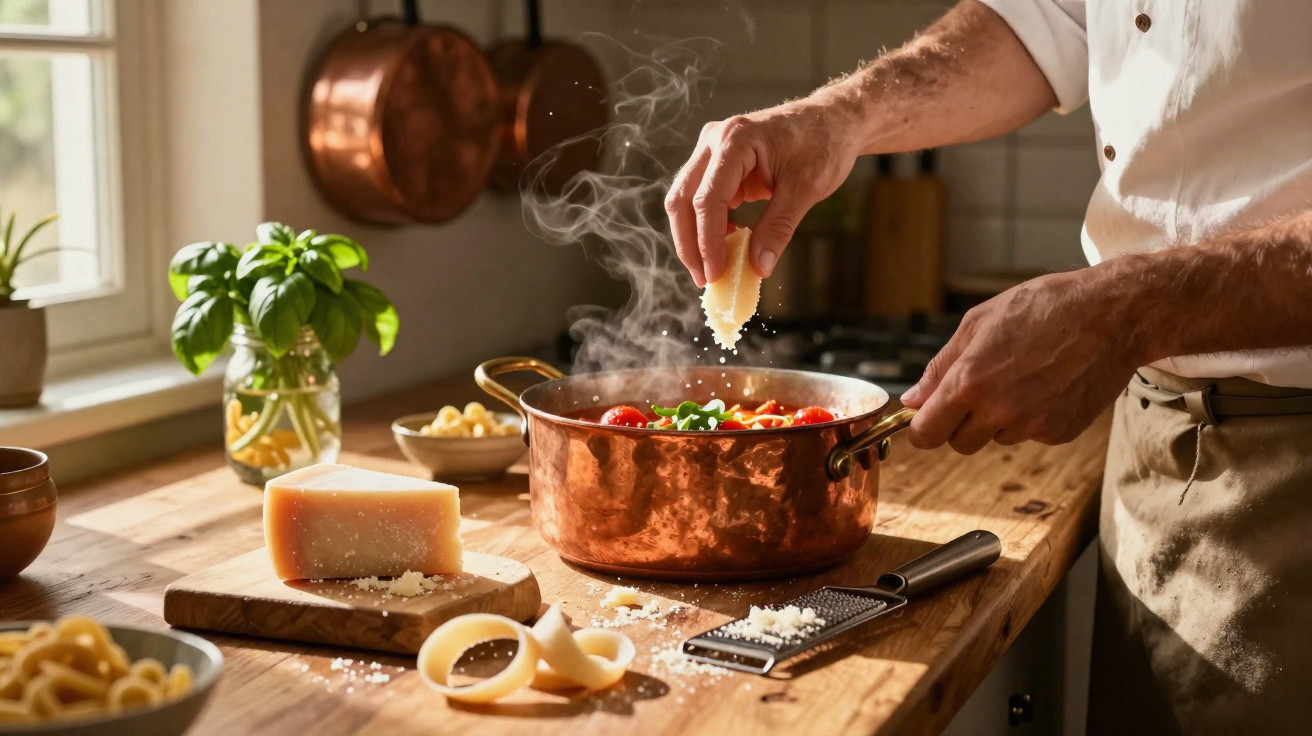
In Italian cooking, a Parmesan rind is rarely treated as automatic waste, as it still holds flavour, aroma and saltiness. Added to stocks and sauces, the rind gradually releases umami, giving the dish more body.
Why do Italians keep Parmesan rinds?
Because Parmesan is a hard, matured cheese with an intense taste, its rind retains aromatic compounds even when it looks dry. As it cooks slowly, it imparts flavour to the liquid and adds depth to the dish.
This practice also reduces waste, since the toughest part is often left behind once the cheese has been grated. Rather than throwing it away, many people keep small pieces to enhance homemade soups, beans, risottos, stocks and sauces.
It is particularly useful in the following ways:
- Sauces: add it while cooking to build flavour and body.
- Soups: it releases saltiness and aroma during long cooking times.
- Stocks: it makes the base richer before straining.
- Risottos: it helps produce a silkier mouthfeel.
- Reusing leftovers: it turns a hard scrap into a useful ingredient.
What makes this part of the cheese so flavourful?
The firm Italian cheese known as Parmigiano-Reggiano has a compact texture, a mildly piquant flavour and an aroma that ranges from gentle to strong. These qualities explain why the rind also holds so much aroma.
Long-matured cheeses such as Parmigiano Reggiano and Grana Padano lose moisture and develop a more concentrated flavour over time. Although the outer layer becomes firm, it can still add texture, saltiness and intensity.
How should you use a Parmesan rind when cooking?
Before using it, scrape away any visible dirt from the rind and rinse it quickly, without soaking it for long. Then place the whole piece in the pan and let it cook with the sauce or stock.
Slow flavour from the pan
The rind does not need to melt away completely. It can simply infuse the recipe with flavour and be removed before serving. If it becomes very soft and contains no wax, it can be cut into small pieces.
For tomato sauces, add the rind at the start of cooking and remove it before serving, once it has released its flavour. In soups and stocks, it can remain for longer, lending subtle body and creaminess.
Use the rind as follows:
- scrape the outer surface before adding it to the pan;
- cook over a low heat so the flavour is released gradually;
- stir from time to time to prevent it sticking to the bottom;
- remove it before serving if the texture is rubbery.
How should you store Parmesan rind to avoid waste?
After grating the cheese, keep the rinds in a sealed container in the fridge if you plan to use them within the next few days. For longer storage, freeze them in separate freezer bags, making it easy to add them straight to soups, stocks and sauces.
The main precaution is to avoid using a rind with excessive moisture, an unusual smell or visible mould. If it feels sticky, has darkened or smells unpleasant, discard it, as reusing it should never compromise safety or flavour.
For better storage, follow these steps:
- dry the rind thoroughly before putting it away;
- use a sealed container or food-safe bag;
- freeze in small portions for easier use;
- label the date when storing several leftovers together.
Which recipes benefit most from Parmesan rind?
Anyone who already uses Parmesan rind in homemade tomato sauce can try the same technique in minestrone, white beans, risotto and vegetable stocks. It delivers depth without requiring expensive ingredients.
Its advantage lies in making use of a leftover that still has a culinary purpose, particularly in slow-cooked dishes. With correct storage and moderate use, Parmesan rind becomes a simple shortcut to Italian flavour at home.





Comments
No comments yet. Be the first to comment!
Leave a Comment