
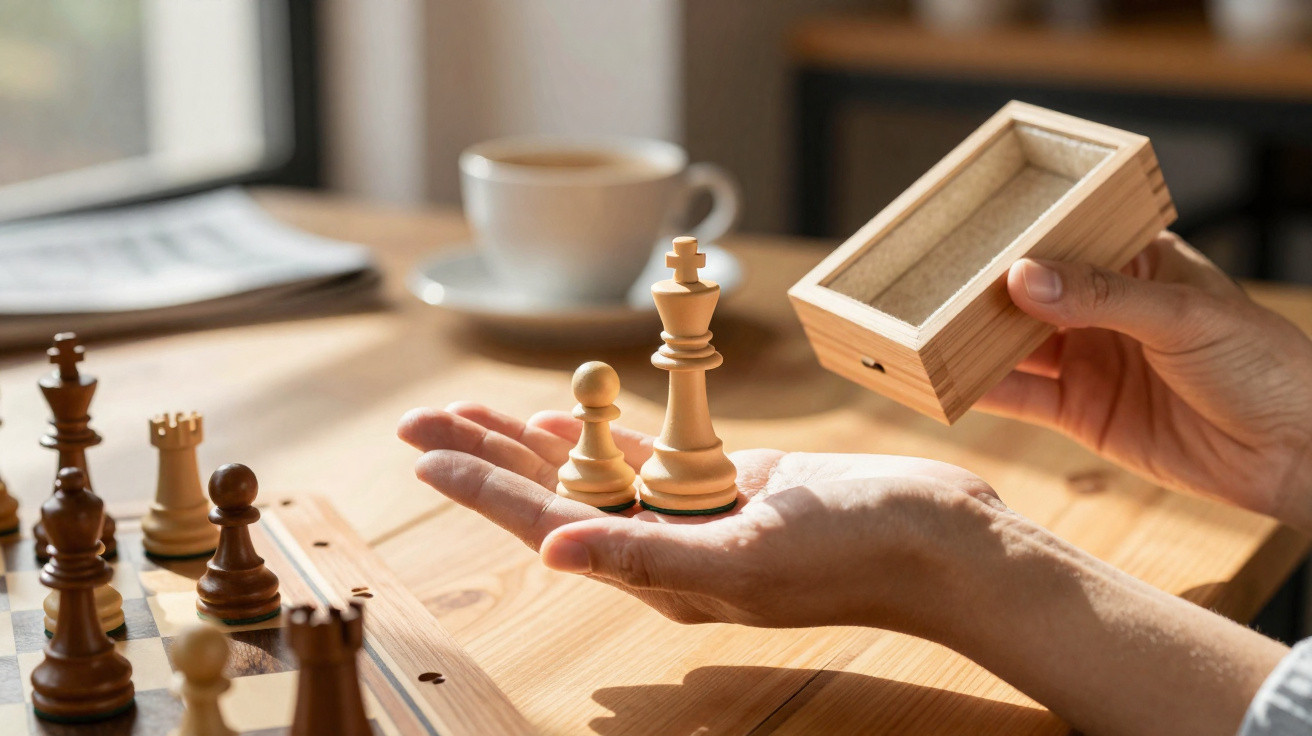
The French proverb “At the end of the chess game, both the king and the pawn return to the same box” draws on a straightforward image to address humility, status and character. It has become a notable reflection on the temporary nature of power and wealth in a society that often judges people by their job titles, money and appearance.
What does the French proverb mean?
The French proverb likens life to a game of chess. While the game is being played, the king appears to hold greater importance, the pawn moves within restrictions, and every piece has a distinct role on the board.
Once the game is over, however, every piece is placed back in the same box. This image suggests that titles, social positions and possessions lose their significance when faced with the shared condition of all human beings.
Why do the king and pawn represent social differences?
In chess, the king must be defended, whereas the pawn is often treated as a piece to be sacrificed. This contrast helps explain why the saying works so effectively as a metaphor for hierarchy, prestige and inequality.
- The king stands for authority, senior status and public recognition.
- The pawn represents unnoticed work, daily effort and limited visibility.
- The box signals the end of the distinctions created during the game.
- The board recalls the places where people compete for status.
How does this phrase encourage us to rethink power and wealth?
Power and wealth may create opportunities, but they do not by themselves show a person's worth. The French proverb reminds us that the position someone holds in life cannot replace respect, responsibility or the way they treat other people.
- A senior role does not erase arrogant behaviour.
- Money does not turn indifference into character.
- Public recognition cannot take the place of genuine relationships.
- Professional success does not excuse contempt for those nearby.
Why does this lesson remain relevant?
The saying retains its force because it speaks to an age of constant comparison. Social media, careers and consumerism can create the impression that life must always be displayed as an unbroken success.
The chess image in the proverb challenges that illusion. When the game ends, it makes no difference whether a piece moved only a short distance or was surrounded by protection: the same box awaits both king and pawn.
What remains after the game ends?
What endures is neither the king's symbolic crown nor the pawn's modest position, but the memory of the choices made during the game. The metaphor points to tangible actions: how someone led, shared space, listened, helped or ignored those on the same board.
The French proverb does not dismiss ambition, work or achievement. It simply puts each in its proper place: power and wealth can alter a piece's position, but they cannot make anyone greater than their own humanity.




Comments
No comments yet. Be the first to comment!
Leave a Comment