
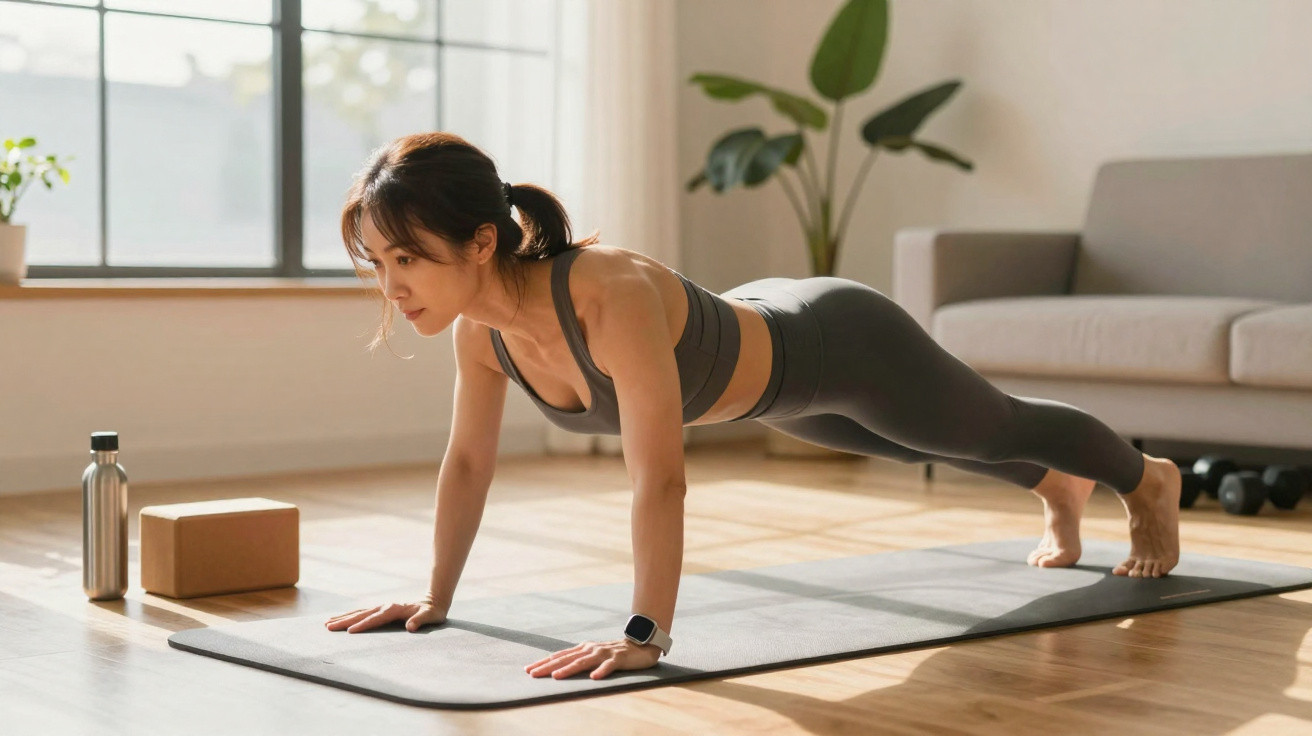
The isometric plank is one of the most well-rounded exercises for strengthening the core, the group of muscles that stabilises the torso. After the age of 50, building this strength becomes even more important for maintaining mobility, improving posture and making everyday tasks easier, such as carrying shopping bags, getting up from a chair and walking more confidently. Simple to perform, the plank can be done at home and adjusted for different fitness levels.
Why does the isometric plank strengthen the core?
The isometric plank engages several muscle groups at once, especially the abdominals, lower back, glutes and shoulders. Because the movement requires continuous stability, these areas stay contracted to keep the body properly aligned.
This strengthening gives the spine better support and helps reduce excessive strain on other joints. Its main benefits include:
- Greater stability when moving.
- Improved everyday posture.
- Strengthening of the deep abdominal muscles.
- Less overload on the lower-back area.
How to perform an isometric plank correctly
Correct technique is essential for achieving good results. Keep your forearms on the floor in line with your shoulders, while forming a straight line with your body from head to heels and keeping your abdominal muscles engaged throughout.
Being able to see the body alignment can make the correct technique much easier to understand. In the video below, the @FISIculturismo.com.br channel demonstrates the ideal position step by step and also shares advice on making the exercise easier or more challenging:
What are the benefits of the isometric plank after 50?
As the years go by, muscle mass and overall body stability naturally decline. Strengthening the core can help offset these changes, offering better balance, movement control and confidence during everyday activities.
In addition, people who practise the isometric plank regularly often notice improved physical endurance, less back pain and greater ease when completing simple tasks without putting extra strain on the spine.
How long does it take to see results?
The first benefits generally become noticeable after a few weeks of consistent practice, particularly when the exercise is included in a muscle-strengthening routine. Progress depends on frequency, correct technique and each person's level of fitness.
Most importantly, respect your own limits and gradually increase the amount of time you hold the position. When practised regularly, the plank promotes more stable posture, improves balance and helps preserve independence in daily activities, supporting a more active and healthier ageing process.



Comments
No comments yet. Be the first to comment!
Leave a Comment