
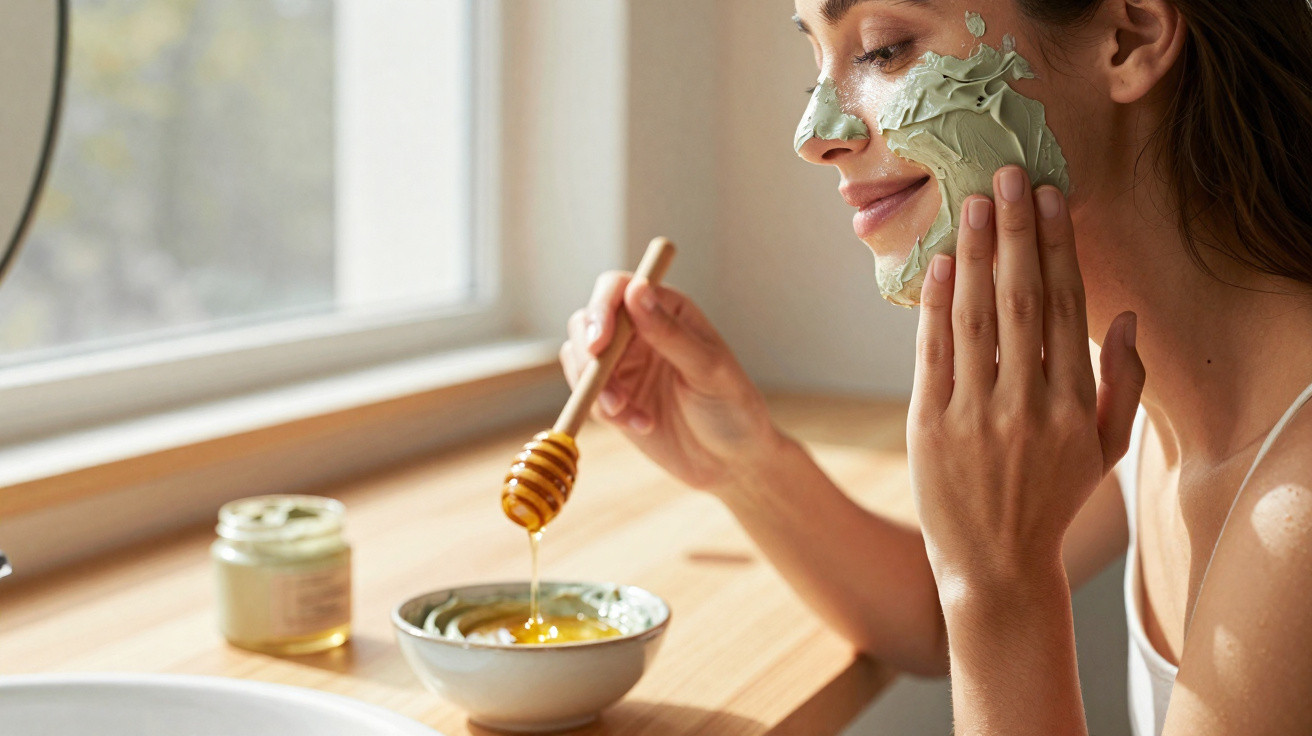
A clay and honey face mask brings together two ingredients commonly used in straightforward skincare. Clay helps draw up surface oil and impurities, while honey makes the blend less drying. The intended result is skin that feels cleaner and more comfortable, with a healthy-looking finish, without relying on harsh layers of product or vigorous exfoliation.
How does clay work on pores?
Rich in minerals, clay can absorb some of the excess sebum present on the skin’s surface. It is therefore often included in masks for oily skin, visible pores and an intensely shiny appearance during the day.
That effect is temporary, however, and it should be used carefully. If clay is allowed to dry too much on the face, it can feel tight, cause irritation and make the skin barrier more sensitive, especially on dry skin or skin sensitised by acids.
Why does honey complement the clay and honey face mask?
In a clay and honey face mask, honey acts as a humectant ingredient, helping the skin retain some moisture while the mask is on. It is also known to contain compounds with antimicrobial properties, but it must not be regarded as a treatment for acne, wounds or severe inflammation.
Before making the mixture, gather suitable ingredients and avoid additions that may irritate the face:
- Use cosmetic clay intended for skin, never garden or construction clay.
- Select pure honey with no added sugar, colourings or flavourings.
- Do not add lemon, bicarbonate of soda, alcohol or hydrogen peroxide.
- Patch-test the mixture on the forearm before applying it to the whole face.
- Do not apply it to wounds, burns, severely inflamed acne or stinging skin.
How do you prepare the mixture in the right proportions?
A safer starting ratio is one tablespoon of clay to half a teaspoon of honey. Then gradually add filtered water, saline solution or cooled chamomile tea until it becomes a creamy paste that spreads easily without running.
Prepare the mask in a clean container, using a wooden, silicone or plastic spoon. Stir until the consistency is smooth and free from dry lumps, as concentrated pieces of clay may scratch the skin during application.
How should you apply it and how long should it stay on?
The skin should be clean and dry before application. Smooth on a thin layer of the clay and honey face mask, avoiding the eye area, lips, corners of the nose and any flaky patches.
To lower the chance of dryness, follow these simple steps:
- Apply the mask with a clean brush or freshly washed fingers.
- Leave it on for 5 to 10 minutes, without waiting for the clay to crack completely.
- Mist it with a little water if the mask dries too quickly.
- Rinse with cool or lukewarm water, using gentle movements.
- Finish with a light moisturiser and sunscreen if applying it during the day.
How often should each skin type use it?
Oily skin will usually tolerate the mask once a week, provided there is no stinging or flaking afterwards. Combination skin can use it only on the T-zone, while dry or sensitive skin should apply it less often, leave it on for only a few minutes, and include more honey or aloe vera gel in the blend.
The mask works best as an occasional treatment for excess oil, shine and the feeling of congested pores. For persistent acne, blemishes, itching, frequent redness or flaking, the safest approach is to adjust the routine with dermatological guidance, as healthy skin depends on gentle cleansing, moisturising and daily protection.




Comments
No comments yet. Be the first to comment!
Leave a Comment