
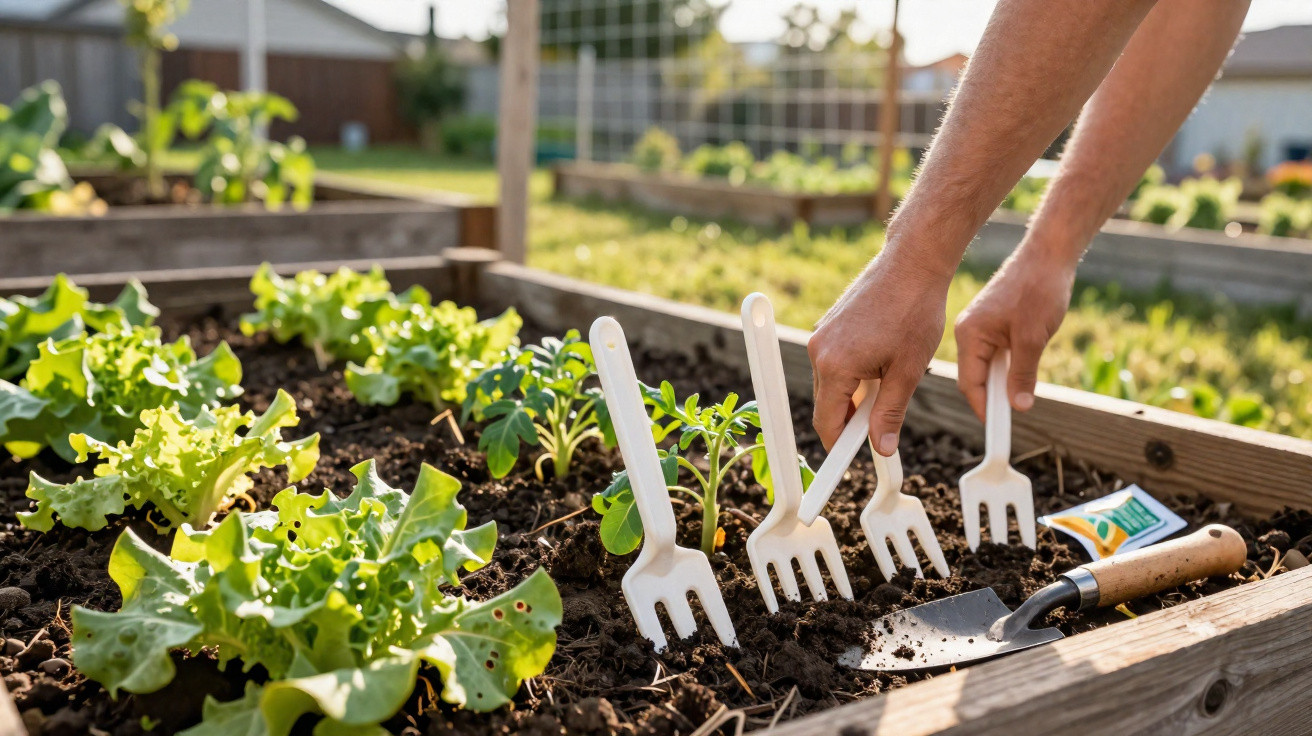
Pushing plastic forks into garden soil may seem like an odd thing to do at first, yet the practice has a practical purpose. Some people place them between plants with their prongs facing upwards, creating a physical barrier that makes it harder for dogs, cats and other animals to walk through or dig in particular parts of a flowerbed.
Why do some people put plastic forks in the garden?
The aim is to use an everyday item to make specific patches of soil harder to access. Placed among plants, the forks fill spaces where an animal may otherwise try to step, lie down or dig.
This approach does not rely on smells or substances added to the soil. Its main purpose is to form a physical obstacle, particularly in small flowerbeds where animals often disturb freshly turned earth.
How do forks work as a barrier?
The exposed prongs alter the surface available between the plants. Rather than finding an open area in which to dig or settle, the animal encounters several closely positioned obstructions.
This may be particularly useful where the issue is limited to one specific area of the garden. Even so, its effectiveness depends on the animal's behaviour and on how the forks are arranged. There is no guarantee that the barrier will work in every situation.
When can this plastic fork trick be used?
The technique may be considered for small flowerbeds, large plant pots or newly planted areas that are being disturbed by pets. It can be especially useful when the intention is to protect an area temporarily while plants become established.
However, the garden must remain a safe space for everyone who uses it. Where children, pets or people who regularly walk through the area are present, leaving pointed objects exposed may pose a risk.
Can plastic forks injure animals or people?
Yes. Although they are made of plastic, fork prongs can cause scratches or puncture wounds, depending on their shape, position and the pressure applied to them. For this reason, the method requires particular care before it is used.
Avoid placing these objects in walkways, and do not use them in areas that children can easily reach. If contact is possible, it is wiser to opt for a solution that creates a barrier without leaving exposed points.





Comments
No comments yet. Be the first to comment!
Leave a Comment