
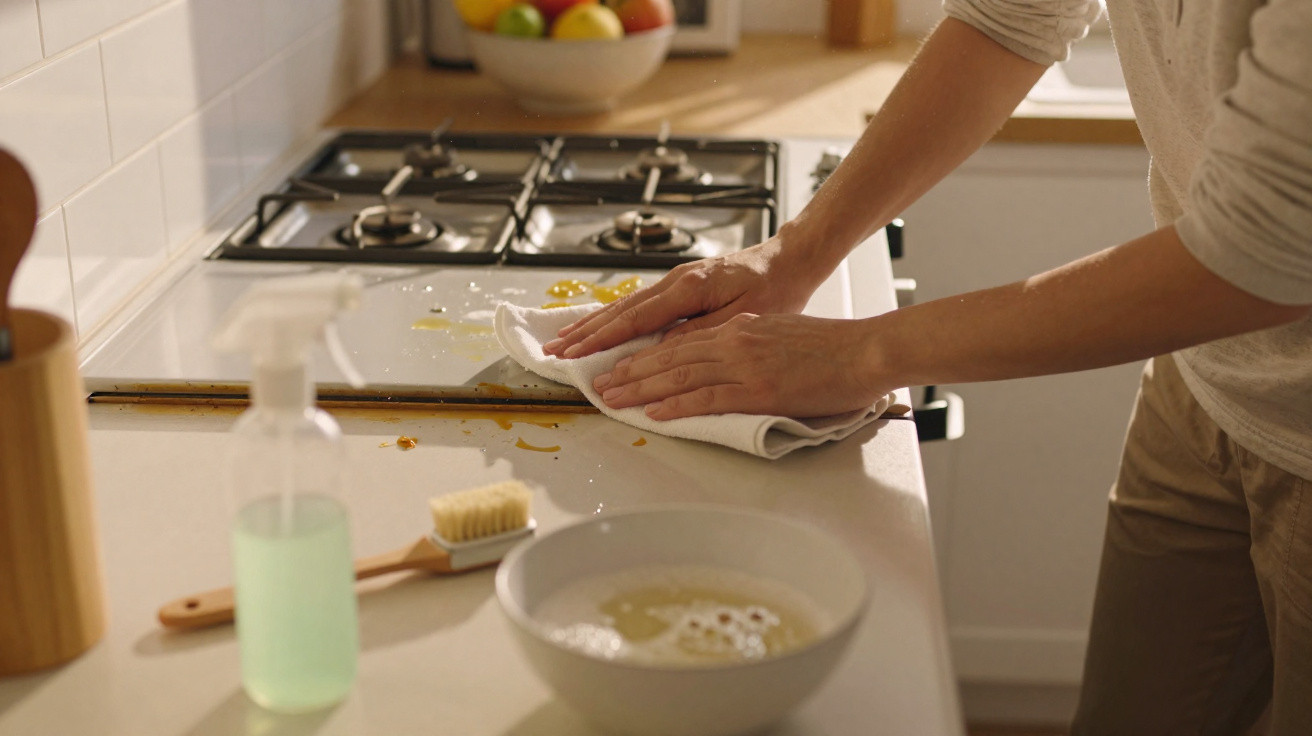
A kitchen corner can collect grease even if the worktops, cooker and cupboards appear spotless. Narrow gaps behind or beside appliances are often exposed to splashes, steam and airborne grease during cooking, yet they are easily missed during regular cleaning.
Why do these kitchen corners build up so much grease?
As meals are prepared, tiny grease particles can travel through the air with steam before settling on nearby surfaces. Where there is a gap between the cooker, worktop or wall, this residue may build up without being immediately noticeable.
Grease can also trap dust and other particles, gradually creating a sticky coating. As a result, an area that looks merely dusty may actually contain a combination of food residue, grease and household dirt.
What makes these spaces so easy to overlook?
Their position is one of the main reasons. Slim, poorly lit areas are difficult to see during everyday cleaning, especially when they sit behind appliances or between items of furniture that are rarely moved.
Routine also plays a part. Because these spots are not usually touched while food is being prepared, small amounts of grease can remain there for weeks. Once residue has aged, it may be harder to remove than newly formed dirt.
How should you clean this kitchen corner without damaging the surface?
Start by removing any items and, where it is possible and safe, moving the appliance away to reach the area. Use a soft cloth or sponge with a cleaning product that is suitable for the surface. Avoid harsh homemade mixtures unless you have checked that they will not damage the material.
Once the grease has been removed, wipe the area with a clean cloth to clear away product residue, then allow it to dry fully. Near electrical appliances or gas connections, do not apply liquids directly and always follow the manufacturer's instructions.
Who should pay closest attention to these areas, and when?
Kitchens used every day, particularly those where a lot of frying or oil-based cooking takes place, may develop residue more quickly. In these settings, it is worth regularly including gaps, sides and areas behind appliances in the cleaning routine.
It is also important to check surfaces that have changed colour, feel sticky or retain a persistent smell. A kitchen corner may seem insignificant, but keeping these spaces accessible and clean helps limit grease build-up and makes general kitchen maintenance easier.





Comments
No comments yet. Be the first to comment!
Leave a Comment