
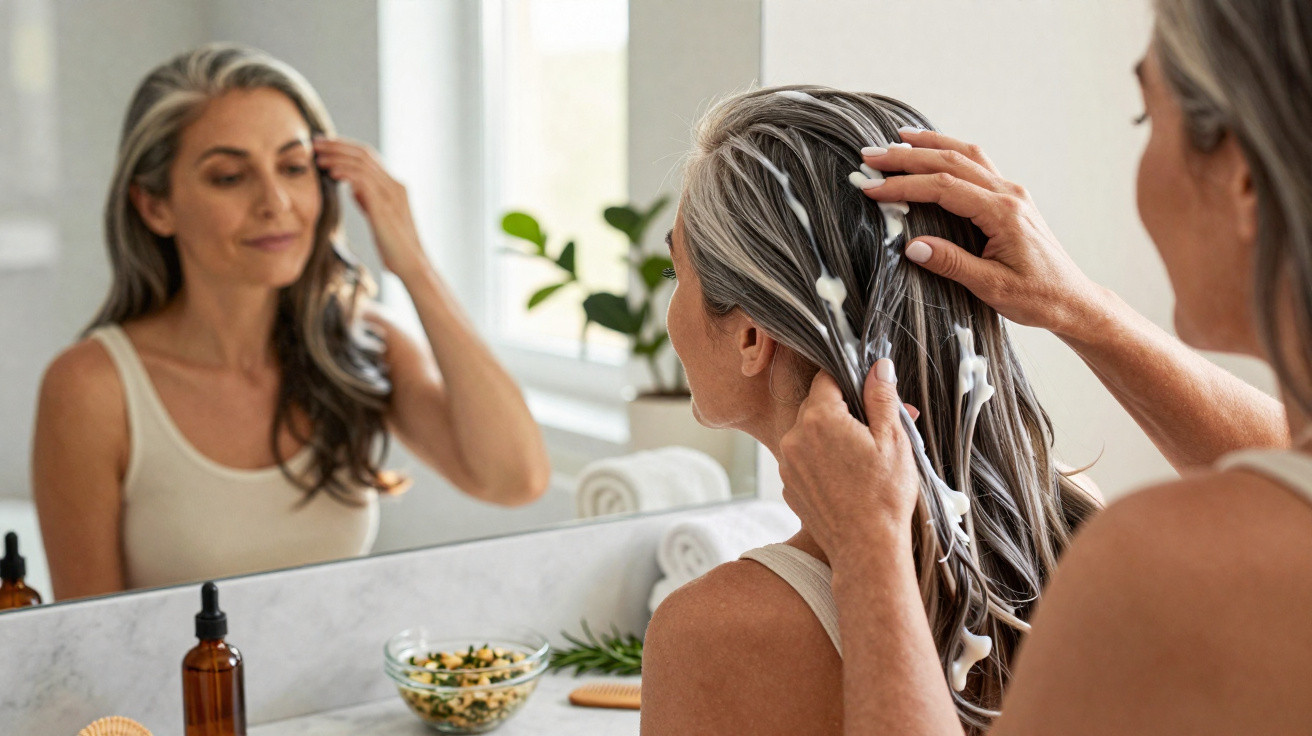
Grey strands are becoming a style decision rather than a crisis, as a subtle new trend changes the way we approach ageing hair.
On social media and in salon chairs, increasing numbers of people are reconsidering how they manage grey hair. Rather than relying on strong dyes and constant root touch-ups, they are embracing a gentler, more natural approach that is gradually shifting beauty expectations around age.
The quiet rebellion against traditional hair dye
For years, the routine was predictable: grey hairs emerged, an appointment was booked, and a colourist covered them up. This pattern could continue for years, with roots becoming visible again every three to four weeks. Many now find the cycle draining, both mentally and financially.
Ageing hair changes in more ways than colour alone. Grey strands can become drier, coarser and more delicate. Because they catch light differently, even freshly styled hair can appear less sleek. For anyone who links grey hair with stress or tiredness, the shift can have a significant effect on confidence.
Grey hair is not the problem; the contrast and texture around it often create that “tired” look people want to avoid.
Rather than battling each individual grey strand, an increasing number of people are choosing to soften and blend their greys while also looking after the hair fibre. The aim is no longer to look “back to my twenties”, but to become a “sharper, healthier version of myself right now”.
A new approach: tinting, not dyeing
The latest trend appearing across TikTok and beauty forums is not based on permanent home-colour kits. Instead, it uses natural pigments and conditioning masks to subtly deepen grey hairs rather than conceal them entirely. These treatments have more in common with skincare than conventional hair dye.
Rather than one harsh application, the method involves several gentle changes. Users build up mild colour, gloss and nourishment, repeating the process regularly in the same way they might use a weekly face mask. Over time, hair develops a softer, deeper shade while the scalp remains more comfortable.
The big shift: from “erase every grey now” to “nudge the tone regularly and keep the hair fibre strong”.
Why cocoa powder is suddenly in your bathroom
A key ingredient in this trend is an item more commonly found in the kitchen cupboard: cocoa powder. This means plain, unsweetened cocoa, not sugar-filled hot chocolate powder.
Cocoa offers several qualities that can benefit greying hair:
- A naturally brown pigment that may gradually tint pale strands.
- Antioxidants that can help shield hair fibres from daily stress.
- Fatty elements which, when combined with conditioner, can promote softness and shine.
People experimenting with cocoa masks commonly report two changes when they use them consistently. Firstly, grey areas may take on a softer, cooler brown tone, particularly at the temples and along the parting. Secondly, hair can feel less prone to brittleness, making it easier to style and helping to limit frizz.
How the cocoa method works in practice
The simple, inexpensive technique shared online can be adapted for varying hair types and degrees of grey coverage.
| Step | What to do |
|---|---|
| 1 | Cleanse hair with a mild shampoo, then towel-dry it until it is damp. |
| 2 | Combine 1 tablespoon of unsweetened cocoa powder with a portion of silicone-free, oil-free conditioner. |
| 3 | Mix until the paste is smooth and uniform, with no dry clumps remaining. |
| 4 | Apply primarily to grey or very pale sections, distributing it through the lengths where necessary. |
| 5 | Leave the treatment in place for up to 20 minutes before rinsing thoroughly with lukewarm water. |
As cocoa does not perform like a chemical dye, the initial result is usually understated. Using it regularly, often once or twice weekly, gradually creates more depth. The effect is generally clearer on light brown and medium brown hair than on very dark hair.
This method behaves more like a stain than a full colour change: repeated layers slowly deepen the tone without a sharp root line.
Who this trend actually suits
Traditional colour still appeals to some people, but this gentler option is particularly attractive to several groups.
People in the early stages of greying
When just 10–30% of the hair is grey, an opaque salon colour can sometimes appear flat and overly uniform. A mild tinting method can:
- Soften the earliest streaks rather than concealing them altogether.
- Prevent the severe “helmet” appearance associated with one solid shade.
- Postpone the point at which permanent dye seems necessary.
Those with sensitive scalps or damaged hair
Frequent use of standard dyes and bleach can cause irritation, stinging and additional breakage. As a cocoa-based mask contains no ammonia or peroxide, it is often better tolerated by the scalp. The conditioning stage may also bring some softness to over-processed hair.
However, cocoa is still a botanical ingredient. Anyone with food allergies or highly reactive skin should carry out a patch test behind the ear or on the inner arm before applying it more widely.
Does it really make you look younger?
The connection between this trend and looking younger is not really about attempting to look 25 again; it is more about creating visual harmony. When grey hairs are very bright beside the rest of the hair, they reflect light and can draw attention to fine lines or dark circles. Reducing that contrast can soften the overall framing of the face.
A light brown veil over silver strands may also give a haircut more structure. Layers can look more intentional, fringes may appear denser, and hairlines can seem less “patchy”. Such small differences often shape how a person views their own age more strongly than the number of grey hairs itself.
People who try gradual tinting often say they feel “more put together”, not necessarily “younger” - and that nuance matters.
How this compares with classic salon options
Hairdressers now discuss several ways to manage grey hair, with each option involving different compromises. Cocoa masks are at the gentlest end of the range.
- Permanent dye: high coverage, noticeable regrowth, more chemicals, and longer intervals between appointments.
- Demi-permanent gloss: a softer regrowth line, medium coverage, with professional application recommended.
- Highlights and lowlights: blends grey visually with blonde or brown hair, but costs more and requires salon expertise.
- Natural tints like cocoa: little damage, subtle coverage, and regular application for a noticeable effect.
Many people are now combining these methods. They may use salon colour a few times each year to create structure, then preserve the tone between visits with cocoa masks or comparable treatments at home. This blended approach can extend the time between appointments and reduce chemical exposure.
Tips to make the cocoa trend actually work
Although the technique is straightforward, several details can help prevent disappointing results:
- Select pure, unsweetened cocoa powder without sugar, flavourings or other additions.
- Test the mixture on a small section, such as the temples, before assessing how the shade develops across your hair.
- Change the proportions as needed: use more cocoa for a deeper result and more conditioner for a lighter finish.
- Keep expectations reasonable: it should be viewed as a gentle filter, not immediate full-coverage colour.
- Complement the routine with a moisturising shampoo and a leave-in product on the lengths.
The final tone will also vary according to the starting colour. Very white hair may become a soft beige-brown, whereas salt-and-pepper hair is more likely to develop a blended, smoky appearance than a uniform block of colour.
Beyond cocoa: broader care for ageing hair
Grey hair reflects several biological changes. Melanin production slows, the scalp barrier alters and follicles frequently produce less natural oil. As a result, managing texture is just as important as managing colour.
Those who use the cocoa method often combine it with other low-impact habits, including less heat styling, wide-tooth combs in place of abrasive brushes, and microfibre towels rather than rough cotton. Some also add scalp massage using lightweight oils to encourage circulation and relaxation, which may slightly enhance shine and volume over time.
Dermatologists point out that lifestyle can influence how greying is experienced. Long-term stress, smoking and nutritional deficiencies may accelerate the process or leave hair feeling more fragile. Basic checks of iron, vitamin D and B12 levels can sometimes identify concerns which, once addressed, help hair perform better, even if its colour does not return.
For people interested in their choices, speaking with a trichologist or dermatologist can help establish when natural stains such as cocoa are appropriate and when more intensive, medically supervised treatments may be worth considering. This space between fully dyeing hair and fully accepting it is where the trend belongs, allowing people to adapt to their changing reflection at their own speed.



Comments
No comments yet. Be the first to comment!
Leave a Comment