
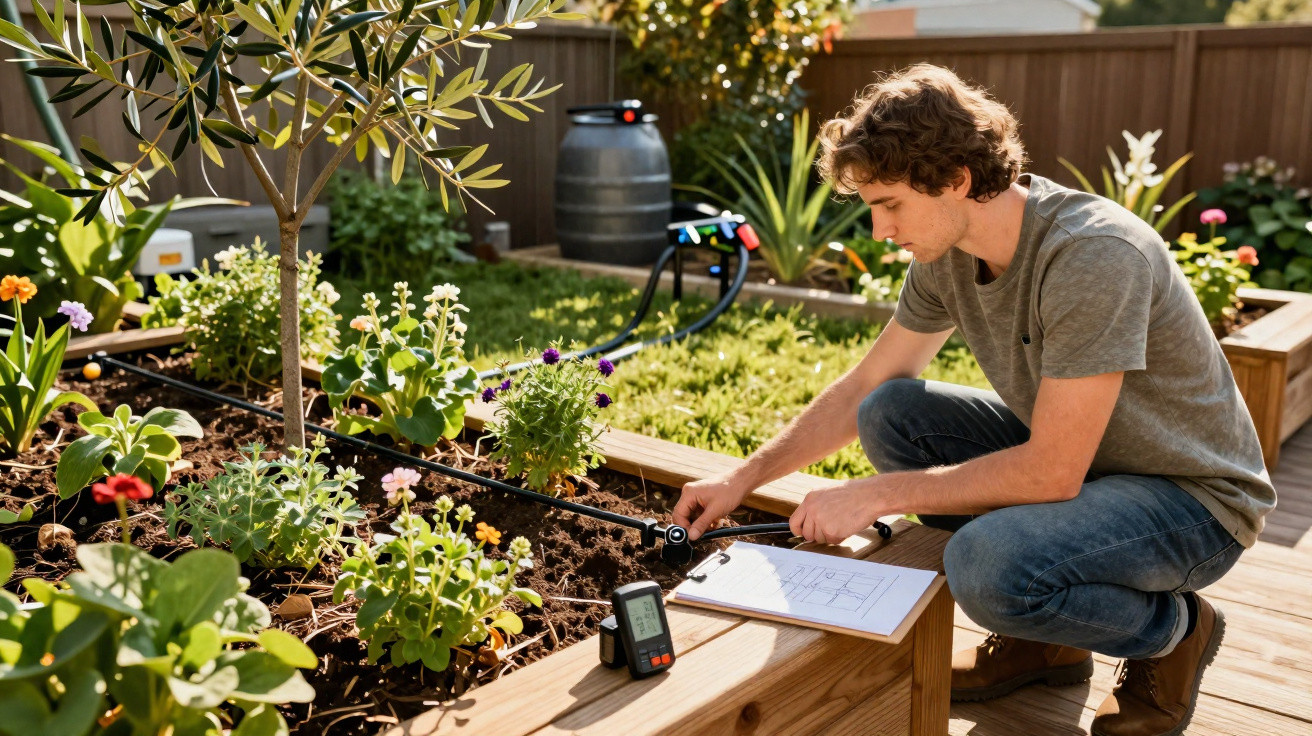
At 6.30 a.m., sprinklers begin their modest dance across a suburban cul-de-sac. Water curves through the cool morning air, catching the sunrise as it drenches fences, pavements and one distinctly unimpressed brown stretch of lawn. By midday, the sun has wiped out all signs of that morning’s “effort”, while homeowners wonder why their water bill keeps rising even though the garden still appears worn out. Next door, on the same street and in the same weather, it is a different picture: a gently green lawn, overflowing pots and a shaded sitting area that feels like a mini break. The climate is identical, as is the hose. The approach is not.
There is an uncomfortable truth quietly revealed by some gardens.
Your garden doesn’t lack water, it lacks a game plan
Many people assume they have a “dry garden problem”, when the real issue is “random watering”. They water whenever they happen to remember, run the hose until the ground appears damp, and hope for the best. The outcome is usually familiar: patchy grass, hydrangeas with crisp leaves and container plants that give up halfway through July.
What the garden actually needs is a system. Some reasoning. A method for putting every drop of water where it will make a genuine difference.
A landscaping firm in Arizona recently assessed two neighbouring homes. Both owners said they watered “a lot” during heatwaves. Home A watered daily for 10–15 minutes. Home B gave the garden a deep watering twice weekly, applied mulch, grouped plants according to their water requirements and installed drip lines in the flower beds. Three months later, Home A had bare sections of lawn and struggling shrubs. Home B had thick grass and unexpectedly thriving borders… while the meter showed 30% less water use.
The climate was the same. The results were completely different. That difference is strategy.
Plants are unconcerned by how regularly you stand outside holding a hose. What matters to them is their roots, the soil’s structure and the length of time moisture remains around them. Frequent, shallow watering encourages shallow, complacent roots that struggle in hot weather. Infrequent, deep watering teaches roots to seek moisture further down, beyond the sun’s reach.
When you begin to see water as something that shapes root behaviour rather than a magical “green switch”, your whole approach to garden design starts changing.
The 7 strategy tips 8 out of 10 homeowners ignore
The first tip may sound dull, which probably explains why it is widely overlooked: find out how long your soil takes to soak properly. Do not estimate. Using a small trowel, water one area as you normally would, then dig a slim section to inspect the depth. For lawns, moisture should reach at least 15–20 cm (6–8 inches) below ground; shrubs need it to go deeper.
If you stop as soon as the topsoil turns dark, you are teaching plants to survive within the upper 3 cm of soil. It is rather like bringing up children who know only the fridge and never the cupboard.
The second neglected step is to set one or two watering times and follow them consistently. Early morning is ideal, while late evening is the fallback option. Watering at 3 p.m. in full sunshine is effectively funding evaporation. Yet plenty of homeowners press “manual start” when they arrive home from work, simply because that is when they notice the garden and feel guilty.
Realistically, hardly anyone manages this every day without fail. Instead, rely on straightforward timers, inexpensive drip kits or a basic weekly reminder on your phone. The strategy does not need to be elaborate; it needs to be consistent.
The third tip quietly distinguishes an average garden from a premium outdoor space: divide areas by thirst. Put plants with similar watering needs together, rather than combining thirsty flowering plants and drought-tolerant grasses in one bed. Mixing them forces you to overwater one group and deprive the other.
“I stopped treating my yard as one big green carpet,” says Claire, a homeowner who renovated her small city garden on a tight budget. “Once I split it into a ‘lavish watering zone’ and a ‘barely needs attention’ zone, my water bill dropped and everything started looking more intentional.”
- Zone 1: lawn and shallow-rooted flowers requiring more regular moisture.
- Zone 2: shrubs and perennials with moderate watering requirements.
- Zone 3: resilient, drought-tolerant plants, gravel and seating areas.
From ordinary garden to premium space: design with water, not against it
Tip four is remarkably straightforward: keep the soil covered. Bare earth resembles an unattended wallet on a park bench. Sun and wind remove moisture far more quickly than most people realise. Applying a 5–8 cm mulch layer around plants and across beds retains water around the roots for longer, reduces temperature fluctuations and gives the whole garden a considered appearance.
Choose shredded bark, compost, gravel or a combination, depending on the look you prefer. That visual consistency alone can make an inexpensive garden feel as polished as a magazine feature.
Tip five deals with the unseen side of strategy: improve the soil rather than simply pursuing extra irrigation. Dense, depleted soil repels water much like a waterproof coat. Loosen it once or twice annually, add compost and allow worms and microbes to work gradually. In time, the soil becomes a sponge rather than a solid slab.
Many homeowners avoid this because it offers no immediate “wow” factor, only a muddy weekend and an aching back. Still, it is precisely this unglamorous task that enables less watering and stronger growth year after year.
Tip six brings together layout and lifestyle: build shade and wind protection into the design. A compact pergola, thoughtfully positioned tree or even a tall screen of planters can greatly reduce evaporation in a particular area. That spot may then work for containers, a reading chair or perhaps an outdoor dining table.
Water strategy isn’t only hoses and sprinklers; it’s architecture and microclimate. A little shade prevents pots from baking and transforms what was once “the dead corner by the fence” into the garden’s most welcoming area.
The quiet luxury move: use your budget twice
The seventh tip is what takes a garden into “premium” territory without requiring twice the budget: every feature should serve at least two purposes. A gravel path can also provide drainage so the lawn does not flood. A raised bed may double as a bench along its edge. A water butt can supply a drip system.
When every garden decision conserves water, organises the space and contributes beauty simultaneously, the result begins to look more deliberate and costly than it truly was.
Most of us know the feeling of standing in the middle of an uneven garden and thinking, “Do I need thousands of dollars and a landscape architect to fix this?” You do not. The answer is to stop making disconnected purchases and begin connecting them. Buy fewer plants but position them in sensible zones. Spend on mulch rather than a third decorative pot. Direct one downpipe into a discreet rain chain and water butt instead of installing another sprinkler head.
Your garden begins telling a story when every adjustment moves the following one in the same direction.
This is the point at which strategy gradually becomes part of your lifestyle. Watering in the early morning offers a reason to go outside before messages and meetings begin. A mulched, shaded corner becomes somewhere children bring blankets, where an inexpensive string of lights suddenly creates intentional ambience. The watering discipline you establish does more than protect plants; it also reshapes the way you enjoy the garden on warm evenings and cool mornings.
A premium outdoor space is not defined by luxury furniture or unusual plants. It is a garden that works so effectively with your climate, schedule and budget that it seems effortless… well before it truly is.
Where you go from here
Go into your garden at the time you would normally water and take a proper look. Which areas receive the fiercest sun? Where does water collect, and where does it disappear immediately? Which plants seem quietly unhappy-not dead, but exhausted by constant improvisation? This brief inspection gives you an initial map of the “strategic leaks” in your garden.
You do not have to tackle everything this weekend. Choose one area and commit to it: mulch it, check the depth of your watering and perhaps install a single drip line or an inexpensive timer. Give that change a few weeks and observe the results. Once you find something that works, apply it to the next zone. Gradually, guilt-led last-minute watering becomes an easy routine that suits your life.
The moment you notice that you are using less water, spending the same amount and making your garden resemble an outdoor room rather than a burdensome patch, you will understand strategy’s quiet power. It is not more water. It is not more things. It is simply a different understanding of what your garden is asking for.
| Key point | Detail | Value for the reader |
|---|---|---|
| Water deeply, less often | Encourage roots to grow downwards by soaking soil to 15–20 cm instead of giving it daily light sprinklings | Stronger plants that withstand heat with less frequent watering |
| Group plants by water needs | Establish zones for thirsty, moderate-water and low-water plants | Cut waste, prevent overwatering and make your routine simpler |
| Use mulch and microclimates | Cover the soil and introduce shade or wind protection in important areas | Make every litre of water go further and give the garden a more premium feel |
FAQ:
- Question 1 How many times a week should I water my lawn?
- Answer 1 In most climates, 2–3 deep waterings each week are preferable to light daily sprinklings. Adapt this for heat and rainfall, but prioritise soaking the roots rather than merely darkening the surface.
- Question 2 Is mulch really worth the cost?
- Answer 2 Yes, as it works on your behalf every day. Mulch limits evaporation, keeps soil temperatures steadier and suppresses weeds, resulting in less watering and reduced maintenance over time.
- Question 3 Can I create zones without an expensive irrigation system?
- Answer 3 Absolutely. Group plants with matching needs in the same beds, then use simple options such as soaker hoses, basic timers and labelled hoses for each section.
- Question 4 What’s the biggest watering mistake most homeowners make?
- Answer 4 Watering too frequently and too lightly. It can feel attentive at the time, but it keeps roots near the surface and leaves plants more exposed to heat and drought.
- Question 5 How long will it take to see a difference once I change my strategy?
- Answer 5 You will often spot improvements within a few weeks, particularly in how long the soil remains moist and how plants cope on hot days. Changes deeper in the soil and root system develop over one or two seasons.



Comments
No comments yet. Be the first to comment!
Leave a Comment