
The last time I attempted to “sort my life out”, I began with the wardrobe.
I took every item out, created a few overly dramatic piles across the bed, and promised myself I would finally become the sort of person who owns colour-coordinated hangers and a capsule wardrobe straight from a Pinterest board. By lunchtime, the bedroom looked as though a charity shop had burst open. At 4pm, I was on the floor in a heap of jumpers, doom-scrolling on my phone and silently despising myself. The wardrobe was no longer simply untidy; it felt like visible evidence that I was incapable of functioning as an adult.
There is something nobody mentions when you watch endless time-lapse organising clips: beginning with the wardrobe is a near-certain way to exhaust yourself. Professional organisers understand this. When they enter a home overflowing with possessions, hangers and hemlines are rarely their first port of call. They begin somewhere else entirely – somewhere so small it can seem unimportant, yet it changes the whole process.
The Wardrobe Trap We All Fall Into
Wardrobes have an oddly magnetic appeal. They seem like the natural place to begin: they are visible, symbolic and perhaps taunting you every morning when you open the door and an escaped shoe lands on your foot. Sorting clothes sounds as though it should be straightforward. Too small? Donate it. Worn through? Put it in the bin. Doesn’t “spark joy”? Get rid of it. So we brace ourselves, put on a decluttering playlist and charge into textile warfare.
But wardrobes are not emotionally neutral spaces. They are minefields. There are the jeans you insist you will fit into again, the costly dress that never made it out of the house, and the blazer representing the career you assumed you would have by now. Every hanger asks a small question about identity, money, regret and guilt. It is hardly surprising that you run out of energy halfway through, shove it all back inside and somehow make the situation slightly worse.
Professional organisers encounter this cycle so frequently that they call it the “closet crash”. It typically unfolds like this: a big, theatrical start, emotional overload, decision fatigue, followed by a quiet return to familiar habits. The outcome is not merely a disorganised wardrobe; it is a new internal story claiming that you “can’t stick to anything”. That story is far more harmful than any mound of clothing.
Where Professional Organisers Actually Start
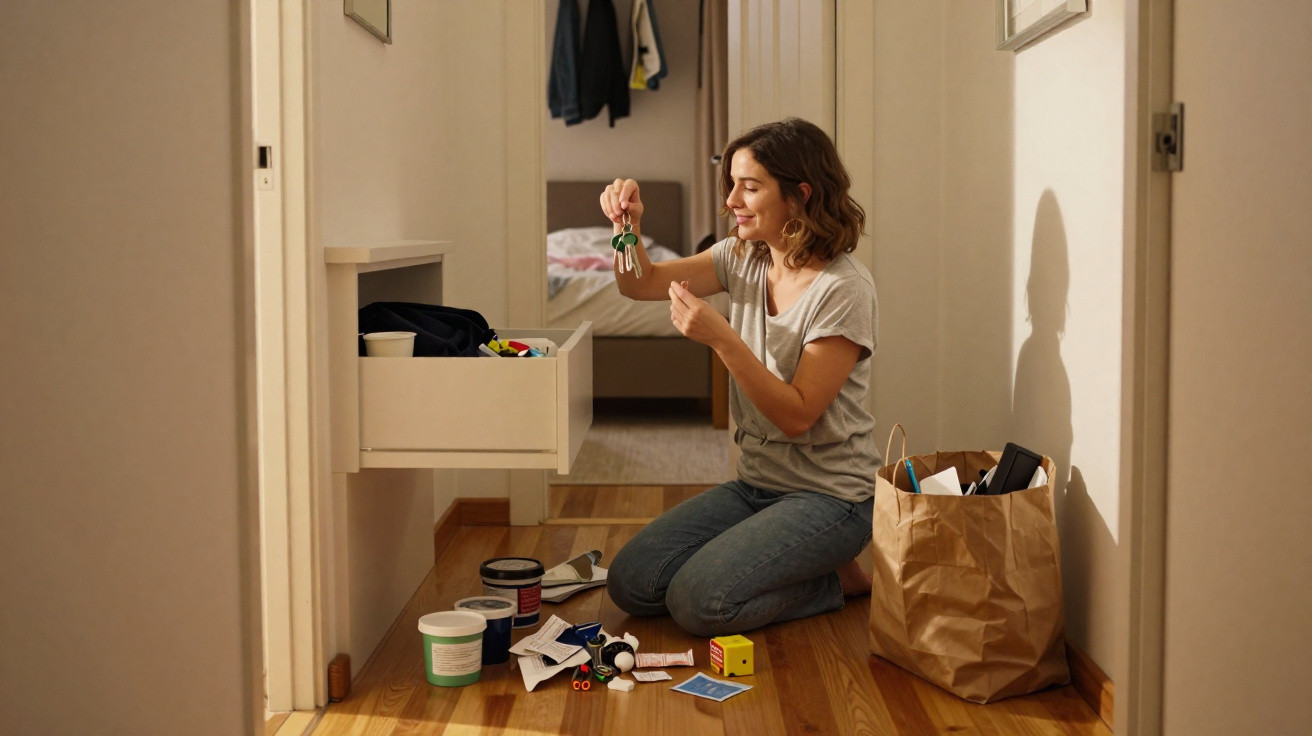
Ask several professional organisers where they tend to start, and the same short list will keep appearing: the junk drawer, the bathroom cabinet or the kitchen worktop where you drop the post. They are tiny, dull, unglamorous places. There are no fairy lights, velvet hangers or Instagram-worthy before-and-after shots. There is only a shallow drawer or one shelf that has gradually turned into a graveyard for batteries, elastic bands and half-used bottles of something.
At first glance, this seems illogical. Why start with the least photogenic corner of the home? Because it is where you can genuinely succeed. Small, low-pressure zones act as practice spaces. They allow you to exercise the three abilities that real decluttering requires: making choices, completing a task and living with those choices for a while. Those are the skills that stop the wardrobe from defeating you later.
One organiser told me that the bedside table is always her starting point. “It’s intimate but not loaded,” she said. “You get to feel what it’s like to clear space around you, without getting stuck sobbing over prom dresses.” There are still emotional changes: the relief of shutting a drawer that is not crammed full, or the unexpected calm of seeing one hand cream rather than seven. Yet you are not attempting to rewrite your entire life in one afternoon.
Why Tiny Wins Matter
People rely more on momentum than motivation. We wait until we “feel ready” to face major tasks, then cannot understand why that feeling never comes. Professional organisers do not wait for it. They create readiness by deliberately producing small victories. Empty the junk drawer, feel mildly pleased with yourself, and carry that small surge into the next manageable area.
Consider the last task you finally completed after putting it off. The satisfaction was not only about what you had done; it was also about what it suggested about you. “Maybe I’m not as hopeless as I thought.” Clearing an entire wardrobe seldom creates that feeling because the task is so enormous that you are exhausted before reaching the end. A bathroom shelf, on the other hand, can be finished in 20 minutes. Afterwards, toothbrush in hand, you can think: I did this. It’s done. That restrained, almost private sense of pride provides the energy needed for more difficult rooms.
The Emotional Physics of Possessions
Everything in your home carries weight. Not literal weight, but emotional drag. A knot of cables on the hall table is a minor irritation. A stack of unopened letters, avoided because they may bring bad news, is much heavier. Wardrobes often contain the greatest weight of all: possessions linked to who you used to be or who you believe you ought to become.
We have all pulled out an old outfit and felt our stomach sink. Perhaps it is the dress connected to a relationship that ended badly, the work trousers from the job where you were made redundant, or the “someday” skirt that has become a fabric form of self-criticism. This is why professionals approach wardrobes cautiously at the start. They know you need emotional resilience in reserve before confronting those ghosts.
Instead, they choose areas filled with more neutral possessions. Out-of-date sun cream? Simple. Dried-up nail varnish from 2013? Into the bin. A pile of takeaway menus from restaurants that shut years ago? Gone. You can experience letting go without bleeding all over the process. Little by little, your home’s physics shifts: less drag, more lightness and more evidence that you can decide and survive the decision.
The “Truth Moment” We Avoid Admitting
Let us be realistic: almost nobody empties, edits and refolds their wardrobe every season as minimalist YouTubers claim to do. Life intervenes. You are worn out, work is relentless, children are sticky, and at 8pm on a Wednesday the last thing you want is to debate the future of your third-favourite cardigan. Acting as though you will become a completely different person overnight is the quickest route to feeling like a failure.
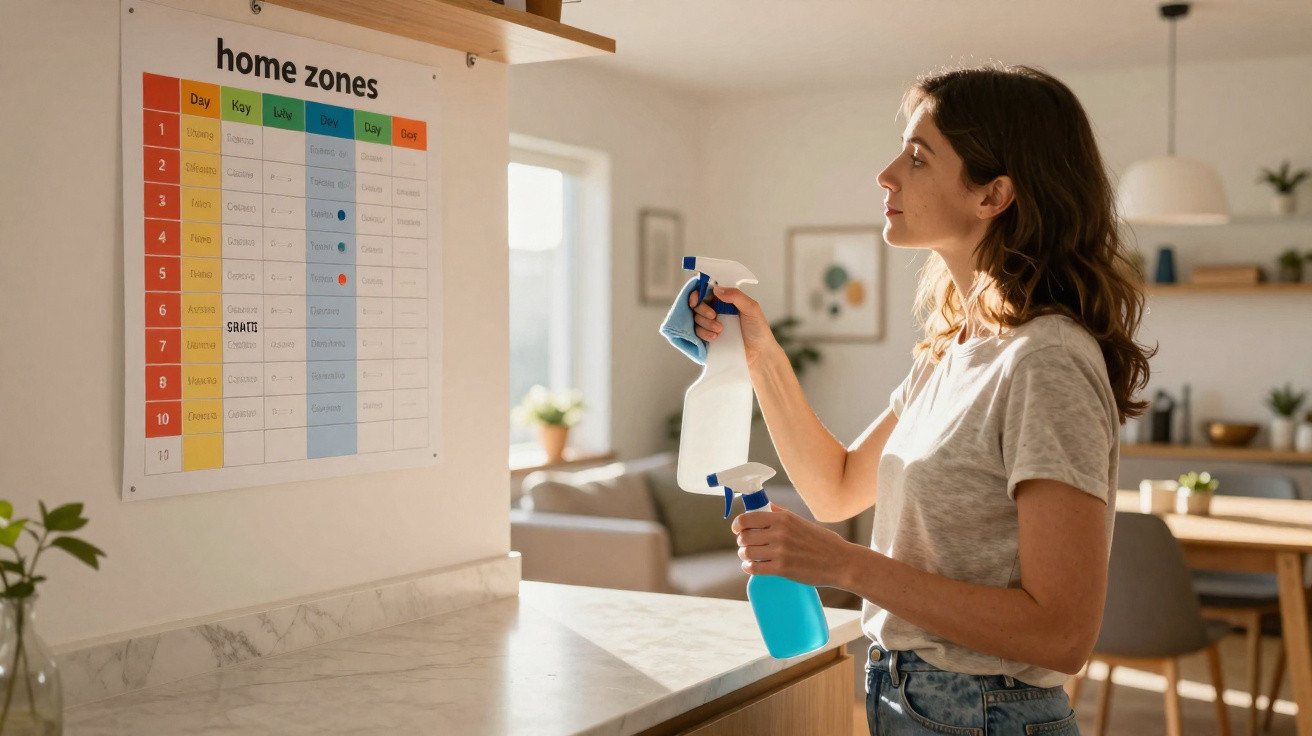
Professional organisers quietly plan around who you are, rather than who you imagine becoming. That is why they start with the places you use every day – the bathroom, fridge door and kitchen counter. You see the results whenever you clean your teeth or collect your keys. That regular reinforcement gradually changes your identity from “I’m messy” to “I can keep some things under control”. It may not be dramatic or glamorous, but it is remarkably effective.
The First Place to Tackle Instead of Your Wardrobe
Ask ten organisers for the ideal first area and their answers may vary slightly. Still, most will return to one of three choices: the junk drawer, bathroom cabinet or the surface where everything gets dropped when you arrive home. Choose the one that makes your shoulders relax rather than tighten. That is your way in.
The junk drawer is popular because it contains chaos in miniature: pens, keys, receipts, twist ties, flat batteries and a single Allen key that probably belongs to furniture you no longer own. You can take everything out at once, spread it over a table and sort it without stumbling around the room. There is something unexpectedly satisfying about hearing useless bits of metal and plastic softly rattle into a bin bag.
The bathroom cabinet can be even more suitable if clothes and weight already feel sensitive. Instead of handling “someday size” jeans, you are deciding about moisturiser you disliked from the beginning or perfume that smells faintly of regret and talcum powder. The stakes are low and decisions are quick. The following morning, opening that cabinet can produce an almost physical exhale. Your day begins with less visual noise.
A Straightforward Method That Is Not Punishment
For these starter spaces, most professional organisers follow some variation of one approach: empty, sort, decide, then return items intentionally. No elaborate labels or 20-piece bamboo storage collection is required. Make four simple piles: keep, bin, relocate and donate. There is nothing revolutionary about it. The difference lies in the scale: you are applying it to one drawer, rather than to your entire existence on a clothes rail.
The magic is not the method; it is being able to finish. You can take one small space from chaos to order in less than an hour, perhaps even in under 30 minutes. Completing it teaches your brain that home projects do not have to be sprawling, shame-filled marathons. They can be sprints. Shut the drawer, notice the satisfying click and the strangely clean sound of wood meeting wood, then make yourself a cup of tea. That is the rhythm professionals want you to find.
Why a Small Start Makes the Wardrobe Easier Later
After a few weeks of working through small areas, a subtle change begins. You notice clutter hotspots without spiralling. You find yourself binning items automatically instead of keeping them “just in case”. Choices become quicker and less fraught. Without forcing yourself through a dramatic boot camp, you have built a kind of decluttering stamina.
When you eventually return to the wardrobe, it is no longer a mythical monster. It is simply… the next space. You have already shown yourself that you can choose, edit and live with less in the bathroom, kitchen and hallway. You have seen that life continues perfectly well without a fifth spatula or a drawer filled with mystery chargers. That evidence sits quietly within you on the day you finally take out the clothes.
Clothing will likely always be more emotional than out-of-date paracetamol. You may still feel a lump in your throat when parting with the dress from a former life. The difference is that you have practised not allowing that feeling to derail the entire job. You have discovered that discomfort is a stage, not a stop sign. That is what averts decluttering failure: not magically being “good at tidying”, but having evidence that you can weather the wobble and finish.
The True Aim Is Not a Perfect Home
A quiet lie sits beneath much organising content: once your house is in order, you will finally become the person you were meant to be. Calm, productive, permanently punctual and perhaps drinking lemon water from a glass that somehow never has fingerprints on it. That is not how life works. Homes become untidy again. Children grow, jobs shift, and winter brings bulky coats and muddy shoes. Perfection is a moving target, always demanding effort and never allowing you to arrive.
Professional organisers with years of experience rarely promise perfection. They offer something more practical: a home that does not battle you every time you enter it. A morning when you can get dressed without a small breakdown. A kitchen where you can cook one straightforward meal without first clearing the whole worktop. Those outcomes come from small, repeatable successes, not one heroic wardrobe purge.
So, when you next feel the urge to “fix everything”, avoid the drama of the wardrobe. Leave the hangers alone for now. Go to the drawer that makes you sigh every time it opens. Empty it. Complete it. Close it carefully. That quiet, almost dull action is where your future, easier decluttering truly begins.
The professionals already understand this: you do not start with the wardrobe because it is not merely storage – it is a story. And the wisest way to alter a story is never to begin with its most painful chapter.

Comments
No comments yet. Be the first to comment!
Leave a Comment