
Warm shirts sat in a loose pile, first carrying a faint hint of perfume, then… very little. Come morning, they had acquired that weary smell you notice when you raise a collar to your nose and pause. My grandmother’s washing was never like that. Her tea towels smelled of a breezy, sunny Tuesday in June, and that clean quality lasted for days. She had one method: the same bottle beside the sink, with no fuss made about it. No expensive pods. No bright-blue softener. No miracle liquid advertised on television. She simply nodded, poured it in and hung the washing on the line. It seemed magical, although it was not. It was a routine - a modest, determined habit that got lost somewhere in modern life. The solution is not where you might expect.
What laundry lost in the modern age
Step into a supermarket detergent aisle and it is all dazzle. Fragrances promise mountain mornings and cotton clouds, but the freshness has disappeared by Wednesday. Your sense of smell is not being fussy. Residue on fabric, low-temperature washes and damp intervals inside closed machines all send musty hints back into your wardrobe. We have all dressed in a hurry, caught a stale odour and wondered whether anybody else could smell it. The appeal of genuinely “fresh” laundry has been swapped for perfume intended to disguise what never truly went away.
My neighbour Jean has a peg basket that appears to be older than her shed. At 82, she trusts sunny washing lines and an unremarkable bottle beneath the sink. Her terry towels dry in a sheltered part of the garden and, somehow, smell as though a breeze has ironed them. No frills. No bother. When she lets me smell one - yes, this is my life now - it remains crisp and airy three days later. That little bottle gives the game away.
Today’s laundry routines favour low heat, speedy programmes and shut doors. They are excellent for energy costs, but less helpful for smells. Detergent may leave alkaline deposits, while softener coats fibres with a film that holds odours and makes towels less absorbent. Bacteria flourish in this comfortable combination, particularly if washing sits in the drum before reaching the air. The outcome is laundry that looks clean but smells confused. What our grandparents did differently was not difficult: it relied on chemistry and airflow rather than fragrance.
The forgotten trick: distilled white vinegar in the final rinse
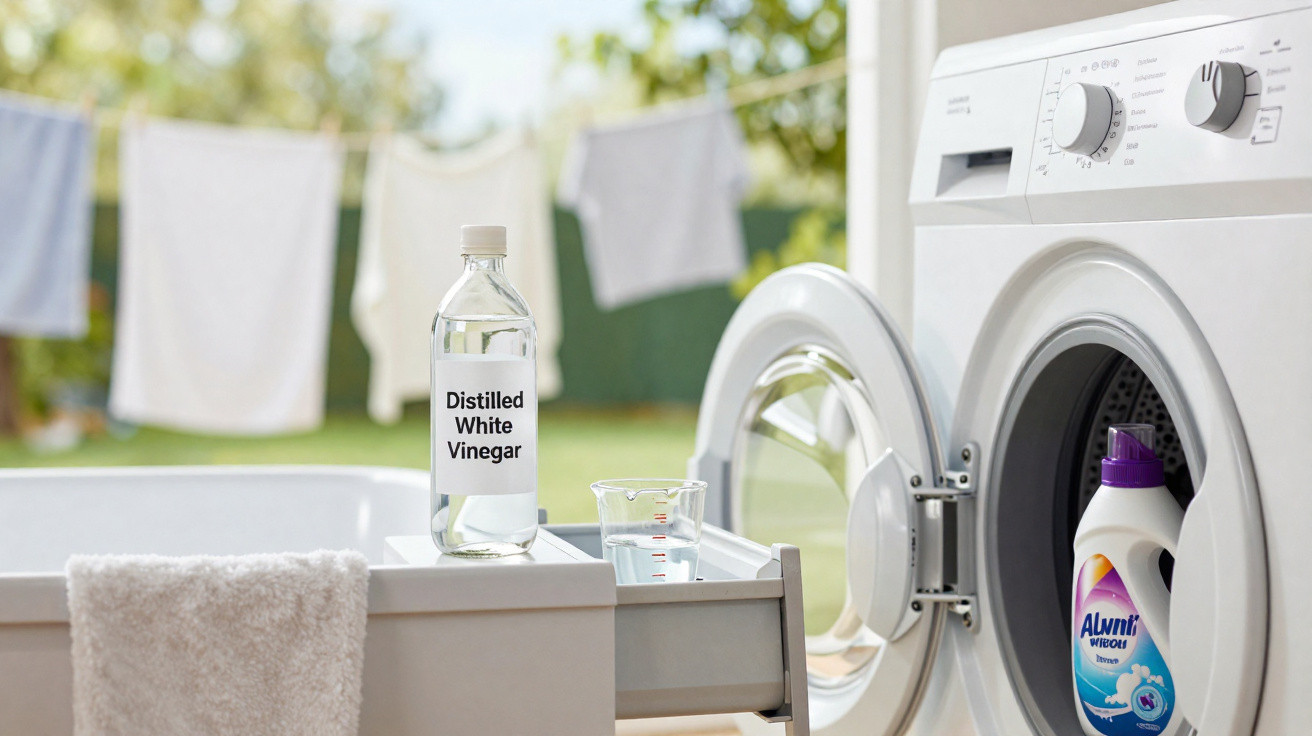
The method is straightforward and effective: pour distilled white vinegar into the fabric-softener compartment, allowing it to dispense during the final rinse. Use 120 ml for an ordinary load, 60 ml for delicates, or 180–250 ml where water is hard or gym kit has persistent odours. Afterwards, dry everything in circulating air, preferably outdoors. Avoid malt vinegar and elaborate infused versions; use only the clear variety. This small amount changes the pH, breaks down residue and leaves fibres sufficiently clean to breathe.
Keep the approach sensible and uncomplicated. Never use vinegar and bleach in the same wash, because their reaction produces harmful fumes. Take care with elasticated waistbands and coated technical clothing. Use white vinegar alone, not the brown bottle intended for chips. Without a garden, open a window and place a drying rack in a mild cross-breeze, or finish items with a brief low-heat tumble dry. Realistically, nobody will do that daily. Reserve it for towels, bedding and the shirts you wear most often.
This is not about covering odours; it is about removing the interference so cleanliness can smell like cleanliness.
“Vinegar doesn’t perfume your wash. It gets out of the way so the fresh air can do the talking,” said Margaret, who ran a launderette in Salford for 30 years.
Try it once and you may find that towels recover their texture, T-shirts dry without that changing-room spectre, and pillowcases retain a light, straightforward scent.
- Pour 120 ml of distilled white vinegar into the fabric-softener drawer.
- Use your normal programme; the vinegar will be released during the rinse.
- Avoid fabric softener, which can cause residue to build up.
- Dry in moving air: on a line, on a rack near an open window, or with a short, low-heat tumble dry.
- Never use vinegar and bleach together in a single wash.
Why it works and how freshness remains
Vinegar contains mild acetic acid, but it changes the process. Alkaline detergent residue can cling to fibres, muting colours and retaining odours; the acid neutralises this coating so that water can wash it away. Hard-water minerals are loosened as well, helping cotton feel like cotton again. With no residue, smells have fewer places to cling to. Air then completes the job. UV light - even on an overcast British day - combined with simple airflow reduces musty notes that cannot be bottled. The smell that spells clean is not citrus or lavender. It is almost scentless: dry, light and easy on the nose. That lack of fragrance endures, which is why clothes can still feel pleasant on Thursday.
| Key point | Detail | Benefit for the reader |
|---|---|---|
| Vinegar in the rinse | 120–180 ml distilled white vinegar in the fabric-softener drawer | Removes residue, helping freshness last for days |
| Airflow instead of perfume | Line-dry or use a breezy rack for line-drying in moving air | A light, clean scent without heavy masking |
| Gentle maintenance | Avoid softener regularly; wipe the drawer; leave the door slightly open | Fewer musty surprises and fluffier towels |
FAQ:
- Will my clothes smell like a chip shop? No. The vinegar smell dissipates as fabrics dry. What remains is a light, clean feeling rather than a powerful fragrance.
- Is vinegar safe for colours and delicates? Yes, when used in small quantities during the rinse. Test vivid or unstable dyes the first time. Do not soak elastic trims or coated sportswear.
- Can I use it with fabric softener? Avoid softener on days you use vinegar. Softener leaves a film that reduces towel absorbency and traps odours. Alternate them if you prefer its feel.
- Is it bad for my washing machine? Used in moderation, it is fine. A small amount in the rinse will not damage seals in a well-maintained machine. Wipe the drawer and leave the door open to help keep the drum fresh.
- What if I prefer a scent? Put one drop of essential oil on a wool dryer ball or a clean cloth for the final 10 minutes of drying, rather than adding it to the drawer. Subtle is better than overpowering.



Comments
No comments yet. Be the first to comment!
Leave a Comment