
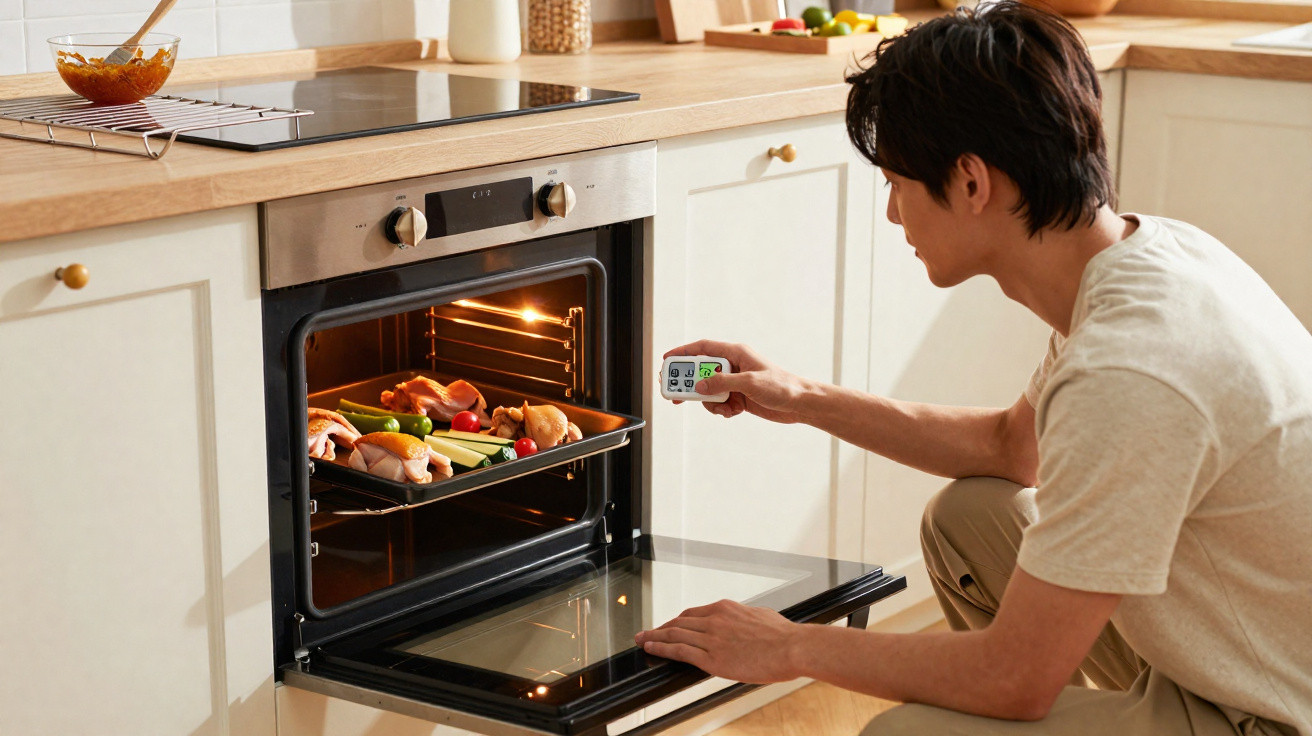
The oven grill mode uses fierce heat from the upper element to brown, gratinate, caramelise and form a crust within minutes. Unlike conventional heat, which cooks food more evenly all around, the grill works rather like an upside-down barbecue: fast, direct and hazardous if used carelessly.
What is the difference between grill and conventional heat?
With conventional heat, the oven warms the air inside and cooks food from all sides, creating a more balanced result between the surface and the middle. This setting is best for cakes, bread, large roasts, pies and dishes that need time to cook through.
In grill mode, the top element becomes the main heat source. It is most suitable for finishing food that is already cooked, or for thin cuts that can handle direct heat, such as grilled cheese, roasted vegetables, toast, thin fillets and the top of a lasagne.
When should you use the grill instead of the standard oven?
Use the grill when a recipe needs colour and texture on top, rather than slow cooking through to the centre. For this reason, it is generally used at the end of cooking, once the food has already been prepared in the conventional oven, a pan or a frying pan.
- Lasagnes and pasta dishes: to brown cheese and white sauce during the final minutes.
- Thin cuts of meat: to sear them or create a crust without a lengthy oven time.
- Vegetables: to char the edges, intensify flavour and toast the tips.
- Toast and bruschetta: for quick crispness on the surface.
- Desserts: to caramelise sugar in dishes designed for high heat.
What is the ideal distance between food and the grill element?
The right distance depends on the thickness of the food. Thin dishes can be placed closer to the element, while taller items need more space so they do not burn on the outside before warming through in the middle.
As a practical guide, position delicate or already cooked foods on the upper shelf, but never so close that they touch the element. For thicker cuts of meat, choose a middle shelf and finish cooking with conventional heat if the centre remains raw.
How do you switch on the grill correctly and stop food from burning?
Before turning on the grill, set the oven shelf to the appropriate height, use a shallow metal or cast-iron tray, and remove paper, plastic, lids and utensils that cannot withstand intense heat. In many ovens, the grill needs a few minutes of preheating to brown food evenly.
- Preheat the grill for 3 to 5 minutes, if the oven manual permits it.
- Place food in a low-sided tray to expose the surface more effectively.
- Stay close to the oven, as the gap between browned and burnt can be less than 1 minute.
- Turn meat and vegetables if you want both sides browned.
- Avoid excessive sugar, oil or fat near the element to limit smoke and the risk of flames.
- Do not use a glass ovenproof dish unless the manufacturer states that it is suitable for use under the grill.
The oven grill mode relies on short cooking times and close attention
Grill mode does not replace conventional heat; it finishes the dish. Use the standard oven to cook the middle, then switch on the grill when it needs a crust, colour, bubbling cheese or toasted edges.
To make the most of this function, adjust the shelf height before switching it on, choose cookware made for high temperatures and watch the food continuously. This allows the grill to do what it does best: deliver a golden surface, crisp texture and restaurant-style finish without leaving the centre undercooked.




Comments
No comments yet. Be the first to comment!
Leave a Comment