
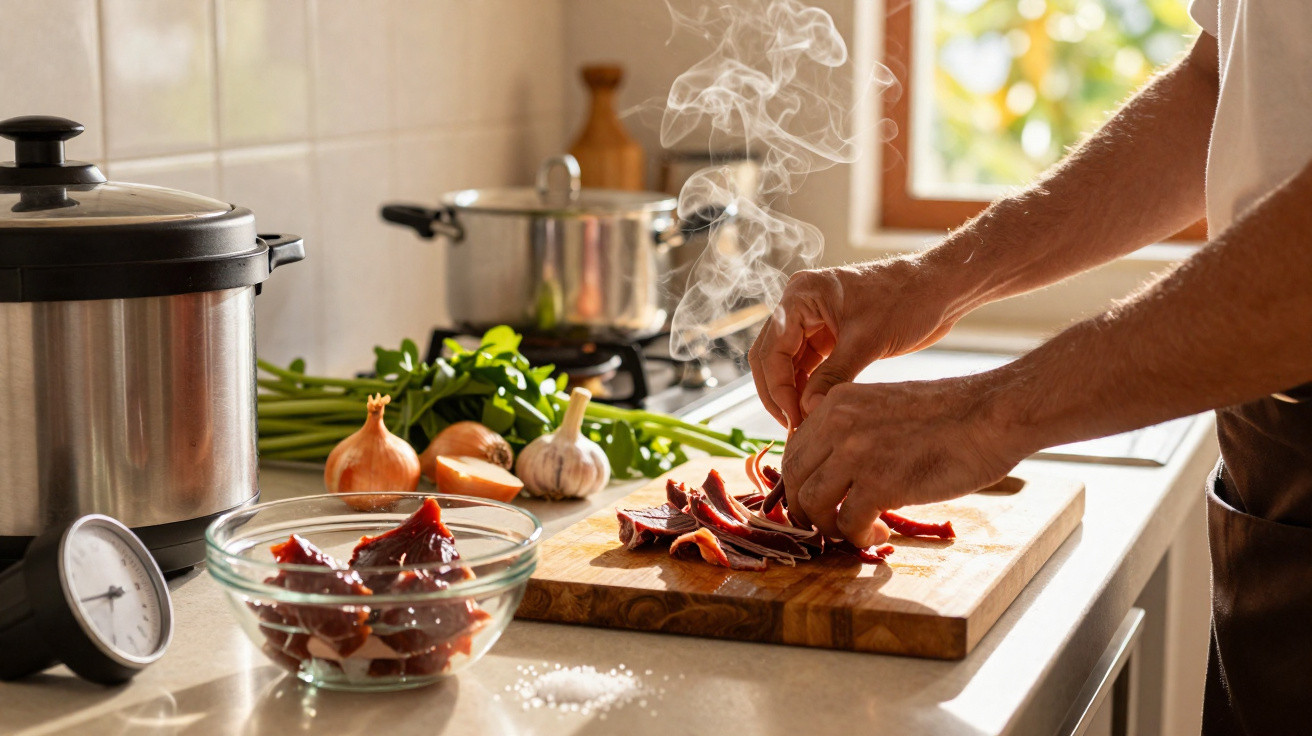
Dried beef requires slow desalting, properly sized cuts and moist cooking to become tender while retaining its flavour. Putting it straight into the pan means the surplus salt toughens the fibres, prolongs cooking and produces a rubbery texture, even after a long time over the heat.
Why does dried beef stay tough after cooking?
Dried beef is cured with salt and dehydrated, which removes moisture and concentrates salt within the fibres. Without rehydrating it before cooking, the water in the pan takes longer to reach the middle of each piece.
Cooking too fiercely after pressure-cooking, or using too little water in the pan, can also cause problems. The meat may shred around the edges, while its centre remains firm, salty and dry.
How should dried beef be desalted correctly?
Traditional desalting is the safest way to soften dried beef while keeping its flavour balanced. Cut it into medium cubes, rinse it under running water, then soak it in the refrigerator, changing the water several times.
- Cut the meat into cubes of a similar size.
- Rinse thoroughly to remove loose surface salt.
- Cover with cold water in a large bowl.
- Refrigerate for about 24 hours.
- Change the water 3 to 4 times during this period.
How long should dried beef cook to become tender?
Once desalted, dried beef should be cooked under enough water for the fibres to relax. In a pressure cooker, it generally needs 25 to 40 minutes once pressure has been reached, depending on the thickness of the pieces and the age of the meat.
It is ready when a fork slides in without resistance and the fibres separate easily. If the centre is still firm, add more hot water and return it to the heat for a few more minutes.
What mistakes make dried beef rubbery?
A rubbery result nearly always comes from rushing the desalting process, using insufficient liquid or stopping the cooking too soon. Dried beef must regain moisture before being added to a sauté, sauce or drier ingredients.
- Using overly hot water for desalting, which starts cooking the outside too early.
- Changing the water too infrequently, leaving excess salt in the fibres.
- Cooking large pieces without cutting them to even sizes.
- Allowing the pan to boil dry during cooking.
- Sautéing for too long before the meat is tender.
How can you achieve perfectly tender dried beef at home?
Dried beef is best when the excess salt is removed first, it is then cooked in sufficient water, and seasonings are added only afterwards. Garlic, onion, bay leaf, bottled butter, pepper and fresh herbs work best once the fibres have already softened.
If you plan to shred it, let the meat cool slightly before pulling the fibres apart with forks or clean hands. For cassava-topped pie, Brazilian dried-meat rice or fillings, this care keeps the meat moist, less salty and loose-textured on the plate.






Comments
No comments yet. Be the first to comment!
Leave a Comment