
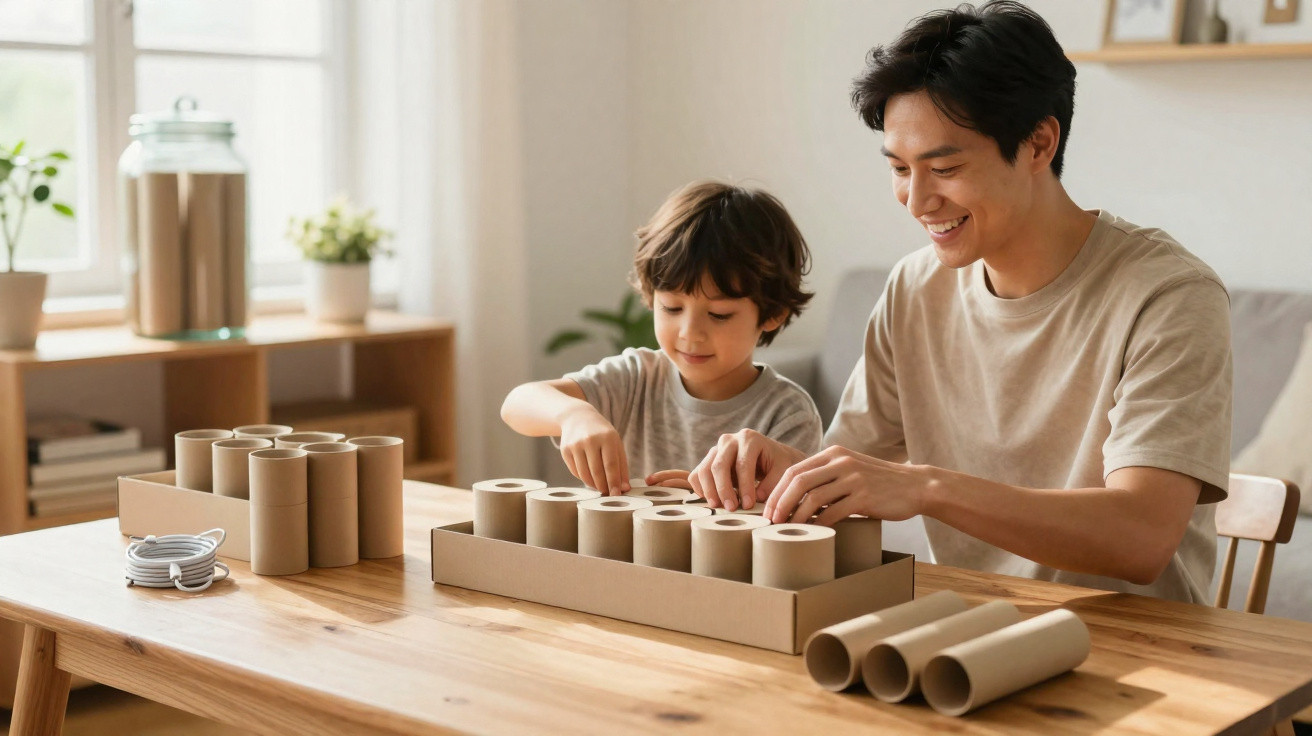
What was once discarded without much thought is increasingly being kept in drawers, craft boxes and cleaning caddies. Cardboard toilet paper tubes, previously considered nothing more than rubbish, have become a modest but useful resource for people seeking to spend and waste less while bringing a little more order to cluttered homes.
From bin to organiser: the new life of toilet paper tubes
For decades, the cardboard centre from a toilet roll was thrown away or placed in recycling as soon as it was empty. That habit is beginning to shift. Higher living costs, greater awareness of waste and the rise of “zero-waste hacks” across social media have all contributed.
Many households now see the humble toilet roll tube as free, ready-made equipment for organising, cleaning and crafting.
Its tubular form, low weight and unexpected durability make it suitable for numerous everyday jobs. No equipment, specialist ability or particular adhesive is required. For many, this ease of use is the main attraction.
Simple cable management without buying anything
A particularly popular use is organising tangled household cables. Charging leads for phones, headphones and USB cables can quickly become knotted in the bottom of a bag or drawer.
- Loosely fold or coil the cable.
- Put it inside a cardboard tube.
- Label the outside with the device name using a marker pen.
This separates the cables and helps limit pressure on their ends, which are often the first part to fail. Several tubes can also be stood vertically in a box or shoebox, producing straightforward sections for chargers, power banks and small electronic accessories.
Instant drawer dividers that actually fit
Kitchen, bathroom and office drawers commonly become full of loose items, including hairbrushes, pens, nail clippers, batteries and memory sticks. Cardboard tubes work as adaptable dividers that can be cut to the required dimensions.
Some people cover the base of a drawer with tubes positioned side by side, giving every item a separate space. Others slice the tubes in half lengthways and use them to divide piles of belongings. In contrast to fixed plastic organisers, they can be cut with scissors within seconds to accommodate unusually shaped areas.
Instead of searching for the “perfect” organiser online, people are cutting cardboard tubes to shape and adjusting them when their needs change.
Unexpected help with cleaning and home maintenance
Cleaning firms and DIY enthusiasts have begun using toilet paper tubes as disposable implements too. The cardboard is gentle enough to avoid scratching surfaces, while remaining sturdy enough to reach into difficult corners.
Reaching awkward spots with less effort
Window ledges, radiator fins, sliding-door runners and tight spaces around kitchen appliances are well-known places for dirt to build up. A toilet paper tube can be compressed, folded or twisted to make a tailored cleaning aid:
- Press one end flat to form a slim “spatula” for edges and runners.
- Cover the tube with a microfibre cloth or old sock to improve absorption.
- Hold the tube rather than using your fingers, keeping them clear of dust and grime.
As the tube can simply be disposed of, it can be thrown away once excessively dirty, avoiding the need to wash brushes or awkward attachments.
Improvised holders and supports
In some homes, tubes are used inside small bins to support rubbish bags, particularly in bathrooms. Folding the bag’s edge over a tube creates a ring that helps hold it securely. Elsewhere, a box filled with rows of tubes can keep cleaning sprays upright, preventing them from falling over in the cupboard beneath the sink.
From supporting bin bags to keeping bottles steady, the cardboard tube is turning into a quiet assistant in home maintenance.
Creativity and learning: why parents love them
Parents and teachers are particularly keen on them. Toilet paper tubes offer these groups a free material for craft activities and learning games.
Craft projects that cost almost nothing
Add paint, felt-tip pens or paper offcuts and tubes can become animals, rockets, pencil holders or miniature castles. Such activities can support children’s fine motor skills, imagination and patience.
Common projects include:
- Binoculars created by taping two tubes together and adding string for a strap.
- Small plant pots for starting seeds on a windowsill.
- Desktop holders for crayons, marker pens and scissors.
Since the material costs little and is easy to replace, children can try ideas without worrying about “ruining” anything. This reduces the sense of pressure and can encourage greater creativity.
Teaching kids about reuse and waste
Repurposing toilet paper tubes can also reinforce teaching about recycling and the use of resources. Children can directly observe that an object regarded as “rubbish” may still be useful. This straightforward message often has more impact than a lecture.
A cardboard tube on the craft table is an everyday reminder that not every object reaches the end of its life when the product inside is gone.
Environmental and economic angles behind the trend
Saving several tubes will not solve climate change. However, these minor practices form part of a wider move towards reconsidering waste. Because many households feel they cannot influence major environmental challenges, they instead concentrate on decisions made every day.
Financially, tubes can stand in for items people might otherwise purchase, such as plastic cable ties, drawer organisers and children’s craft sets. Each saving may be small, but they can build over time, particularly for families managing restricted budgets.
When reuse makes sense – and when it does not
There are drawbacks to consider. Cardboard deteriorates when wet and may gather dust. It is not advisable to use old tubes for storing food or in very damp places. Those with asthma or allergies may also choose not to store piles of dusty cardboard.
| Good uses | Less suitable uses |
|---|---|
| Cable tidies, drawer dividers, craft projects | Holding unpackaged food |
| Cleaning narrow, dry spaces | Long-term use in very humid rooms |
| Seed starters, temporary plant collars | Any task that needs strong, waterproof material |
For anyone concerned about cleanliness, one straightforward solution is to retain only a limited number of tubes at once, replace them regularly and recycle any damaged ones immediately.
Practical ideas for beginners
Anyone interested in trying this trend can run a brief experiment at home. Keep five or six tubes in a drawer over one month. When small frustrations arise, such as tangled headphones, an untidy make-up drawer or dust that cannot be reached, see whether a tube offers a solution.
Consider a realistic example: the kitchen “junk drawer” is opened, but batteries and tape are always difficult to locate. In ten minutes, you could:
- Gather several tubes.
- Arrange them vertically in the drawer in a honeycomb pattern.
- Give each tube a category: batteries, rolls of tape, matches or spare keys.
The arrangement may not be glamorous, but it prevents small objects from moving about. If it proves useful, keep it; if it does not, recycle the cardboard, having lost only a few minutes.
How this small habit fits with other low-waste choices
Keeping toilet paper tubes complements other easy household adjustments, such as reusing jars as storage containers, making cleaning cloths from old T-shirts and selecting refill packs for cleaning products. Individually, none of these actions is dramatic, but together they reduce the quantity of single-use goods sent directly to the bin.
Behind the growing pile of cardboard tubes in many homes is a wider attempt to stretch resources, cut clutter and think twice before throwing things away.
As households search for practical, affordable methods of handling limited space and tighter budgets, it makes sense that even the basic cardboard centre of toilet paper is being reconsidered.



Comments
No comments yet. Be the first to comment!
Leave a Comment