
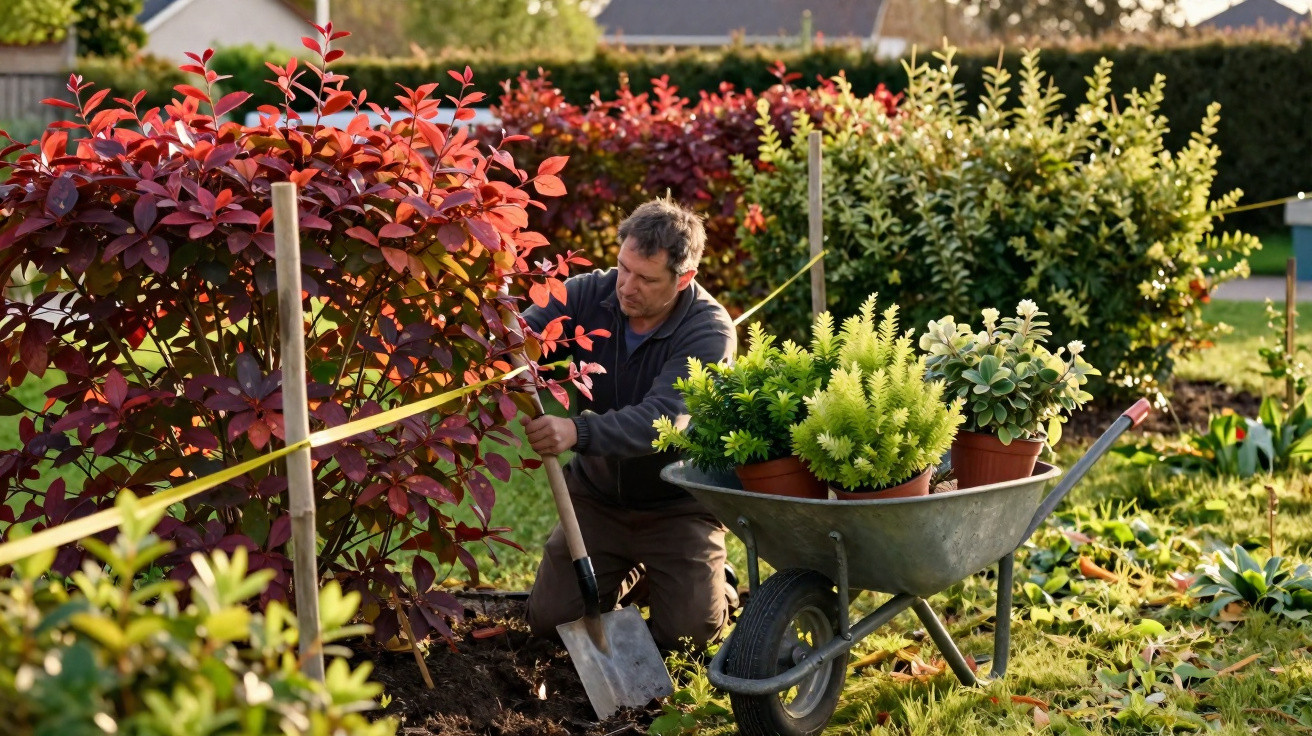
A new shrub is already waiting in the wings.
Ten or 15 years ago, anyone wanting a dense privacy hedge quickly would almost automatically choose Photinia. Red new growth, evergreen foliage and rapid growth sounded like the ideal combination. Yet countless housing developments now reveal the downside: brown spots, holes in the hedge, continual pruning and still an unattractive result. Landscape gardeners expect a different shrub to take centre stage from spring 2026 – one that is considerably tougher and easier to live with.
How the former favourite hedge lost its appeal
For years, Photinia was the standout plant in modern terraced-house gardens. It was planted to screen out prying eyes without requiring much thought. Its vivid red spring shoots gave a garden an instantly “fully designed” appearance, even where little else had been planted.
Over time, the same signs began appearing in many hedges: a few discoloured leaves at first, then thin patches and eventually full gaps. Many homeowners blamed poor care or one particularly bad winter. However, anyone watching the plants over several seasons soon noticed that the hedge often never regained its former density.
“In many gardens, the ‘miracle shrub for lazy people’ became a permanent work in progress marked by disease symptoms and frustration.”
At a certain stage, replacement no longer seems drastic but sensible. Rather than spraying against the same fungus every year, collecting leaves and being disappointed again, gardeners are seeking a solution that will last.
Why Photinia is now so vulnerable
The problems are not solely down to the variety; they are also closely linked to changing conditions. Milder winters, long wet springs and tightly planted hedges create ideal circumstances for fungal diseases.
A leaf fungus known scientifically as Entomosporium is particularly troublesome for the shrub. It initially produces small red or brown spots. Gradually, leaves dry out and drop off. What remains is a patchy, uneven privacy screen that barely serves its intended purpose.
- Warm, damp weather encourages fungal infection.
- Planting too closely together prevents foliage from drying properly.
- Fallen leaves left in the bed keep infection pressure high.
- New plants in the same location often begin the season already affected by disease.
Many amateur gardeners unknowingly repeat the same mistake: they pull out diseased shrubs but fail to remove every leaf thoroughly, or only loosen the soil near the surface. They then plant Photinia again – and, within a few years, the cycle begins afresh.
The new favourite: why Pittosporum is seen as Photinia’s successor
Anyone replacing a hedge is mainly looking for three things: attractive foliage, lasting density and manageable maintenance. This is exactly where Pittosporum excels. It is an evergreen shrub that has so far been more of an insider’s choice.
Its leaves remain ornamental throughout the year. Depending on the variety, colours range from rich dark green to leaves edged in silver or cream. The result is a hedge that looks light, bright and contemporary without seeming artificial.
“Pittosporum grows in a controlled way, stays compact and needs far less corrective pruning than many traditional hedge plants.”
Its shoots do not race uncontrollably upwards; instead, they grow at a predictable pace. In practical terms, this means:
- One or two shaping cuts a year are entirely sufficient.
- The hedge does not lose its shape at the top as quickly.
- Even slightly uneven trimming still leaves a tidy overall impression.
Garden designers value Pittosporum because it works not only as a formal hedge but also in looser, mixed planting schemes. Those switching from Photinia to Pittosporum often experience something of a “reset”: a continuous privacy screen at last, without constantly worrying about the next spots appearing.
Moving beyond the green fence: intelligent mixed hedges
The classic monoculture hedge – one shrub repeated 50 times – is now regarded by many professionals as outdated. One source of disease can put the entire boundary at risk. What is more, the dense, uniform strip tends to look attractive for only a short period.
Mixed hedges are the growing trend. The principle is simple: several woody plants share the role. Different leaf shapes and growth habits make it harder for diseases to spread through the entire row.
Pittosporum is ideal as the foundation. Suitable companions include:
- Oleaster (Elaeagnus) – exceptionally robust, tolerant of wind and distinguished by silvery foliage.
- Red dogwood – understated in summer but with vivid red stems in winter.
- Hazel – native, beneficial for insects and producing edible nuts.
- Other evergreen species suited to the local climate.
“Mixing plants brings not only greater resilience, but more life to the garden – literally.”
Flowering periods are spread across the year, berries and nuts attract birds, and varied foliage textures soften the severity of a garden boundary. Many homeowners are surprised by how much larger their garden appears when the hedge no longer resembles a drawn curtain but instead forms a living frame.
How to switch from Photinia to a new hedge
Before reaching for a spade or chainsaw, it is worth taking an honest look at the hedge. If only individual shoots are affected, severely cutting back the affected branches, removing fallen leaves and testing whether the hedge recovers over one or two years may be enough. If, however, long sections consist only of “skeletons”, full replacement is often the more sensible option.
Removing old plants properly
Clearing the site involves more than simply pulling out the roots. Diseased leaves and prunings should not go on the compost heap; dispose of them consistently in household waste or take them to a recycling centre. This reduces infection pressure at the site.
The soil then needs some restoration:
- Loosen it thoroughly and as deeply as possible.
- Work in mature compost or well-rotted manure.
- Prevent waterlogging with drainage or added grit.
Permanently wet, heavy soil weakens young shrubs from the outset. Doing this work properly avoids many problems later.
Correct spacing and early care
The biggest mistake with a new hedge is planting too closely simply because a perfect privacy screen is wanted in the first year. It may look impressive in photographs, but the plants will soon compete for light, water and nutrients.
A moderate spacing that allows air to circulate and leaves room for the shrubs to develop is the better approach. In exposed, windy positions, canes or stakes help during the first few years, until the plants have rooted firmly. A mulch strip of bark, woodchip or leaves reduces evaporation, suppresses weeds and keeps the soil crumbly.
What garden owners should consider before spring 2026
Anyone intending to replace an old hedge in spring 2026 can start planning strategically now. These initial questions can provide clarity:
- How much time can I realistically devote to pruning and maintenance each year?
- Is maximum density more important to me, or a natural and varied appearance?
- How severe are winters in my area, and how exposed is the site to wind?
- Should the hedge primarily provide privacy, or also offer flowers, fruit and habitat?
Pittosporum is particularly suited to people who favour a neat, orderly garden style but do not want to spend every weekend using hedge trimmers. Combined with robust companion plants, it creates a system that does not collapse at the first sign of disease.
Anyone unsure should plant one or two shrubs in a different spot as a trial and observe them for a year. How well do they cope with the soil, sun and wind? This small “test run” costs very little but can prevent expensive mistakes when the whole garden boundary is replanted later.
There is one further point: many people associated old hedges purely with shutting the outside world away. The new generation of garden owners thinks more about microclimates, insect-friendly planting and visual lightness. A thoughtfully designed mixed hedge, with Pittosporum as its framework, delivers all of these benefits while also significantly reducing everyday garden stress.






Comments
No comments yet. Be the first to comment!
Leave a Comment