
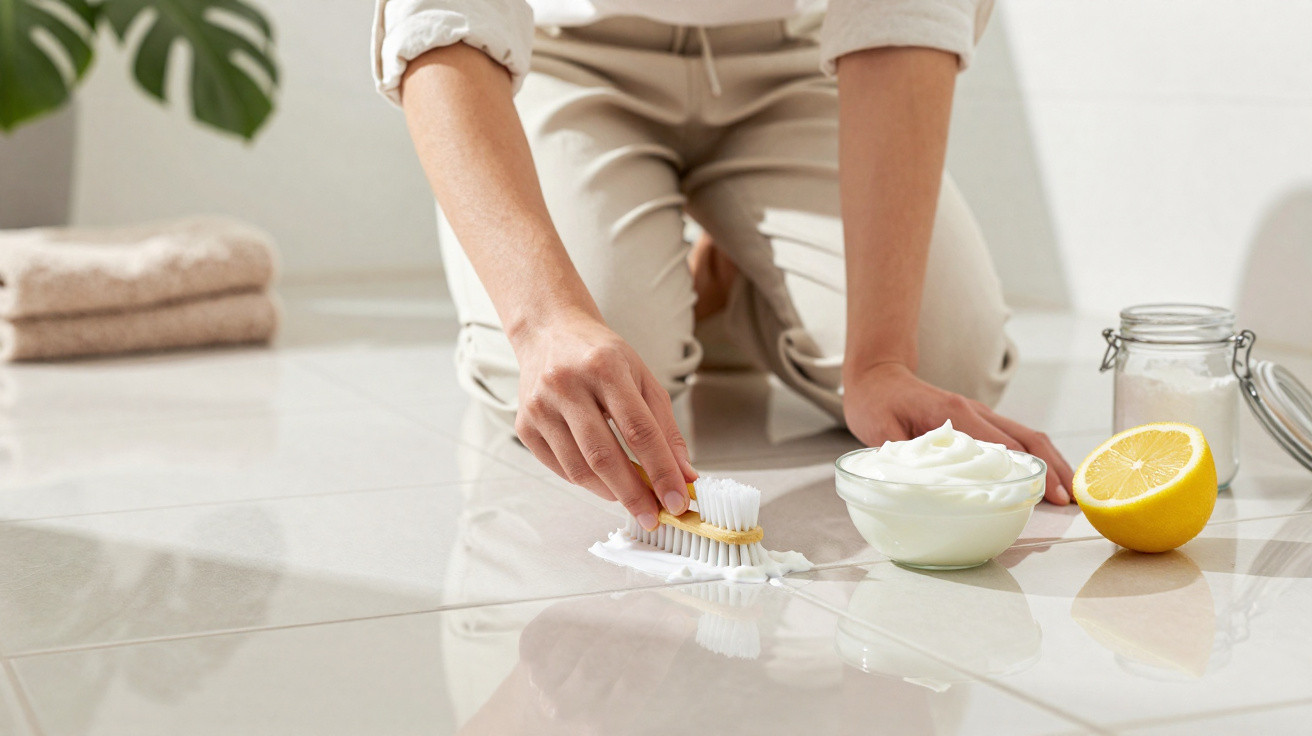
Last Tuesday morning, I was looking at my bathroom tiles with the all-too-familiar combination of frustration and embarrassment. The grout lines, once spotless, had become grimy, dark seams that made the whole bathroom seem unclean, however much I scrubbed everything else. My immediate reaction was to grab the industrial-strength bleach from beneath the sink, but I stopped myself. Perhaps it was the prospect of harsh fumes in my small, badly ventilated bathroom, or the concern about what those chemicals could be doing to my family’s health. Then I remembered my grandmother’s traditional cleaning methods – the ones that often worked better than anything available in the shops. The best answers can sometimes be right in front of you.
Why Your Grout Becomes So Dirty (and Why Bleach Is Not the Solution)
Bathroom grout attracts virtually everything you do not want around your home. As most grout is porous, it absorbs soap scum, dead skin cells and moisture much like a sponge. Combine that with inadequate ventilation and you have the ideal environment for mould and mildew to develop.
I discovered this for myself after moving into my current flat three years ago. The former tenant had evidently abandoned grout upkeep altogether, leaving lines so stained that they looked more suited to a petrol station toilet. My letting agent recommended bringing in professional cleaners, but their estimate was £300 for a job that appeared fairly straightforward. That was when I resolved to become my own grout-cleaning expert.
What many people do not know about bleach is that, although it can make grout appear whiter for a short while, it gradually damages it. Its aggressive chemicals break down the binding materials, leaving grout more porous and more likely to stain again. And, frankly, no one wants to inhale toxic fumes simply to clean the bathroom.
The Baking Soda and Hydrogen Peroxide Paste That Really Works
The effective solution may already be in your kitchen: baking soda and hydrogen peroxide. Combine three parts baking soda with one part hydrogen peroxide to make a thick paste that spreads easily. It should have a toothpaste-like texture – firm enough to remain on vertical areas, yet not so dry that it breaks apart.
People often rush this stage, but giving it time is crucial. Use an old toothbrush to coat the grout lines generously with the paste, then leave it alone for at least 10 minutes. I normally put on a wash or make a coffee while it gets to work. The hydrogen peroxide acts as a natural bleaching agent, while baking soda supplies mild abrasive action.
How you scrub is more important than it may seem. Tackle small areas at a time, moving the toothbrush in circular motions.
“I was skeptical at first, but this paste removed stains that I thought were permanent. My bathroom looks like it belongs in a hotel now, and I didn’t have to wear a gas mask to clean it.” – Sarah M., homeowner
- Do not use metal brushes on grout – they can scratch and harm the surface.
- Clean from the top down so that dirty water does not stain areas you have already cleaned.
- Once finished, rinse everything thoroughly with warm water.
- Open windows or run an extractor fan to improve air circulation.
Beyond the Quick Fix: Keeping Your Grout Clean
The real achievement is not merely cleaning grout once, but maintaining it without turning the bathroom into a chemistry lab every few weeks. Once I had used the paste method, I began running a squeegee over the shower walls after every use. That small routine stops soap and water from settling in the grout lines to begin with. Your future self will thank you for spending those additional 30 seconds on daily care.
| Key point | Detail | Value for the reader |
|---|---|---|
| Cost-effective solution | Baking soda and hydrogen peroxide cost under £5 total | Saves hundreds compared to professional cleaning |
| Non-toxic approach | No harsh fumes or chemical residue | Safe for families, pets, and people with sensitivities |
| Long-term grout health | Gentle cleaning preserves grout integrity | Prevents costly grout replacement down the road |
FAQ:
- How often should I use this paste method? Once a month is generally enough for most bathrooms, although busy showers may require cleaning every two weeks.
- Can I add essential oils to make it smell better? Absolutely! Tea tree oil or lavender work well and give your cleaning paste natural antimicrobial qualities.
- What if my grout is really, really bad? If the discolouration is severe, you may need to apply the paste twice and leave it for 15-20 minutes on each occasion.
- Is this safe for coloured grout? Try it first on a small concealed section. Hydrogen peroxide may lighten certain coloured grouts, so use it carefully.
- Can I make a big batch and store it? It is better to prepare a fresh mixture each time. Hydrogen peroxide becomes less effective after prolonged exposure to air and light.




Comments
No comments yet. Be the first to comment!
Leave a Comment