
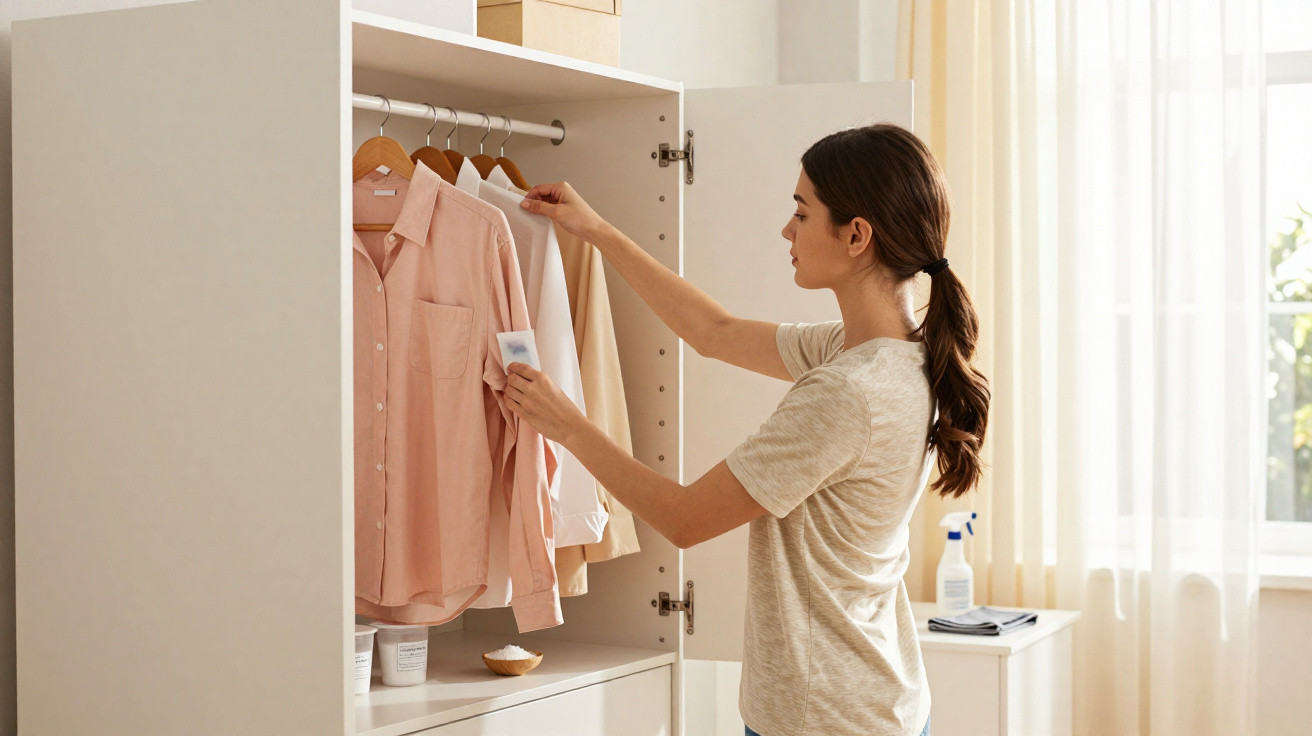
Dark marks at the back of the wardrobe, a strong smell and clothes with that “stored for far too long” look are usually signs of a problem that is easy to recognise yet hard to overlook: mould. In damper areas or poorly ventilated homes, a clothes wardrobe can become an ideal setting for fungi to grow, as they feed on residue, dust and textile fibres. As well as damaging garments, mould can affect air quality and cause respiratory discomfort for sensitive people.
How can you prevent mould in a clothes wardrobe every day?
Keeping humidity under control is the most straightforward way to stop mould from taking hold in a wardrobe. Wardrobes positioned against cold walls or in enclosed corners retain more moisture in the air, so it is worth leaving a few centimetres between the furniture and the wall, as well as opening doors and drawers for a few minutes each day.
It is equally important to consider what goes into the wardrobe. Clothes that have been exposed to rain, worn to the gym or collected from the laundry should not be put away until they are completely dry. Sealed plastic garment covers also encourage moisture to condense around suits and evening dresses, so breathable fabric covers are a better choice.
Watch a video on the Organise Sem Frescuras YouTube channel about effective methods for removing the stale smell from wardrobes and preventing humidity from damaging clothes:
https://www.youtube.com/watch?v=J3mCbyE8nco
Which habits help prevent mould in the wardrobe?
A few straightforward habits when using the wardrobe can greatly lower the likelihood of mould, while also helping clothes last longer. They keep the interior drier, improve air circulation and prevent dirt and sweat from building up in concealed areas.
These measures are particularly helpful during rainy periods or in coastal towns, where relative humidity is often higher and wardrobes are regularly affected by mould and unpleasant odours.
- Avoid overcrowding a single shelf, leaving space for air to circulate between garments.
- Clean the wardrobe regularly using a lightly dampened, well-wrung cloth, then wipe it with a dry cloth.
- Keep very dirty or damp shoes outside the area used for storing clothes.
- Do not line drawers with plastic or paper that obstructs natural ventilation.
- Use anti-mould containers or dehumidifiers in very humid towns or locations near the sea.
What are the most practical ways to control humidity in the wardrobe?
Alongside good everyday habits, some simple products can help manage the moisture hidden inside a wardrobe. They provide additional protection by absorbing water from the air and making the space between drawers and shelves less suitable for fungal growth.
Commonly used options include electric dehumidifiers, the dry setting on an air conditioner and anti-mould containers containing calcium chloride. Silica gel sachets, activated charcoal and absorbent clay can also be placed at strategic points inside the furniture.
How should you clean the wardrobe and clothes once mould has appeared?
If mould has already spread through the wardrobe, it is best to empty it completely, set aside the affected items and deal with the furniture first. With the wardrobe empty, many people use a mild mixture of water and bleach applied with a cloth, followed by a clean damp cloth and then a dry cloth. On varnished surfaces, diluted white vinegar is generally a less harsh alternative.
Stained clothes should be washed according to their care labels. For hard-wearing fabrics, give preference to diluted white vinegar, bicarbonate of soda and morning sunlight; for delicate garments, use mild detergents or a specialist dry cleaner. Once cleaning is complete, only put back items that are entirely dry and, where possible, combine daily ventilation with anti-mould containers to reduce the risk of the problem returning.





Comments
No comments yet. Be the first to comment!
Leave a Comment